Cost and Management Considerations
Guide Z-139
Marcy Ward, Pilja Vitale, Craig Gifford, and Jeffrey Vitale
College of Agricultural, Consumer and Environmental Sciences, New Mexico State University
Authors: Respectively, Extension Livestock Specialist, Extension Animal Sciences and Natural Resources, New Mexico State University (NMSU); Statewide Extension Economist, Department of Extension Economics, New Mexico State University (NMSU); Associate Professor, Department of Animal and Range Sciences, NMSU; and Associate Professor in Agricultural Economics, Oklahoma State University. (Print-friendly PDF).
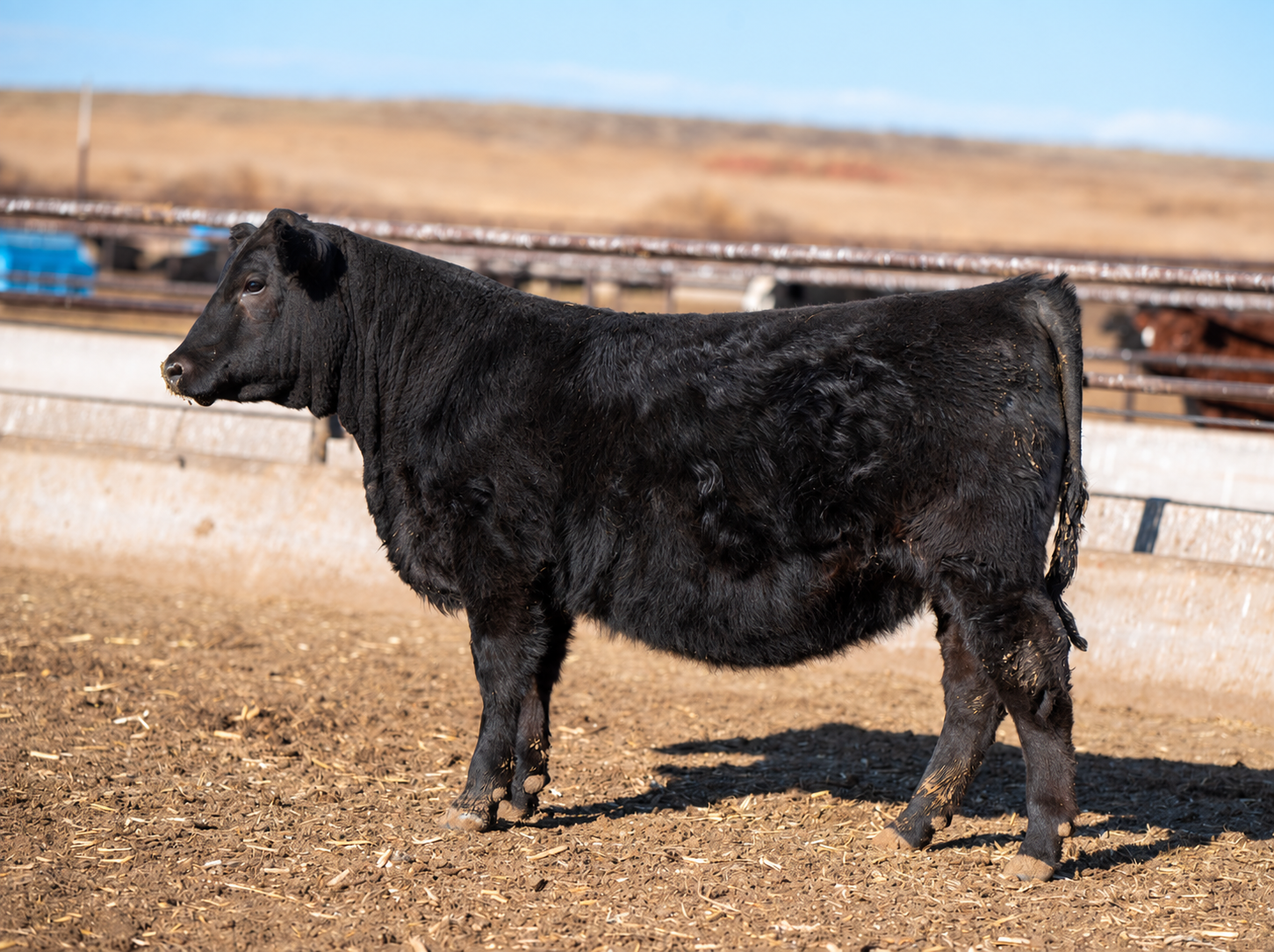
Agricultural Science Center at Tucumcari. NMSU, 2026.
Introduction
Replacement heifers play an important role in maintaining the long-term productivity and sustainability of cow-calf operations in New Mexico. Ranchers rely on replacement heifers to maintain herd size, improve genetics, and recover from culling or drought-related herd reductions. In recent years, prolonged drought conditions across New Mexico have increased production challenges because of limited forage availability and declining pasture conditions on both private rangelands and federal grazing allotments.1 According to USDA-NASS, New Mexico beef cow inventory declined from approximately 450,000 head in 2025 to 430,000 head in 2026, reflecting continued adjustments in herd size under drought conditions.2 At the national level, cattle inventories also declined to historically low levels, contributing to higher replacement beef heifer prices and increasing the financial importance of replacement decisions for ranchers.2 As a result, New Mexico producers must carefully evaluate not only the purchase price of replacement heifers, but also their ability to perform under arid and highly variable grazing conditions.
Under New Mexico arid conditions, replacement heifer purchases involve more than the initial market price; ranchers must also consider transportation expenses, water availability, herd health, and the ability of purchased animals to adapt to New Mexico’s environment.3 Poor replacement decisions may increase production costs and reduce long-term herd performance, particularly during drought conditions. A survey of New Mexico beef producers conducted by New Mexico State University found that 72% of producers retained their own replacement heifers, 22% used both retained and purchased heifers, and only 6% primarily purchased replacement heifers.4
The purpose of this publication is to help New Mexico ranchers evaluate important cost and management factors when purchasing replacement beef heifers under arid production conditions.
Current New Mexico Cattle Market Conditions
The market information presented in this publication is for illustrative purposes only and reflects market conditions at the time of writing. Because cattle prices change frequently, readers should consult the latest USDA Agricultural Marketing Service (USDA-AMS) market reports for current New Mexico cattle prices and market conditions. Current reports are available through the following link: https://www.ams.usda.gov/market-news/feeder-and-replacement-cattle-auctions#NewMexico
Recent cattle market conditions have created additional challenges for ranchers purchasing replacement heifers in New Mexico. Tight national cattle supplies and historically low beef cow inventories have contributed to stronger calf markets and higher replacement heifer values.5 Reports from the USDA Agricultural Marketing Service indicate that replacement heifer prices in New Mexico auction markets, including Roswell, Clovis, and Belen, increased substantially during 2025 and 2026 compared with previous years.5,6 In many markets, bred replacement heifer prices increased by approximately 30% to 50% compared with prices observed several years earlier, reflecting changing market conditions and reduced national cattle inventories.
Major Cost Factors for Purchasing Replacement Heifers
Purchase Price
Purchase price is typically the largest direct cost when purchasing replacement heifers in New Mexico. Under drought and limited forage conditions, high-priced replacement females may increase financial risk for ranchers operating on native rangelands and public grazing allotments.5,7
Transportation Costs
Replacement heifers are often purchased from distant auction markets in Texas, Oklahoma, or surrounding states due to limited local cattle availability during drought periods. Long transportation distances across arid regions may increase fuel, freight, and shrink costs, particularly for ranchers operating in remote areas of New Mexico.
Management Considerations Under Arid Conditions
Selecting Heifers Adapted to New Mexico
Selecting replacement heifers that are well adapted to New Mexico’s arid and semi-arid environments is important for long-term herd productivity. Ranchers should consider traits such as heat tolerance, forage efficiency, and structural soundness when purchasing replacement females. Heifers that can efficiently utilize limited forage resources and travel long distances on rough rangeland conditions may perform better under extensive New Mexico grazing systems.8
Body Condition and Nutrition
Maintaining adequate body condition is important for reproductive performance and overall herd productivity. Replacement heifers with poor body condition may experience reduced fertility and lower pregnancy rates, particularly under limited forage conditions.9
Biosecurity
Introducing purchased cattle into an existing herd may increase the risk of disease transmission. Ranchers should evaluate vaccination history, health records, and overall animal condition before purchase. Producers should consult with their veterinarian and local Cooperative Extension Service professional to determine appropriate quarantine and biosecurity practices for their operation.10
Reproductive Performance
Reproductive performance is an important consideration when selecting replacement heifers. Ranchers should evaluate fertility, reproductive soundness, and expected calving performance before purchase.11 Matching calving seasons with forage availability and ranch management systems may improve long-term herd productivity under New Mexico conditions.
Economic Evaluation for Replacement Heifer Investment
Ranchers should evaluate the total cost of replacement heifers, including purchase price and transportation expenses, before making purchasing decisions.7,12 Comparing these costs with expected future calf revenue may help producers determine whether replacement purchases are economically feasible under current market conditions.
For example, based on 2026 New Mexico auction market prices, if a bred replacement heifer is purchased for approximately $2,400 per head and transportation costs add an additional $100 per head, the initial investment may exceed $2,500 before feed, labor, and annual maintenance costs are considered. If the replacement female produces a 500-pound calf that sells for $4.50 per pound5, gross calf revenue may be approximately $2,250 per calf before production expenses are deducted. Under these conditions, multiple productive calf crops may be required before the replacement investment is fully recovered.
Example
The following break-even example uses hypothetical values to illustrate the calculation and should not be interpreted as current market prices.
Where:
- Replacement Heifer Cost = Purchase price (or development cost) of the replacement heifer
- Lifetime Cow Costs = Feed, pasture, health, breeding, labor, and other annual costs over the cow’s productive life
- Cull Cow Value = Expected value received when the cow is sold
- Average Calf Sale Value = Average sale price received per calf
Assume:
- Variable - Value
- Replacement heifer purchase price - $2,540
- Annual cow cost - $1,050
- Expected productive life - 5 years
- Lifetime cow cost - $5,250
- Expected cull cow value - $1,350
- Average calf sale value over 5 years - $1,750
Step 1. Calculate total investment
$2,540+$5,250-$1,350=$6,440
Step 2. Divide by average calf value
$6,440/$1,750=3.68
Break-even = 3.68 (or 4 calves)
In this scenario, the replacement heifer would need to successfully wean four marketable calves before recovering her purchase and production costs.
Practical Considerations
This calculation is intentionally simple and can be updated as market conditions change. Producers can substitute current values for:
- Replacement heifer price
- Annual cow costs
- Cull cow value
- Average calf sale price
The formula provides an estimate of the minimum number of calves required to recover investment costs. It does not account for the opportunity cost of invested capital (time value of money), financing costs, death loss, reproductive failure, or annual variation in calf prices. Producers making long-term replacement decisions should consider applying an appropriate annual interest or discount rate to reflect the opportunity cost of capital invested in replacement heifers. However, these factors should be evaluated separately when assessing the long-term profitability of replacement heifer investments. This format is well suited for an Extension fact sheet because it is easy to understand, requires only a few readily available inputs, and remains applicable across changing market conditions. All values presented in this section are illustrative. Producers should substitute current market prices and production costs when evaluating replacement heifer investments.
Figure 1 illustrates the life cycle of a purchased replacement beef cow, including the initial investment, annual calf production, production years, and cull value at the end of the productive life. Values are illustrative and should be adjusted to reflect current market conditions in New Mexico.
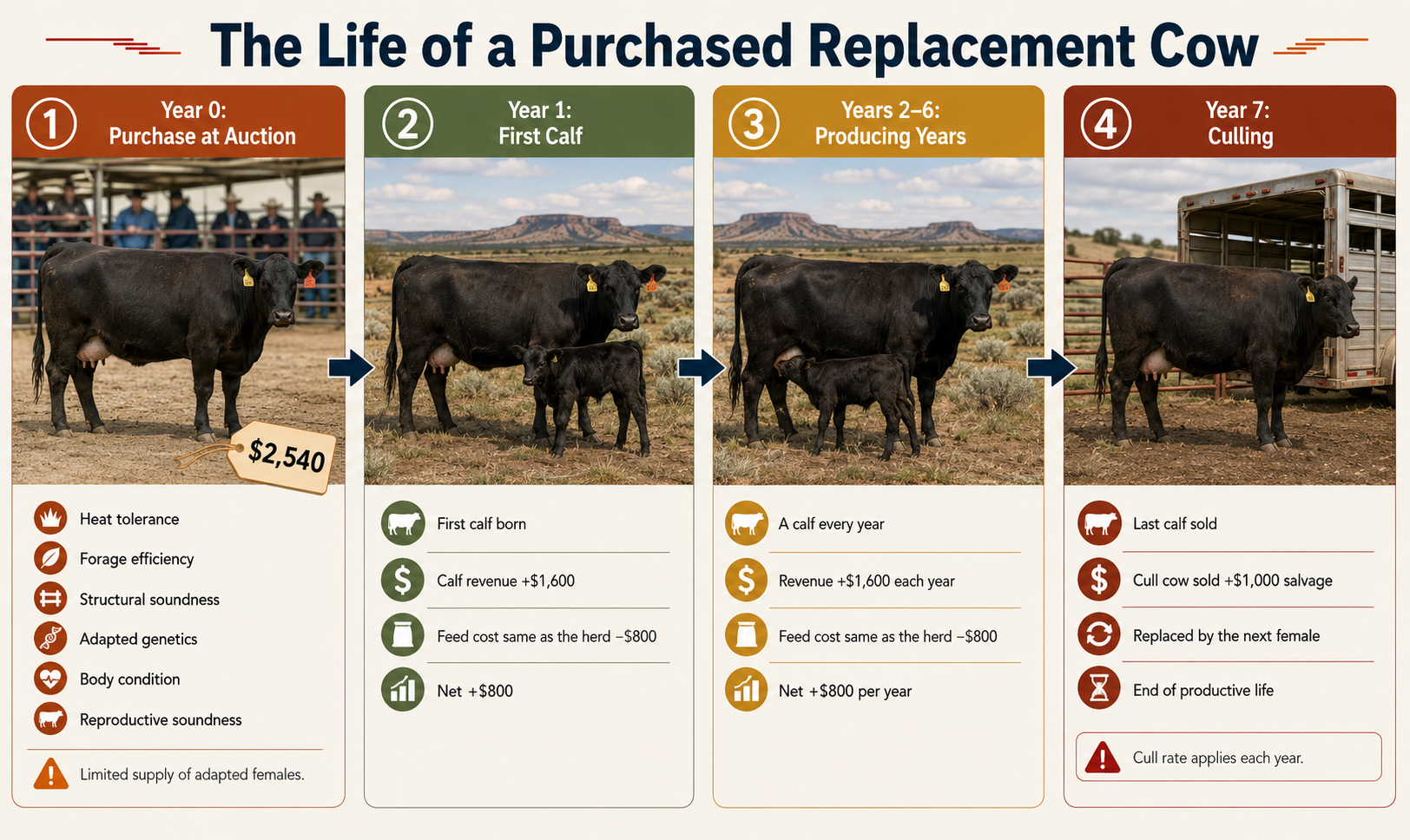
Figure 1. Life Cycle of a Purchased Replacement Cow.
Buy vs. Raise Replacement Heifers in New Mexico
Table 1 shows the partial budgeting comparison for purchasing bred replacement heifers in New Mexico. The costs section includes major expenses associated with purchasing replacement heifers, including purchase price, transportation, vaccination, and health-related costs. Purchased replacement heifers may also involve additional risks associated with disease introduction and adaptation to arid grazing conditions. In this example, the estimated total initial investment ranges from approximately $2,525 to $2,550 per head.5,13
|
Table 1. Partial Budget Comparison for Buying Bred Replacement Heifers in New Mexico |
|
|---|---|
|
Costs (-/head) |
Benefits (+) |
|
Purchase cost: ~$2,400 |
Immediate calf revenue: ~$1,600/year |
|
Transportation cost: ~$100 |
Faster herd rebuilding: 1-2 years |
|
Health/vaccination cost: ~$25-50 |
Earlier cash flow from calf sales |
|
Possible disease introduction and adaptation risk |
Higher cumulative calf production over time |
|
Total Initial Cost: ~$2,525–2,550/head |
Potential Long-Term Calf Revenue: ~$16,000/head |
|
Note: This example summarizes the initial acquisition costs associated with purchasing a bred replacement heifer. Because the heifer is already confirmed pregnant at the time of purchase, post-purchase breeding and pre-calving development costs are not included. Routine annual maintenance and production costs after purchase are assumed to be similar across alternatives and are therefore excluded. |
|
The benefits section presents the potential economic advantages of purchasing replacement heifers. Purchased bred heifers may provide immediate calf production, faster herd rebuilding following drought conditions, earlier cash flow from calf sales, and potentially higher cumulative calf production over the productive life of the animal. Under favorable production and market conditions, cumulative calf revenue may reach approximately $16,000 per head over the productive life of the cow.
Table 2 shows the partial budgeting comparison for raising replacement heifers in New Mexico. The costs section includes major expenses associated with developing replacement heifers within the operation, including feed and pasture costs, labor and management expenses, and breeding and development costs. Ranchers raising their own replacement heifers may also experience delayed calf production because heifers typically require additional time before entering the breeding herd. In this example, the estimated total development cost ranges from approximately $850 to $1,150 per head.
|
Table 2. Partial Budget Comparison for Raising Bred Replacement Heifers in New Mexico |
|
|---|---|
|
Costs (-/head) |
Benefits (+) |
|
Feed and pasture costs: ~$700–900 |
Better adaptation to local conditions |
|
Labor and management expenses: ~$100–150 |
Lower disease introduction risk |
|
Breeding and development costs: ~$50–100 |
Greater management control |
|
Delayed calf production |
Lower initial cash investment |
|
Total Development Cost: ~$850–1,150/head |
Potential Long-Term Calf Revenue: |
The benefits section presents the potential economic and management advantages of raising replacement heifers. Home-raised replacement heifers may provide better adaptation to local environmental and grazing conditions, lower disease introduction risk, and greater management control over genetics and herd performance. Although calf revenue may be delayed during the development period, long-term calf revenue over the productive life of the animal may still reach approximately $14,400 per head under favorable production and market conditions.
In summary, Table 1 and Table 2 compare the partial budgeting differences between purchasing and raising replacement heifers in New Mexico. In this example, purchasing replacement heifers may generate approximately $1,600 more lifetime calf revenue per head compared to raising replacement heifers ($16,000 versus $14,400 over the productive life of the cow). This represents approximately 11.1% higher cumulative calf revenue for purchased replacement heifers. Purchased bred heifers may also provide improved genetics, faster herd rebuilding, and earlier cash flow because calf production can begin immediately. However, raising replacement heifers may require lower initial investment and may provide advantages related to local adaptation, lower disease introduction risk, and greater management control. The most economically beneficial option ultimately depends on each rancher’s financial situation, forage availability, labor resources, herd goals, and current cattle market conditions.
Practical Recommendations
- Match herd size with available forage and water resources under New Mexico drought conditions.
- Avoid purchasing large numbers of replacement heifers during drought recovery periods when pasture conditions remain limited.
- Select replacement females adapted to New Mexico’s hot, dry, and extensive grazing conditions.
- Evaluate total replacement costs, including purchase price, transportation, feed, health, and long-term productivity before purchasing replacement heifers.
Conclusion
Replacement heifer decisions are especially important for New Mexico ranchers because of drought conditions, limited forage resources, and high cattle prices. Both purchasing and raising replacement heifers involve economic advantages and risks under arid production conditions. Ranchers should carefully evaluate costs, forage availability, herd goals, and long-term productivity before making replacement decisions. Careful planning may help improve herd sustainability and long-term ranch profitability in New Mexico.
References
- National Oceanic and Atmospheric Administration. (2025). U.S. Drought Monitor: New Mexico conditions. https://www.drought.gov/states/new-mexico
- United States Department of Agriculture National Agricultural Statistics Service. (2026). Cattle. https://esmis.nal.usda.gov/publication/cattle/2026-01-30
- Vitale, P., & Lillywhite, J. (2023). Understanding NMSU’s livestock cost and return budgets [Guide Z-128]. New Mexico State University Cooperative Extension Service. https://pubs.nmsu.edu/_z/Z128/
- Gifford, C. A., DeAtley, K. L., Banwarth, M. R., Mulliniks, J. T., Petersen, J. L., Thomas, M. G., & Cibils, A. F. (2023). Factors important for bull purchasing decisions and management strategies of New Mexico beef producers. Translational Animal Science, 7(1), 167. https://doi.org/10.1093/tas/txac167
- United States Department of Agriculture Agricultural Marketing Service. (2026). Roswell, Clovis, and Belen, New Mexico livestock auction reports. https://mymarketnews.ams.usda.gov/
- United States Department of Agriculture Agricultural Marketing Service. (2022). Roswell, Clovis, and Belen, New Mexico livestock auction reports. https://mymarketnews.ams.usda.gov/
- Baker, H. (2024). The economics of raising replacement heifers: Estimating direct costs using the replacement heifer calculator. UF/IFAS Extension. https://edis.ifas.ufl.edu/publication/FE1153
- Funston, R. N., & Deutscher, G. H. (2004). Comparison of target breeding weight and breeding date for replacement beef heifers and effects on subsequent reproduction and calf performance. Journal of Animal Science, 82(10), 3094–3099. https://doi.org/10.2527/2004.82103094x
- United States Department of Agriculture Animal and Plant Health Inspection Service. (2017). Beef 2017: Beef cow-calf management practices in the United States, 2017. https://www.aphis.usda.gov/sites/default/files/beef2017_dr_parti.pdf
- Carpenter, B., & Gill, R. (2021). Replacement heifer selection, development, and reproduction. Texas A&M AgriLife Extension Service. Texas A&M University. https://agrilifeextension.tamu.edu/library/ranching/replacement-heifer-selection-development-and-reproduction/
- Griffith, A. (2023). Economic considerations for replacement heifer retention and purchasing decisions. University of Tennessee Extension. https://extension.tennessee.edu/publications/Documents/W941.pdf
- New Mexico Auction Market. (2026). https://www.ams.usda.gov/market-news/feeder-and-replacement-cattle-auctions#NewMexico

Marcy Ward is the Extension Livestock Specialist at NMSU. She received her B.S. and M.S. in animal science from Colorado State University and NMSU, respectively, and her Ph.D. in ruminant nutrition from North Dakota State University. She was most recently the Beef Program Director at Colby Community College in Colby, KS.
To find more resources for your business, home, or family, visit the College of Agricultural, Consumer and Environmental Sciences on the World Wide Web at pubs.nmsu.edu.
Contents of publications may be freely reproduced, with an appropriate citation, for educational purposes. All other rights reserved. For permission to use publications for other purposes, contact pubs@nmsu.edu or the authors listed on the publication. New Mexico State University is an equal opportunity employer and educator. NMSU and the U.S. Department of Agriculture cooperating.
September 2026. Las Cruces, NM.