Wine Grapes (Multiple Varieties)
Deming – Luna County – Medium Size – Single High Wire Trellis
Guide Z-138
Pilja Vitale, Geraldine Diverres Naranjo, Don Caldwell, Carlos Carpio Ochoa, Jay Lillywhite
College of Agricultural, Consumer and Environmental Sciences, New Mexico State University
Authors: Respectively, Extension Economist, Agricultural Economics and Agricultural Business (AEAB), Cooperative Extension Service, New Mexico State University(NMSU); Extension Viticulturist Specialist, Extension Plant Sciences, Cooperative Extension Service, NMSU; Wine Extension Specialist, Extension Plant Sciences, Cooperative Extension Service, NMSU; Department Head, AEAB, Cooperative Extension Service, NMSU; Director, New Mexico Agricultural Experiment Station (AES), NMSU. (Print-friendly PDF).
Table of Contents
Introduction
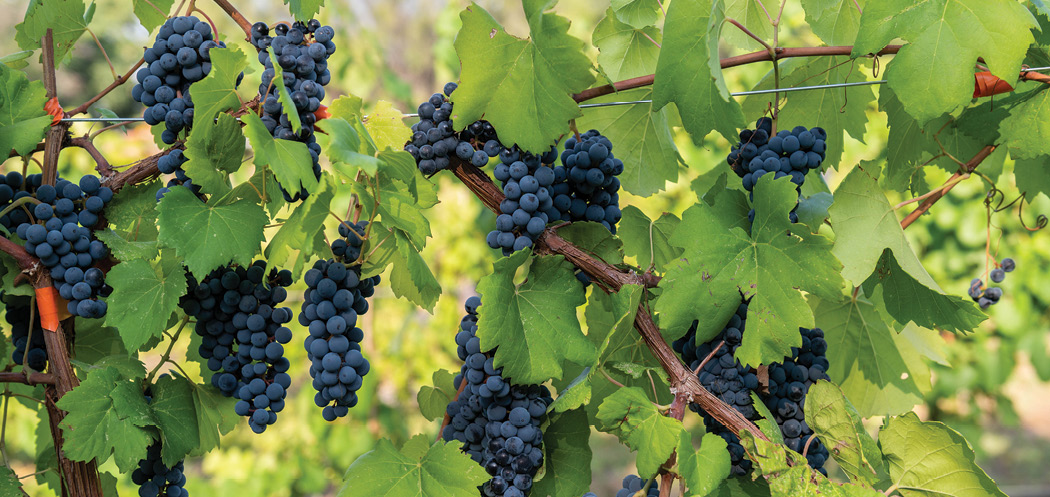
Photo by Josh Bachman. NMSU, 2021.
This article provides estimated costs to establish a wine grape vineyard in Deming, New Mexico. Establishment is assumed to occur over a three-year period. Information in the article is intended to serve as a guide only. It can be used to guide production decisions, estimate potential returns, prepare budgets, and evaluate production loans. Sample costs given for labor, materials, equipment, and contract services are based on June 2025 figures. Budget structure and cost categories are consistent with vineyard enterprise budgets from other U.S. regions1,2, while cost levels reflect current New Mexico conditions. The practices described are based on production practices considered typical for the crop and area but will not apply to every situation.
For an explanation of calculations used in the study, refer to the section titled “Assumptions”. For more information, contact Pilja Vitale, Department of Extension Economics, at 575-646-7577 or pilja@nmsu.edu. To discuss this study with a local county extension, contact your county cooperative extension office (https://extension.nmsu.edu/county.html).
Costs and Returns Study Program/Acknowledgements. The cost and returns budget was developed with input from producers within the region. The authors thank farmers, New Mexico Cooperative Extension Service personnel, and other industry representatives who provided information, assistance, and expert advice. The use of trade names and cultural practices in this report does not constitute an endorsement or recommendation by New Mexico State University, nor is any criticism implied by omission of other similar products or cultural practices.
Assumptions
The following assumptions refer to Tables 1 to 7 and pertain to sample costs to establish the vineyard and produce winegrapes in Deming, Luna County, NM. The practices described are not New Mexico State University recommendations, but represent operations and materials considered typical of a well-managed vineyard in the region. The costs, materials, and practices shown in this study are based on assumptions that do not necessarily apply to all farms. Establishment and cultural practices vary by farm, and the differences can be significant. The methodology for estimating vineyard establishment and production costs follows approaches outlined by Carpio (2006, 2007) and Carpio et al. (2008)3-5,which have been widely applied in winegrape enterprise budgeting and investment analyses across U.S. regions.
Farm. The hypothetical 50-acre vineyard farm is located on land with less than a three percent slope. The vineyard is owned and operated by the grower, who determines how land and capital costs are treated in the budget. All operations that prepare the vineyard for planting are done in the year before planting, so costs are shown for Years 0-3 and also matured costs of vineyard. This study assumes water availability from an existing well; however, water rights are not included in the cost structure. In New Mexico, growers should verify water rights and long-term availability before considering vineyard establishment.
Establishment of Cultural Practices and Material Inputs
Vineyard Conversion and Land Preparation. The grapevines are assumed to be planted in the existing vineyard, replacing varieties no longer desired. The old grapevines are removed in the fall. After the vines have been removed, soil amendments, including compost, are spread and disked into the soil. The land is then ripped in two different directions to a depth of up to 6 feet to break up hardpan, improve root penetration, water infiltration, and pull up additional roots remaining from the previous vines. The ground is then disked and rolled twice. The field is leveled with a landplane. The costs associated with vine removal, soil amendments, ripping, disking, and land leveling are included in the land preparation costs presented in Table 1.
Vines. Cabernet Sauvignon clone 8 plant stock ($3.55 each based on a local nursery) is planted on a 5-foot x 9-foot spacing at approximately 1,000 vines per acre. Vines will be trained to a bilateral cordon and spur pruned. While this study does not specify a rootstock, its selection (or use of own-rooted vines) should be considered carefully, as it influences resistance to phylloxera and tolerance to soil conditions such as salinity. Clone 8 refers to a commonly available Cabernet Sauvignon clonal selection; specific clone choice does not materially affect cost estimates. Cordons are the permanent horizontal structures trained along the fruiting wire that bear the spurs. Spurs are the bearing units on the cordon in which a desired number of buds are retained through winter pruning for next season’s growth and crop. The grapevines are assumed to produce a first harvestable crop in the third year, with yields below full production, and to increase in subsequent years, and to produce for an additional 27 years.
Planting. The field is marked and laid out in the fall or early spring. Initial planting with dormant vines occurs in early spring (February). To promote growth and protect the young vines from herbicide applications after transplanting, cardboard cartons, nursery wraps, or grow tubes are installed at planting to prevent spray contact with new green growth. These protective materials are estimated at approximately $0.50 per unit and are included in the establishment cost. In the following years, vine replacement occurs as needed; an average of eight percent (8%) or 80 vines per acre are replanted in the second year and three percent (3%) or 30 vines per acre in the third year, with replacement vines transplanted from late May through August when green vines are used. In some vineyards with early transplanting, vigorous vine growth, and proper training, a harvest of economic importance can be achieved in the second year. Some protectors may be reused for replacement vines.
Trellis System. The trellis is a single high-wire system (SHW) with a lower training wire, supported by metal posts and vineyard wire. The system uses 5-inch × 8-foot notched steel line posts spaced 15 feet apart. Training stakes (½-inch rebar, four feet in length) are installed at vine locations between the line posts to support young vines during establishment.
End posts are 3-7/8-inch × 10-foot steel tube (well casing) posts equipped with a welded spade plate at the base to improve anchoring strength.
The trellis includes a 12-gauge high fruiting (cordon) wire, a 14-gauge drip wire, and a 13-gauge lower training wire used to guide young vines to the fruiting wire. Fitting parts such as wire tensioners, end sleeves, tie clips, and gripples are used to assemble and secure the trellis structure.
The trellis is considered part of the vineyard infrastructure and is included in the establishment cost, as it will be removed along with the vines at the end of their productive life.
The drip wire and fruiting (cordon) wire are installed after planting, and the training wire may be installed during the early establishment years to assist vine development. Materials and installation costs for the single high-wire trellis system are detailed in Table 4.
Training. Training and pruning establish the vine framework, and these techniques will vary with variety and trellis system. In this study, training during the establishment years includes pruning, tying, suckering, and shoot thinning to the high fruiting wire, following the phenological stages outlined by Giese et al. (2020).6 Not all operations are done each year, nor are all the operations used for other training methods or trellis systems. Pruned wood is left between the vine rows and then mowed.
First Year. The main goal during the establishment years is to promote root development and to train a strong trunk that reaches the fruiting wire. Once a shoot reaches the wire, it may be topped just below the wire to encourage lateral growth for future cordon development. Basal and unwanted shoots are removed, and the selected shoot is typically tied to a training stake to protect it from wind and sun damage and to maintain a straight trunk. Light training may begin to guide the vine’s structure along the fruiting wire. If any fruit clusters appear, they are removed early to direct the plant’s energy toward vegetative growth. During winter pruning, one strong shoot that reaches the wire is retained to form the permanent trunk. If the establishment is incomplete, two trunks may be retained as a renewal option.
Second Year. Once the trunk reaches the high fruiting wire, two opposite shoots are selected and trained to form bilateral cordons. If the trunk has not yet reached the wire, one or two strong shoots are selected and cut back to two buds to encourage vigorous growth. Once growth resumes, the selected shoot is trained upward to the wire to complete trunk development. Suckering and removal of unwanted shoots continue, with several passes typically required during the spring and summer. Any fruit that appears is removed to allow the vine to focus on vegetative growth.
Third Year. During winter, cordons–the permanent horizontal vine arms trained along the fruiting wire–are pruned back to the appropriate length, typically in mid to late March in Deming, with some interannual variability, depending on variety. Training vines in the third year includes extending the cordons along the fruiting wire and establishing evenly spaced spur positions, 6-7 inches apart. Suckering and shoot thinning are performed in spring and summer to guide vine structure and avoid excessive canopy growth. Fruit thinning is performed only if vine growth is weak. By the end of the third year, a limited harvest is expected and is included in the budget as partial production. By this time, the permanent vine structures should be established (trunk, cordons, and spur positions). In the third year, the yield is assumed to be 3 tons per acre for the first harvest.
Irrigation. The budget assumes an average of 8 to 9 inches of rainfall, which occurs primarily during the summer monsoon. Water outside the annual rainfall is provided by groundwater pumped from a well. Because groundwater in the area may contain sediment, salts, or mineral particles, the irrigation system includes basic filtration equipment to prevent clogging of drip emitters. In addition, a well water test is conducted to evaluate water quality before the irrigation system is installed.
Irrigation costs include electricity to pressurize water through the drip system and labor associated with irrigating, such as monitoring irrigation scheduling, checking system pressure, clearing clogged emitters, repairing minor leaks, and seasonal start-up and shut-down of the drip system. During the first two years, irrigation typically begins in March and ends around October. Some growers may continue limited irrigation during winter (post leaf fall), although this practice is not included in this study due to limited supporting data. In the first year, additional irrigation is applied to ensure vine establishment and promote vegetative growth. In this study, 32 acre-inches of water are applied in the first year, 30 in the second year, and 28 in the beginning of Year 3, maintained thereafter.
Drip System. Prior to planting, mainlines and sublines (300 ft per acre) are installed in the fall to prepare for efficient water delivery. The drip line is initially laid on the soil surface. After planting, it is lifted and attached to the lower trellis wire to improve vine access. This configuration supports uniform (homogeneous) water distribution along the vine row. Pre-irrigation may be applied to soften the soil and ease hand-digging of planting holes, particularly in compacted or dry conditions. The drip irrigation system includes drip tubing, laterals (6,000 ft per acre at 8-foot spacing), valves, a two-stage filter system, a fertilizer injector, and fitting standard components for efficient water use. The cost of materials and labor for the system is included in the vineyard establishment budget. Labor tasks include laying out the line, connecting components, and attaching the drip line to the trellis. Drip tubing support hooks used to secure the drip line to the trellis wire are included in the irrigation system material costs. Detailed drip irrigation installation costs are shown in Table 3.
Chemical Injections/Acid Flush. All the fertilizer and some pesticides are injected through the drip system. The cost of the fertilizer injector and related components is included in the drip irrigation system investment cost shown in Table 4. The drip irrigation system requires chemical flushing to decelerate mineral buildup and emitter clogging. The flushing is performed after harvest with N-phuric acid applied through the drip system using an additional 0.10 acre-inches of water.
Pest Management. The pesticide materials and rates used in this study are based on common practices in arid-region vineyards and draw from both field experience and available New Mexico State University Extension resources. Although this document references some practices found in a broader IPM guide, growers in New Mexico should consult NMSU Extension publications and specialists for pest and disease management strategies that reflect local conditions and regulations.
Insects. Many insect pests can affect grapevines, so monitoring begins in the first year of vineyard establishment. In southern New Mexico, leafhoppers, mites, and the grapevine leaf skeletonizer are among the most common pests. Leafhoppers (Erythroneura elegantula and E. variabilis) can cause significant damage by feeding on leaves and reducing photosynthesis. In this study, Phosmet (Imidan) is applied beginning in early May of the second year as a preventative measure. The grapevine leaf skeletonizer (Harrisina metallica) can occasionally occur in southern New Mexico vineyards. Because outbreaks are sporadic and manageable with early detection and cultural practices, no control costs are included in this budget. Growers should monitor for larvae in late spring and apply Bacillus thuringiensis (Bt) or spinosad products if defoliation exceeds economic thresholds.
Diseases. Several pathogens attack grapevines, but the major disease assumed is powdery mildew (Uncinula necator).7 Powdery mildew control begins in April of the third year, but timing depends upon the disease pressure, which can vary from year to year. Micronized wettable sulfur is applied every 10 to 14 days from the onset of shoot development through the fruit set and early berry development stage. Eutypa-dieback-sensitive varieties, such as Cabernet Sauvignon, benefit from fungicide Myclobutanil (Rally®) applied immediately after pruning dormant canes, beginning in the third year.
The vineyard must be scouted for viruses in the fall. The actual cost for virus testing will vary depending on the percentage of infected plants. Virus testing can cost $35 per sample. Virus testing costs are not included in this study. The virus detection program begins the first year. Virus-infected vines cannot be cured; the only long-term management practice is rogueing and replanting. This is not included in the study, as the analysis assumes the use of clean plant material from the nursery.
Vineyard Floor Management/Weeds. Weed control in the vine rows is managed through a combination of herbicide strip sprays, mechanical cultivation, and hand weeding during the establishment period. Pre-emergence and post-emergence herbicides are applied as strip sprays along the vine rows in both winter and summer to reduce weed competition. The herbicides used include Goal 2XL, Prowl H2O, and Roundup PowerMax. During the first two years of vineyard establishment, additional weed control is required because young vines are sensitive to weed competition. Hand weeding around the vines and mechanical cultivation with a disc are performed several times during the growing season. In the third year, as vines become more established, weed control continues with winter and summer strip sprays along the vine rows and periodic mechanical cultivation between rows.
Vertebrates. Gophers, squirrels, and birds are the major pest problems. Infestation varies between vineyard blocks. Areas with heavy gopher pressure may have replant rates as high as 15% annually. To prevent or minimize bird damage, netting should be installed soon after veraison (the onset of grape ripening). No additional vertebrate control costs are included in this study.
Fertilization. Fertilization begins in the second year using liquid nutrients applied through the drip system. In this study, 10-34-0 is applied in March, followed by UAN-32 in May to supply nitrogen and phosphorus for vine growth and canopy development. These application timings generally correspond to key phenological stages in southern New Mexico, including shoots with five leaves separated (March) and fruit set (May), although timing may vary across years and regions. Fertilization is timed to align with vine nutrient demand during critical growth stages such as early shoot development, bloom, and fruit set. In the third year, fertilizer applications include 10-34-0 in March and UAN-32 from April through June.
Unless a nutritional deficiency is observed, the total nitrogen rate is adjusted to approximately 35-40 lbs N per acre, equivalent to about five (5) gallons of 10-34-0 and 10 gallons of UAN-32 applied through fertigation. This provides balanced early-season nutrition while avoiding excessive vigor. Rates and timing should be refined according to soil type, water quality, and petiole or soil test results.
Harvesting. Harvesting starts in the third year. In this study, the crop is machine harvested by a custom operator. Hauling to the winery is contracted, and the grower pays both the harvest and hauling costs. The yield assumes 3 tons per acre. Establishment costs are summarized in Table 1, with detailed operations shown in Tables 2-1 through 2-3
Production Cultural Practices and Material Inputs
This section describes annual cultural practices and material inputs required during full production, beginning in Year 4; whereas the previous section focuses on activities and costs associated with vineyard establishment and vine training during the non-bearing and early bearing years (Years 0–3). Annual cultural practices and operating costs during full production are summarized in Table 5
Pruning. Pre-pruning is performed mechanically during the winter months (January), followed by final hand pruning in early February to adjust spur positions and regulate shoot number and vine vigor. Proper irrigation management helps control canopy growth and maintain balanced vine development. Because the single high wire canopy system allows for natural shoot spreading sprawling and good air circulation, summer hedging operations are generally not required and therefore are not included in this study. Pruning wood is left in the vineyard inter-row and later incorporated into the soil through mowing. Pruning costs are calculated using an hourly labor rate, although in practice some vineyards in the region may perform pruning on a piecework basis.
Vine Canopy Management. Canopy management begins with trunk and cordon suckering and shoot thinning in late April to remove shoots arising from non-count buds and to reduce canopy density. A second pass may be made in early summer if needed to maintain balanced vine growth. In the Single High Wire (New Mexico Sprawl) system, shoots grow downward naturally from the cordon. Shoot thinning removes weak or poorly positioned shoots that lack vigor or that originate from non-fruiting buds.
Fertilization. Fertilizers are applied through the drip irrigation system during the growing season. Nitrogen fertilizer (ammonium sulfate) is applied in early spring (March) to support early shoot growth. In southern New Mexico, soil phosphorus and potassium levels are often sufficient; therefore, applications of these nutrients are typically made only when tissue testing indicates a deficiency. October, N-phuric acid is injected through the irrigation system to clean the drip lines. Unless a nutritional deficiency is identified, the total annual nitrogen application rate is approximately 30-40 lbs per acre. If tissue tests indicate nutritional deficiencies, foliar spray applications at the adequate phenological stage based on the results will be applied to ensure uptake and response.
Sampling. Petiole samples are collected during the growing season to monitor macro- and micronutrient levels, particularly phosphorus, iron, molybdenum, zinc, manganese, copper, and boron, because of their reduced availability in high soil pH vineyards and their key role in vine growth and reproductive success. Following University of California Cooperative Extension guidelines8, one composite sample can represent approximately five acres. For budgeting purposes, this study assumes two diagnostic petiole sampling events per year during full production, typically at bloom and mid-season, using one composite sample per five acres. The budget includes only the cost of laboratory leaf tissue analysis and minimal labor for sample collection. Additional nutrient spray programs or soil amendments are excluded because these practices are site-specific and depend on actual deficiency results.
Irrigation. Irrigation is provided through a well-based drip system, which is common practice in the Deming area of Luna County. In mature vineyards, irrigation typically begins in March and continues through October, depending on seasonal weather conditions. Approximately 28-32 acre-inches of water per acre are applied annually through drip irrigation to meet vine water requirements under arid southern New Mexico conditions. This range is also used to guide irrigation during vineyard establishment, with higher amounts applied in the early years to support vine development. This irrigation level is consistent with recommendations reported by Herrera (2000) and NMSU Cooperative Extension guidance.9
Pest Management. The pesticide materials and application rates used in this study are based on common practices in arid-region vineyards and draw from both field experience and available New Mexico State University Cooperative Extension resources. While some practices referenced in this study are consistent with broader vineyard IPM guides, growers in New Mexico should consult NMSU Extension publications and specialists for pest and disease management strategies that reflect local environmental conditions and regulatory requirements.
Application Methods. Pesticide and fertilizer applications are made by either chemigation (pesticides and/or fertilizers applied through the irrigation water), by a tractor-mounted ground sprayer, or by airblast sprayers for foliar applications. Insecticides and fungicides can be tank-mixed and applied in a single pass when the label is approved. Always refer to individual pesticide labels for compatibility, mixing requirements, and usage. Some pesticides are applied to a portion of the acreage. See tables 6 & 8 for a list of chemicals used for the applications.
Weeds. Herbicide choice is a function of weed pressure, which may change over time. In this vineyard, weeds in the vine row are controlled using a strip spray of Prowl H2O, Goal, and Roundup applied in January. Rely herbicide is used later in the season for summer weed control in the vine row. Volunteer cover crops and weeds in the row middles are controlled by mowing or discing twice per year. Occasional hand weeding or miscellaneous labor may also be required to control weeds that escape chemical or mechanical treatments.
Insects. Platinum is applied in June (combined with a mildew spray) to control leafhoppers. Occasional leaf skeletonizers may also occur.
Diseases. Many diseases attack grapevines, but the primary disease considered in this study is powdery mildew (Uncinula necator). Powdery mildew management begins with a dusting sulfur application in mid-April. Additional fungicide applications follow using materials with different modes of action to reduce resistance risk. Rally (a sterol inhibitor fungicide) is applied in May, and Flint (a strobilurin fungicide) is applied in July. Both applications may be combined with the insecticide Platinum to control leafhoppers.10
Harvest, Yields, and Revenue
Harvest. The crop is machine harvested by a custom operator and a cost of $250 per acre. Local hauling to the winery/crusher is an additional $18.00 per ton. Additional charges will apply to hauls considered to be out of the local area. This budget assumes hauling within the local area and does not include additional long-distance hauling charges.
Yields. Yield maturity is reached in the fifth or sixth year; however, this study presents a representative full-production budget rather than a multi-year projection. Average yield is assumed to be 5.5 tons per acre, based on grower information indicating that well-managed single high-wire vineyards in southern New Mexico typically produce 5–6 tons per acre. Average yields were compared with USDA National Agricultural Statistics Service data for New Mexico and neighboring states.11 Because vineyards in southern New Mexico commonly include a mix of red and white wine grape varieties, price assumptions reflect this mixture. White varieties are assumed to receive $1,000–$1,400 per ton, while red varieties typically receive $2,000–$2,500 per ton, depending on quality and market conditions.
Revenue. Return prices per ton for winegrapes vary and are determined by quality and markets. Historical price series are not available for this study; therefore, a representative price of $1,600 per ton is used to estimate returns. This price reflects a mixture of red and white wine grape varieties commonly grown in southern New Mexico. Market price assumptions were informed by data from the USDA Economic Research Service12 and regional winery contract information. Estimated returns and profitability measures are summarized in Tables 6 and 7.
Marketing. Most growers sell grapes under contract to established wineries or through custom crush facilities. The costs associated with marketing winegrapes have not been included in this study.
Risk. The risks associated with wine grape production should not be underestimated. While this study makes every effort to model a production system based on typical, real-world practices, it cannot fully represent financial, agronomic, and market risks, which affect the profitability and economic viability of agricultural production. Because of many potential risk factors, effective risk management must combine specific tactics in a detailed manner, in various combinations for a sustainable operation. Any returns above total costs are considered returns on risk and investment to management (or owners).
Labor, Equipment, and Interest
Labor. Vineyard labor is performed by full-time employees who carry out both machinery operation and general field labor activities. Based on information provided by local vineyard managers, hourly wages for full-time employees range from $12 to $14 per hour depending on experience and responsibilities. A representative wage rate of $13.00 per hour is used in this study. A 38% payroll overhead is added to account for benefits, insurance, and other employer costs.11 Thus, the total labor cost is $17.94 per hour ($13.00 + $4.94).
Labor for operations involving machinery is assumed to be 10% greater than the machine operation time shown in Table 1 to account for equipment set-up, moving between fields, maintenance, work breaks, and minor repairs. For example, 1.5 hours of machine operation requires 1.65 hours of labor time.
Wages for management are not included as cash costs. Any returns above total costs are considered as returns to management and risk. However, growers wanting to account for management may wish to include a management fee. The manager makes all production decisions, including cultural practices, pest management strategies, and labor supervision.
Pickup. The study assumes the pickup is for general farm use, such as moving laborers, picking up supplies and parts, monitoring the vineyard, and checking the irrigation system. Travel time associated with these activities was estimated by the authors.
Equipment Operating Costs. The operating costs of equipment use consist of repairs, fuel, and lubrication. Repair costs are estimated based on purchase price, annual hours of use, total lifetime hours, and repair coefficients provided by the American Society of Agricultural Engineers (ASAE). Fuel and lubrication costs are calculated using ASAE equations based on maximum PTO horsepower and fuel type. Prices for on-farm diesel and gasoline are assumed to be $3.25 and $2.75 per gallon, respectively. Fuel price assumptions were based on U.S. Energy Information Administration (2025) regional averages.13
The fuel, lubrication, and repair cost per acre for each operation is calculated by multiplying the total hourly operating cost shown in Table 6 for each piece of equipment by the hours required per acre for that operation. Tractor time is assumed to be 10% greater than implement time to account for equipment setup, travel, and operational delays.
Interest In Operating Capital. Interest in operating capital is based on cash operating costs and is calculated monthly until harvest at a nominal interest rate of 8.75% per year. A nominal interest rate is the typical market cost of borrowed funds.
Risk. Production risks should not be minimized. While this study makes every effort to model a production system based on typical, real-world practices, it cannot fully represent financial, agronomic, and market risks affecting winegrape production’s profitability and economic viability.
Cash Overhead Costs
Cash overhead consists of various cash expenses paid out during the year that are assigned to the whole farm and not to a particular operation. These costs can include property taxes, office expenses, liability and property insurance, sanitation services, equipment repairs, and management.
Property Taxes. In Luna County (where winegrape vineyard is located), the average per-acre value of tillable farmland in 2025 assumed to be $1,001 based on Luna County appraised price. Taxable value of property is calculated using the following formula:
Taxable Value = (Per Acre Value of Tillable Farmland / 3) X Non-Residential County Tax Rate
In this context, the county tax rate is set at 2.2465% of the property’s value. The property tax was about $7.50 per acre.
Insurance. Insurance for farm investments varies depending on the assets included and the amount of coverage. A standard farm liability insurance policy will help cover the expenses for which the grower becomes legally obligated to pay for bodily injury claims on their property and damage to another person’s property as a result of a covered accident. Common liability expenses covered under their policy include attorney fees and court costs, medical expenses for people injured on their property, and injury or damage to another’s property. In this study, liability insurance costs $80 for the entire farm or $16 per acre.
Crop Insurance. Federally supported crop insurance is available to wine grape growers in New Mexico for unavoidable losses in yield, damage, or quality resulting from adverse weather conditions such as frost, freeze, hail, excessive heat, drought, rain, wind, or fire. Some policies may also cover wildlife damage, including birds, depending on the insurance provider. Coverage levels typically range from 50 to 85 percent of the grower’s approved average yield, based on verifiable production history. Insurance coverage is by unit, not by acre. While crop insurance is available, not all growers in the Deming region purchase it. The cost of crop insurance is not included in this study.
Office Expense. Office and business expenses are estimated at $156 per acre. These expenses include office supplies, telephones, bookkeeping, accounting, shop and office utilities, and miscellaneous administrative charges.
Sanitation. An annual sanitation fee of $40 per acre is included to represent miscellaneous environmental compliance and waste management costs associated with vineyard operations. These costs may include disposal of pesticide containers, recycling programs for agricultural chemical containers, handling of used oil and filters from farm equipment, and other minor regulatory or environmental service fees. Although vineyards are open-field operations, growers may incur these costs through participation in agricultural waste management and recycling programs required for safe handling of farm inputs.
Investment Repairs. Annual maintenance is calculated as two percent (2%) of the purchase price, except on vineyard establishment, which is one-half of one percent (0.5%) to cover costs for vine replacement and trellis repairs.
Non-Cash Overhead/Interest. Non-cash overhead costs, shown on an annual per-acre basis, are calculated as the capital recovery cost for equipment and other farm investments.
Capital Recovery Costs. Capital recovery cost is the annual depreciation and interest costs for a capital investment. It is the amount of money required each year to recover the difference between the purchase price and salvage value (unrecovered capital). It is equivalent to the annual payment on a loan for the investment with the down payment equal to the discounted salvage value. This is a more complex method of calculating ownership costs than straight-line depreciation and opportunity costs, but it more accurately represents the annual costs of ownership because it takes the time value of money into account.14,15
The formula for the calculation of the annual capital recovery costs is:
Capital recovery costs = ((Purchase Price – Salvage Value) X (Capital Recovery Factor)) + (Salvage Value x Interest Rate).
Salvage Value. Salvage value is an estimate of the remaining value of an investment at the end of its useful life. For farm machinery (tractors and implements), the remaining value is a percentage of the new cost of the investment.14 The percent remaining value is calculated from equations developed by the American Society of Agricultural and Biological Engineers (ASABE) based on equipment type and years of life. Life in years is estimated by dividing the wear-out life, as given by ASABE, by the annual hours of use in the operation. For other investments, including irrigation systems, buildings, and miscellaneous equipment, the value at the end of their useful life is zero. The salvage value for land is the purchase price because land does not depreciate. The purchase price and salvage value for equipment and investments are shown in Table 6.
Capital Recovery Factor. The capital recovery factor (CRF) is used to calculate the annual cost of owning capital assets such as machinery, equipment, buildings, and irrigation systems. It represents the annual payment required to recover the initial investment over the useful life of the asset, accounting for the time value of money. The capital recovery calculation depends on the interest rate and the expected lifespan of the asset.
Interest Rate. An interest rate of 3% is used to calculate capital recovery in this study. The interest rate represents the opportunity cost of invested capital and reflects typical long-term borrowing conditions faced by agricultural producers. Actual borrowing rates may vary depending on loan terms and lender requirements. The capital recovery calculation incorporates this interest rate together with the useful life of each asset to estimate the annual ownership cost.
Establishment Cost. Costs to establish the vineyard are used to determine capital recovery expenses, depreciation, and interest on investment for the production years. Establishment cost is the sum of the costs for land preparation, trellis system, drip system, planting, vines, cash overhead, and production expenses for growing the vines through the first year that grapes are harvested, minus any returns from production. The Total Accumulated Net Cash Cost in Table 1, in the third year, represents the establishment cost. For this study, the cost is $20,404 per acre or $1,020,200 for the 50-acre vineyard. The establishment cost is amortized over the remaining 27 years of the vineyard’s projected 30-year lifespan. Annual vineyard maintenance (vines and trellis) is calculated at one-half percent (0.5%) of the establishment costs.
Irrigation System. Single-line drip system with a pump for system pressurization, a filter, and an injection system. The irrigation system is included in the vineyard establishment cost.
Land. Land value is not included in this analysis. The budget assumes land is already owned and available for vineyard production.
Building. The shop building(s) consists of 2,400 square feet of metal building on a cement slab.
Tools. This includes shop tools, hand tools, and miscellaneous field tools such as pruning tools.
Fuel Tanks. Two 500-gallon fuel tanks using gravity feed are on metal stands. The tanks are set up in a cement containment pad that meets federal, state, and county regulations and Luna County regulations.
Equipment Costs. Farm equipment is purchased new or used, but the study shows the current purchase price for new equipment. The new purchase price is adjusted to 60 percent to indicate a mix of new and used equipment. Annual ownership costs for equipment and other investments are in the Whole Farm Equipment, Investment and Business Overhead Tables. Equipment costs are composed of three parts: non-cash overhead, cash overhead, and operating costs. Both overhead factors have been discussed in previous sections, except taxes. In New Mexico, equipment taxes are calculated as:
Equipment Tax = (new value of equipment / 2) X 1/3 X non-residential county tax rate
The equation has been used in New Mexico State University’s Cost and Return Estimates (CARE) for farms and ranches, 2013-2024. That reflects the unique situation of the New Mexico equipment tax. The tax rates of other investment facilities are assumed to be 1% of their value.
Table Values. Due to rounding, the totals may be slightly different from the sum of the components.
Comparison with California Vineyard Systems. Although direct comparisons are limited by differences in study years, inflation, and varietal focus, a comparable California Cabernet Sauvignon production system using a High Cordon Mechanical Pruning (HCMP) single-wire trellis system in the San Joaquin Valley North region reported annual operating costs of approximately $2,216 per acre, or about $222 per ton at yields near 10 tons per acre, compared with approximately $1,529 per acre, or about $278 per ton, in this Deming, New Mexico mixed-variety single high-wire vineyard system producing 5.5 tons per acre.
References
- Davis, T. J., Gomez, M. I., Moss, R., & Walter-Peterson, H. (2019). Cost of establishment and production of V. Vinifera Grapes in the Finger Lakes Region of New York. Charles H. Dyson School of Applied Economics and Management, College of Agriculture and Life Sciences, Cornell University, p.p. 14853-7801. https://dyson.cornell.edu/wp-content/uploads/sites/5/2020/02/COST-OF-ESTABLISHMENT-AND-PRODUCTION-OF-V.-VINIFERA-GRAPES-IN-THE-FINGER-LAKES-REGION-OF-NEW-YORK-2019-VD.pdf
- Murdock, J., Goodrich, B., & Sumner, D. A. (2021). Sample Costs to Establish a Vineyard and Produce Wine grapes, Cabernet Sauvignon, San Joaquin Valley North-San Joaquin and Sacramento Counties Crush District 11: High Cordon Mechanical Pruning (HCMP)– Single Wire Trellis. University of California, Cooperative Extension. Agricultural Issues Center. Department of Agricultural and Resource Economics. https://coststudies.ucdavis.edu/en/
- Carpio, E. C. (2006). Cost and investment analysis of Chardonnay (Vitis Vinifera) Winegrapes. In B.E. Poling and S. Spayd (Eds.) North Carolina: The North Carolina Winegrape Grower’s Guide. https://content.ces.ncsu.edu/north-carolina-winegrape-growers-guide
- Carpio, E. C. (2007). Vineyard Site Selection. In B.E. Poling (Ed.) The North Carolina Winegrape Grower’s Guide. https://content.ces.ncsu.edu/north-carolina-winegrape-growers-guide
- Carpio, C. E., Safley, C. D., & Poling, E. B. (2008). Estimated Costs and Investment Analysis of Producing and Harvesting Muscadine Grapes in the Southeastern United States. HortTechnology, 18(2), 308-317.
- Giese, G., Velasco-Cruz, C., & Leonardelli, M. (2020). Grapevine phenology: Annual growth and development [Guide H-338]. New Mexico State University Cooperative Extension Service. https://pubs.nmsu.edu/_h/H338/index.html
- Giese, G., & Lujan, P. (2022). Grape Powdery Mildew [Guide H-329]. New Mexico State University, College of Agricultural, Consumer and Environmental Science Cooperative Extension Service. https://pubs.nmsu.edu/_h/H329.pdf
- Bettiga, L.J. (2013). Grape Pest Management [Publication 3343]. University of California Division of Agriculture and Natural Resources (DANR).
- Herrera, E. (2000). Growing Grapes in New Mexico [Circular 483]. New Mexico State University Cooperative Extension Service. https://pubs.nmsu.edu/_circulars/CR483/index.html?utm_source=chatgpt.com
- Kersten, M. L., & Giese, G. (2022). Grape Integrated Pest Management (IPM) in New Mexico [Circular 705]. New Mexico State University Cooperative Extension Service. https://pubs.nmsu.edu/_circulars/CR705/index.html
- United States Department of Agriculture (USDA) National Agricultural Statistics Service. (2025). https://www.nass.usda.gov/Quick_Stats/
- USDA Economic Research Service (ERS). https://ers.usda.gov/Data/
- United States Energy Information Administration (EIA). (2025). Gasoline and Diesel Fuel Update. https://www.eia.gov/petroleum/gasdiesel/gas_geographies.php#pricesbyregion
- Boehlje, M., & Eidman, V.R. (1984). Farm Management. John Wiley and Sons. New York, New York
- American Society of Agricultural and Biological Engineers (ASABE). (2015). ASABE Standards 2015: The Society for Engineering in Agricultural, Food, and Biological Systems. https://elibrary.asabe.org/standards.asp?utm_source=chatgpt.com
Appendix
Table 1
|
Table 1. Sample Costs per Acre to Establish a Vineyard |
||||
|
Deming, Luna – 2025 |
||||
|
Wine Grape price per Ton = $1,600 |
Cost Per Acre |
|||
|
Year: |
Year 0 |
Year 1 |
Year 2 |
Year 3 |
|
Tons Per Acre: |
3.0 |
|||
|
Soil Sampling |
4 |
|||
|
Compost Applying |
380 |
|||
|
Rip/slip plow 2X |
180 |
|||
|
Disc 2X and Land Leveling |
160 |
|||
|
Weeds: Winter Pre-plant Strip Spray |
39 |
|||
|
Fumigation (Metam Sodium- assume using chile land) |
375 |
|||
|
Truck Use |
5 |
|||
|
TOTAL PRE-PLANTING COSTS |
1,143 |
|||
|
Planting Costs: |
||||
|
Mark & Layout Vineyard (Year1) |
270 |
|||
|
Planting (Yrs. 1-3) |
815 |
115 |
43 |
|
|
Vines: 1000 Per Acre (8% Replant in 2nd Yr., 3% in 3rd Yr.) |
2,500 |
200 |
75 |
|
|
Vine protector (cardboards) |
500 |
|||
|
Trellis Install (materials & labor) (Year1) |
6,655 |
|||
|
Drip Irrigation Install (materials & labor) (Year1) |
4,120 |
|||
|
TOTAL PLANTING COSTS |
14,860 |
315 |
118 |
|
|
Cultural Costs: |
||||
|
Pruning: Prune Vines by Hand (Yrs 2-3) |
- |
204 |
562 |
|
|
Irrigation: Pumped Water & Labor (Yr 1. 7X; Yr 2 7X; Yr 3 6X) |
152 |
188 |
183 |
|
|
Irrigation Well Test (Yrs 1, 3) |
75 |
- |
75 |
|
|
Irrigation: Drip System Acid Flush (Yr. 3) |
- |
- |
6 |
|
|
Fertilizer: 10-34-0, UAN -32) (Yrs. 2-3) |
- |
37 |
99 |
|
|
Fertilizer: Zinc Sulfate (Yr. 3) |
- |
- |
17 |
|
|
Training/Suckering (Yrs.1-3) |
460 |
593 |
119 |
|
|
Tie & Wrap (Year 2) |
- |
142 |
- |
|
|
Suckering (2 passes in Years 2 and 3) |
- |
843 |
306 |
|
|
Shoot Thinning 2X (Year 2-3) |
- |
511 |
204 |
|
|
Weeds: Hand Weed/Misc. Labor (Yrs 1-3) |
83 |
83 |
- |
|
|
Weeds: Winter Strip Spray (Yrs 0-2, Prowl, Goal, Roundup) |
90 |
90 |
90 |
|
|
Weeds: Summer Strip Spray (Rely) (Yr. 2-3) |
34 |
33 |
||
|
Weeds Middle: Disc 3X (Yes 1-3) |
39 |
42 |
42 |
|
|
Insects: Leafhoppers (Platinum) (Year 1: mealy bug, Year 2) |
40 |
123 |
- |
|
|
Disease: Mildew 3X (Dusting Sulfur) (Year 3) |
- |
- |
134 |
|
|
Cluster Thinning (Yrs 1-3); |
24 |
59 |
47 |
|
|
Pick Up Truck Use (Yrs 0-3) |
5 |
42 |
42 |
42 |
|
TOTAL CULTURAL COSTS |
5 |
1,005 |
2,991 |
1,959 |
|
Harvest Costs: |
||||
|
Mechanical Harvest Fruit |
250 |
|||
|
Haul Fruit to Crusher |
54 |
|||
|
TOTAL HARVEST COSTS |
304 |
|||
|
Interest On Operating Capital @ 8.75% |
100 |
1,388 |
289 |
182 |
|
TOTAL OPERATING COSTS/ACRE |
1,243 |
17,253 |
3,594 |
2,259 |
|
Table 1. Sample Costs per Acre to Establish a Vineyard |
||||
|
Deming, Luna County, 2025 |
||||
|
Wine Grape price per Ton = $1,600 |
Cost Per Acre |
|||
|
Year: |
Year 0 |
Year 1 |
Year 2 |
Year 3 |
|
Cash Overhead Costs: |
||||
|
Office Expense |
156 |
156 |
156 |
|
|
Liability Insurance |
16 |
16 |
16 |
|
|
Sanitation Fees |
40 |
40 |
40 |
|
|
Property Taxes |
8 |
8 |
8 |
|
|
Investment Repairs |
65 |
65 |
65 |
|
|
TOTAL CASH OVERHEAD COSTS |
285 |
285 |
285 |
|
|
TOTAL CASH COSTS/ACRE |
1,243 |
17,538 |
3,879 |
2,544 |
|
INCOME/ACRE FROM PRODUCTION |
4,800 |
|||
|
NET CASH COSTS/ACRE FOR THE YEAR |
1,243 |
17,538 |
3,879 |
-2,256 |
|
PROFIT/ACRE ABOVE CASH COSTS |
||||
|
ACCUMULATED NET CASH COSTS/ACRE |
1,243 |
18,781 |
22,660 |
20,404 |
|
Non-Cash Overhead (Capital Recovery): |
||||
|
Building- 2400 sq. ft. |
26 |
26 |
26 |
|
|
Fuel Tanks- 2, 500 gallon |
5 |
5 |
5 |
|
|
Shop/Field Tools |
13 |
13 |
13 |
|
|
Well/pumps/filters |
138 |
138 |
138 |
|
|
Equipment |
56 |
62 |
62 |
|
|
TOTAL INTEREST ON INVESTMENT |
238 |
244 |
244 |
|
|
TOTAL COST/ACRE FOR THE YEAR |
1,243 |
17,776 |
4,123 |
2,788 |
|
INCOME/ACRE FROM PRODUCTION |
4,800 |
|||
|
TOTAL NET COST/ACRE FOR THE YEAR |
1,243 |
17,776 |
4,123 |
-2,012 |
|
NET PROFIT/ACRE ABOVE TOTAL COST |
||||
|
TOTAL ACCUMULATED NET COST/ACRE |
1,243 |
19,019 |
23,142 |
21,130 |
Table 2-1
|
Table 2-1. Establishment Operations with Equipment and Material Inputs (Year 0, 1) |
||||||
|---|---|---|---|---|---|---|
|
DEMING, LUNA COUNTY, 2025 |
||||||
|
Operation |
Operation Month |
Tractor |
Implement |
Labor Type/ Material |
Rate/ acre |
Cost |
|
Site Preparation – Year 0 |
||||||
|
Soil samplings |
Sep. |
Soil sampling materials |
$4 |
|||
|
Compost applying |
Oct. |
Customs |
$380 |
|||
|
Rip/slip plow 2X |
Nov. |
Customs |
$180 |
|||
|
Disc 2X and land leveling |
Dec. |
Customs |
$160 |
|||
|
Weeds -winter strip spray |
30HP 4WD |
Weed sprayer |
Equipment hour |
0.52 hour |
$39 |
|
|
Goal 2XL |
2.4 pint |
- |
||||
|
Prowl H2O |
3.84 pint |
- |
||||
|
Fumigation |
Oct. |
Customs (based on soil test) |
Assumed previously Chile planted |
$375 |
||
|
Pickup truck |
Year around |
$5 |
||||
|
Total |
$1,143 |
|||||
|
Year 1 |
||||||
|
Mark & layout vineyard |
Customs |
$270 |
||||
|
Planting (1,000 vines, 5’X9’) |
Feb. |
Customs |
$3,315 |
|||
|
Vine Protector(cardboards) |
Feb |
1,000 units |
$0.5 |
$500 |
||
|
Installing trellis and post materials |
Jan |
$6,155 |
||||
|
Installing trellis labor |
Mar.-Apr. |
Customs |
25 hours |
$500 |
||
|
Installing drip irrigation |
$3,820 |
|||||
|
Drip irrigation labor |
$300 |
|||||
|
Cultural: |
||||||
|
Irrigation (32 acre-inches) |
Mar. |
Pumping-well |
Irrigation labor |
0.4 hours |
$10 |
|
|
Water Pumped |
Water Pumped |
2.0 acre-inches |
$2 |
|||
|
Apr. |
Pumping-well |
Irrigation labor |
0.6 hour |
$14 |
||
|
Water Pumped |
2.5 acre-inches |
$3 |
||||
|
May |
Pumping-well |
Irrigation labor |
0.7 hour |
$16 |
||
|
Water Pumped |
5.0 acre-inches |
$5 |
||||
|
Jun. |
Pumping-well |
Irrigation labor |
0.9 hour |
$20 |
||
|
Water Pumped |
6.5 acre-inches |
$6 |
||||
|
Jul. |
Pumping-well |
Irrigation labor |
1 hour |
$22 |
||
|
Water Pumped |
8.0 acre-inches |
$8 |
||||
|
Aug. |
Pumping-well |
Irrigation labor |
0.8 hour |
$17 |
||
|
Water Pumped |
5.5 acre-inches |
$6 |
||||
|
Sep. |
Pumping-well |
Irrigation labor |
0.6 hour |
$12 |
||
|
Water Pumped |
2.0 acre-inches |
$2 |
||||
|
Oct |
Pumping-well |
Irrigation labor |
$8 |
|||
|
Water Pumped |
0.5 acre-inches |
$1 |
||||
|
Irrigation well test |
Customs |
$75 |
||||
|
Insects-mealybug & leafhopper |
Aug. |
Customs |
$40 |
|||
|
Weeds-winter strip spray |
30HP 4WD |
weed sprayer |
Equipment hours |
0.52 hours |
$90 |
|
|
Goal 2XL |
2.4 pint |
- |
||||
|
Prowl H2O |
3.84 pint |
- |
||||
|
Roundup Power Max |
1.2 pint |
- |
||||
|
Weeds- hand weeding |
3.5 hour |
$83 |
||||
|
Weeds – disc 3X |
Mar. |
90 HP 4WD |
Disc -Tandem 8’ |
Operator labor |
0.25 hour |
$39 |
|
Apr. |
90 HP 4WD |
Disc -Tandem 8’ |
Operator labor |
0.25 hour |
- |
|
|
May. |
90 HP 4WD |
Disc -Tandem 8’ |
Operator labor |
0.25 hour |
- |
|
|
Train (initial tie, suckering, shoot selection) |
18 hours |
$460 |
||||
|
Cluster thinning (remove the first-year fruit) |
Jun. |
1 hour |
$24 |
|||
|
Pickup Truck Use |
1 hour |
$42 |
||||
|
Total (Year 1) |
$15,865 |
|||||
Table 2-2
|
Table 2-2. Establishment Operations with Equipment and Material Inputs (Year 2) |
||||||
|---|---|---|---|---|---|---|
|
Deming, Luna County, 2025 |
||||||
|
Operation |
Operation Month |
Tractor |
Implement |
Labor Type/ |
Rate/ acre |
Cost |
|
Year 2 |
||||||
|
Replanting (8% of vines) |
Feb. – Mar. |
Skilled |
4.5 hours |
$315 |
||
|
Prune – by hand |
Skilled |
8 hours |
$204 |
|||
|
Fertilizer |
Pumping-Well. |
Irrigation labor |
Unskilled |
0.5hours |
$12 |
|
|
Mar. |
10-34-0 |
4 gallons |
$15 |
|||
|
May |
UAN -32 |
4.5 gallons (15 N lbs.) |
$10 |
|||
|
Irrigation (30 acre-inches) |
Mar. |
Pumping -well |
Irrigation labor |
0.5 hour |
$17 |
|
|
3 |
Water Pumped |
1.7 acre-inches |
$2 |
|||
|
Apr. |
Pumping -well |
Irrigation labor |
0.55 hour |
$18 |
||
|
Water Pumped |
2.5 acre-inches |
$3 |
||||
|
May |
Pumping -well |
Irrigation labor |
0.8 hour |
$25 |
||
|
1 |
Water Pumped |
5.0 acre-inches |
$5 |
|||
|
Jun. |
Pumping -well |
Irrigation labor |
0.85 hour |
$25 |
||
|
Water Pumped |
6.5 acre-inches |
$6 |
||||
|
Jul. |
Pumping -well |
Irrigation labor |
0.95 hour |
$28 |
||
|
Water Pumped |
7.5 acre-inches |
$8 |
||||
|
Aug. |
Pumping -well |
Irrigation labor |
0.8 hour |
$24 |
||
|
Water Pumped |
4.5 acre-inches |
$5 |
||||
|
Sep. |
Pumping -well |
Irrigation labor |
0.3 hour |
$10 |
||
|
Water Pumped |
1.5 acre-inches |
$2 |
||||
|
Oct. |
Pumping -well |
Irrigation labor |
0.25 hour |
$9 |
||
|
Water Pumped |
1.0 acre-inches |
$1 |
||||
|
Trunk training & tying |
Tie |
25 hours |
$593 |
|||
|
Wrap |
6 hours |
$142 |
||||
|
Suckering (2 passes) |
Jul. – Aug. |
Remove/basal |
Skilled |
33 hours |
$843 |
|
|
Shoot thinning (2 passes) |
Skilled |
20 hours |
$511 |
|||
|
Cluster thinning |
Jun. |
Skilled |
2.5 hour |
$59 |
||
|
Weeds-winter strip spray |
Feb. |
30 HP 4WD |
Weed Sprayer |
Skilled |
0.52 hour |
$90 |
|
Goal 2 XL |
- |
|||||
|
Prowl H2O |
- |
|||||
|
Roundup Power Max |
- |
|||||
|
Weeds – hand weeds |
3.5 hours |
$83 |
||||
|
Weeds -disc (3 times) |
Apr. |
90 HP 4WD |
Discs -Tandem 8’ |
Equipment Operator Labor |
0.27 hour |
$42 |
|
Jun. |
90 HP 4WD |
Discs -Tandem 8’ |
Equipment Operator Labor |
0.27 hour |
- |
|
|
Aug. |
90 HP 4WD |
Discs -Tandem 8’ |
Equipment Operator Labor |
0.27 hour |
- |
|
|
Weed-Summer Strip Spray |
Jun. |
30 HP 4WD |
Weed Sprayer |
Skilled |
0.52 hour |
$27 |
|
Roundup Power Max |
1.2 pint |
$6 |
||||
|
Insects- Leafhoppers |
May |
90 HP 4WD |
AirBlast |
Equipment Operator Labor |
0.94 hour |
$48 |
|
Imidan 70-w |
3 lbs. |
$75 |
||||
|
Pick-up Truck Use |
1 hour |
$42 |
||||
|
Total (Year 2) |
$3,305 |
|||||
Table 2-3
|
Table 2-3. Establishment Operations with Equipment and Material Inputs (Year 3) |
||||||
|---|---|---|---|---|---|---|
|
Deming, Luna County, 2025 |
||||||
|
Operation |
Operation Month |
Tractor |
Implement |
Labor Type/ Material |
Rate/ acre |
Cost |
|
Year 3 |
||||||
|
Replanting (3% of vines) |
Feb. – Mar. |
Skilled |
3 hours |
$118 |
||
|
Prune-by hand |
$562 |
|||||
|
Irrigation well test/water analysis |
Custom |
$75 |
||||
|
Irrigation system: N-Phuric Acid |
$6 |
|||||
|
Weeds- Winter Strip Spray |
Feb. |
30 HP 4WD |
Sprayer |
Equipment Operator Labor |
0.52 hours |
|
|
Goal 2XL |
2.4 pint |
|||||
|
Prowl H2O |
3.8 pint |
|||||
|
Roundup Power Max |
1.2 pint |
$90 |
||||
|
Fertilizer |
Pumping -well |
Irrigation labor |
2 hours |
$47 |
||
|
Mar. |
10-34-0 |
5 gals. |
$19 |
|||
|
Apr.- Jun. |
UAN-32 |
10 gal. |
$33 |
|||
|
Fertilizer |
Mar. |
90 HP 4WD |
AirBlast |
Equipment |
0.5 hour |
$12 |
|
Zinc sulfate |
1.5 lbs. |
$5 |
||||
|
Irrigation (28 acre-inches) |
Apr. |
Pumping-well |
Irrigation labor |
0.8 hour |
$21 |
|
|
Water Pumped |
2.5-acre-inches |
$3 |
||||
|
May |
Pumping-well |
Irrigation labor |
0.65 hour |
$20 |
||
|
Water Pumped |
5.0 acre-inches |
$5 |
||||
|
Jun. |
Pumping-well |
Irrigation labor |
0.65 hour |
$20 |
||
|
Water Pumped |
6.0 acre-inches |
$6 |
||||
|
Jul. |
Pumping-well |
Irrigation labor |
0.65 hour |
$20 |
||
|
Water Pumped |
6.5 acre-inches |
$7 |
||||
|
Aug. |
Pumping-well |
Irrigation labor |
0.65 hour |
$20 |
||
|
Water Pumped |
5.0 acre-inches |
$5 |
||||
|
Sep. |
Pumping-well |
Irrigation labor |
0.8 hour |
$27 |
||
|
Water Pumped |
2.0 acre-inches |
$2 |
||||
|
Oct. |
Pumping-well |
Irrigation labor |
0.8 hour |
$26 |
||
|
Water Pumped |
1.0 acre-inches |
$1 |
||||
|
Trunk training & tying |
Tie |
5 hours |
$119 |
|||
|
Suckering (2 passes) |
May |
Remove/basal |
12 hours |
$306 |
||
|
Shoot thinning (2 passes) |
Jun. – Jul. |
8 hours |
$204 |
|||
|
Cluster thinning |
Jun. – Jul. |
2 hours |
$47 |
|||
|
Weed disc (3 times) |
Apr. |
90 HP 4WD |
Discs -Tandem 8’ |
Equipment |
0.27 hour |
$42 |
|
Jun. |
90 HP 4WD |
Discs -Tandem 8’ |
Equipment |
0.27 hour |
- |
|
|
Aug. |
90 HP 4WD |
Discs -Tandem 8’ |
Equipment |
0.27 hour |
- |
|
|
Weed Summer Strip Spray |
Jun. |
30 HP 4WD |
Weed Sprayer |
Skilled |
0.52 hour |
$27 |
|
Roundup Power Max |
1.2 pint |
$6 |
||||
|
Disease - Mildew |
May |
90 HP 4WD |
AirBlast |
Equipment Operator Labor |
0.37 hour |
$35 |
|
Sulfur |
7.5lbs |
- |
||||
|
Disease – Mildew |
Jun. |
90 HP 4WD |
AirBlast |
Equipment Operator Labor |
0.94 hour |
$48 |
|
Rally 40 WSP |
4 oz |
$16 |
||||
|
Disease – Mildew |
Jun. |
90 HP 4WD |
AirBlast |
Equipment |
0.37 hour |
$35 |
|
Sulfur |
7.5 lbs. |
- |
||||
|
Pickup Truck Use |
1 hour |
$42 |
||||
|
Total (Year 3) |
$2,077 |
|||||
Table 3
|
Table 3. Costs Per Acre to Install Single High Wire Trellis |
||||
|---|---|---|---|---|
|
Construction Per Acre Winegrapes - Mixed Varieties |
||||
|
Items |
Quantity/Units |
Price |
Total per acre |
|
|
Steel end posts (10 ft well casing) |
20 |
posts |
$30.00 |
$600 |
|
Steel line Post (8 ft, notched) |
250 |
line posts |
$12.00 |
$3,000 |
|
Training Stake |
1,000 |
stakes |
$1.50 |
$1,500 |
|
Wire |
18,000 |
ft |
$0.04 |
$720 |
|
Vine (catch wire clips) (6 per line post) |
1,500 |
clips |
$0.05 |
$75 |
|
Gripples (wire connectors) |
55 |
gripples |
$0.19 |
$10 |
|
Ties (fitting part) |
2,000 |
ties |
$0.10 |
$200 |
|
Tapes (fitting part) |
10 |
rolls |
$5.00 |
$50 |
|
Total Cost of Trellis Construction Materials |
|
|
|
$ 6,155 |
Table 4
|
Table 4. Costs Per Acre to Install Drip Irrigation Per Acre Winegrapes - Cabernet Sauvignon |
|||
|---|---|---|---|
|
Deming, Luna County, 2025 |
|||
|
Item |
Quantity /Acre |
Price $/unit |
Total Cost Per Acre |
|
Mainline & subline (300 ft row length) |
300.00 units |
$4.80 |
$1,440 |
|
Laterals (20 row X 300ft) |
6,000 units |
$0.18 |
$1,080 |
|
Valve (manual or ball valves) one row 2-3 |
8 units |
$25.00 |
$200 |
|
Two-stage filter system |
1 unit |
$600.00 |
$600 |
|
Fertilizer injector |
1units |
$400.00 |
$400 |
|
Drip tubing and fittings |
1 unit |
$100.00 |
$100 |
|
Total Cost of drip irrigation per acre |
$3,820 |
||
|
Note: Assumptions: The drip irrigation system is designed for approximately 20 rows per acre with 300-ft row length. One drip line is installed per row with emitters positioned along the vine row. |
|||
Table 5
|
Table 5. Costs Per Acre to Produce Winegrapes - Mixed Varieties |
||||||||
|---|---|---|---|---|---|---|---|---|
|
Deming, Luna County, 2025 |
||||||||
|
Operation |
Equipment Time (Hrs./A) |
Cash and Labor Costs per Acre |
Your Cost |
|||||
|
Labor Cost |
Fuel |
Lube & Repairs |
Material Costs |
Custom/Rent |
Total Cost |
|||
|
Cultural: |
||||||||
|
Weeds: Winter Strip Spray |
0.52 |
14 |
2 |
3 |
71 |
0 |
90 |
|
|
Hand Prune |
0.00 |
179 |
0 |
0 |
0 |
0 |
179 |
|
|
Fertigate 3X |
0.94 |
24 |
8 |
21 |
111 |
0 |
164 |
|
|
Weeds: Summer Strip Spray (Rely 280) |
0.52 |
14 |
2 |
1 |
5 |
0 |
22 |
|
|
Trunk Suckering |
0.00 |
72 |
0 |
0 |
0 |
0 |
72 |
|
|
Petiole Sample/Analysis 2X |
0.00 |
2 |
0 |
0 |
0 |
20 |
22 |
|
|
Disease: Mildew (Sulfur) |
0.37 |
7 |
5 |
3 |
11 |
0 |
26 |
|
|
Irrigate (4X) |
0.00 |
78 |
12 |
0 |
0 |
0 |
90 |
|
|
Mow Middles: Volunteer C.C. 2X |
0.50 |
10 |
6 |
5 |
0 |
21 |
||
|
Disease: Insects (Rally, Platinum) |
0.94 |
17 |
13 |
9 |
95 |
0 |
134 |
|
|
Disease: Insects (Flint, Platinum) |
0.94 |
17 |
13 |
9 |
108 |
0 |
147 |
|
|
Weeds: Summer Strip Spray (Rely 280) |
0.52 |
14 |
2 |
1 |
5 |
0 |
22 |
|
|
Chemigate N-Phuric |
0.00 |
6 |
6 |
|||||
|
Pickup Truck Use |
1.0 |
20 |
10 |
6 |
36 |
|||
|
TOTAL CULTURAL COSTS |
6.25 |
468 |
73 |
58 |
412 |
20 |
1,031 |
|
|
Operation |
Equipment Time (Hrs./A) |
Cash and Labor Costs per Acre |
Your Cost |
|||||
|
Labor Cost |
Fuel |
Lube & Repairs |
Material Costs |
Custom/Rent |
Total Cost |
|||
|
Harvest: |
||||||||
|
Machine Harvest Fruit |
0.00 |
0 |
0 |
0 |
0 |
250 |
250 |
|
|
Haul Fruit to Crusher |
0.00 |
0 |
0 |
0 |
0 |
99 |
99 |
|
|
TOTAL HARVEST COSTS |
0.00 |
0 |
0 |
0 |
0 |
349 |
349 |
|
|
Interest on Operating Capital at 8.75% |
40 |
6 |
5 |
36 |
32 |
121 |
||
|
TOTAL OPERATING COSTS/ACRE |
508 |
79 |
63 |
448 |
401 |
1,500 |
||
|
Note: in case of two machines, we use tractor hours. |
||||||||
|
CASH OVERHEAD: |
||||||||
|
Liability Insurance |
16 |
|||||||
|
Office Expense |
156 |
|||||||
|
Sanitation |
40 |
|||||||
|
Property Taxes |
8 |
|||||||
|
Investment Repairs |
167 |
|||||||
|
TOTAL CASH OVERHEAD COSTS/ACRE |
387 |
|||||||
|
TOTAL CASH COSTS/ACRE |
1,887 |
|||||||
|
NON-CASH OVERHEAD: |
Annual Cost |
|||||||
|
Capital Recovery |
||||||||
|
Building 40'X60' |
26 |
26 |
||||||
|
Fuel Tanks - 2, 500 gallons |
5 |
5 |
||||||
|
Tools-Shop/Field |
13 |
13 |
||||||
|
Operation |
Equipment Time (Hrs./A) |
Cash and Labor Costs per Acre |
Your Cost |
|||||
|
Labor Cost |
Fuel |
Lube & Repairs |
Material Costs |
Custom/Rent |
Total Cost |
|||
|
Well/Pumps/Filters |
138 |
138 |
||||||
|
Vineyard Establishment |
1,280 |
1,280 |
||||||
|
Equipment |
36 |
36 |
||||||
|
TOTAL NON-CASH OVERHEAD COSTS |
1,498 |
1,498 |
||||||
|
TOTAL COSTS/ACRE |
|
3,385 |
||||||
Table 6
|
Table 6. Costs and Returns Per Acre to Produce Winegrapes |
|||||
|---|---|---|---|---|---|
|
Deming, Luna County, 2025 |
|||||
|
Quantity/ Acre |
Unit |
Price or Cost/Unit |
Value or Cost/Acre |
Your Cost |
|
|
GROSS RETURNS Wine Grape – |
5.5 |
Ton |
1600.00 |
8,800 |
|
|
TOTAL GROSS RETURNS |
5.5 |
Ton |
8,800 |
||
|
OPERATING COSTS |
|||||
|
Herbicide: |
81 |
||||
|
Goal 2XL |
2.40 |
Pint |
11.45 |
27.48 |
|
|
Prowl H2O |
3.84 |
Pint |
9.85 |
37.82 |
|
|
Roundup Pro Max |
1.20 |
Pint |
5.0 |
6.0 |
|
|
Rely 280 |
24 |
fl oz. |
0.41 |
9.84 |
|
|
Insecticide: |
150 |
||||
|
Platinum 75 SG |
24.00 |
oz |
6.25 |
150 |
|
|
Fungicide: |
64 |
||||
|
Rally 40WSP |
5.00 |
oz |
4.00 |
20 |
|
|
Sulfur DF |
5.00 |
lbs. |
2.17 |
10.85 |
|
|
Flint |
2.50 |
oz |
13.09 |
32.73 |
|
|
Fertilizer: |
111 |
||||
|
Ammonium sulfate |
0.1 |
ton |
608.6 |
60.86 |
|
|
10-34-0 |
15 |
lbs. |
0.33 |
5.00 |
|
|
Potassium Thiosulfate |
4 |
Gal. |
11.21 |
44.85 |
|
|
Irrigation System Aids: |
6 |
||||
|
N-pHuric Acid |
0.12 |
Gal |
50.0 |
6 |
|
|
Custom: |
369 |
||||
|
Petiole Tissue Analysis(2X) |
0.34 |
lbs. |
60.00 |
20 |
|
|
Machine Harvest & Haul |
1.00 |
Acre |
250.00 |
250 |
|
|
Haul to Crusher |
5.50 |
Ton |
18.00 |
99 |
|
|
Labor: |
468.25 |
||||
|
Equipment Operator Labor |
6.31 |
hrs. |
17.94 |
113.22 |
|
|
Pruning Labor |
10.00 |
hrs. |
17.94 |
179.4 |
|
|
Irrigation Labor |
5.69 |
hrs. |
17.94 |
102.08 |
|
|
Canopy Management Labor |
4.12 |
hrs. |
17.94 |
73.91 |
|
|
Machinery: |
131 |
||||
|
Fuel-Gas |
3.63 |
gal |
2.75 |
9.98 |
|
|
Fuel-Diesel |
19.45 |
gal |
3.25 |
63.02 |
|
|
Lube |
10.95 |
||||
|
Machinery Repair |
47.05 |
||||
|
Interest on Operating Capital @ 8.75% |
120 |
||||
|
TOTAL OPERATING COSTS/ACRE |
1,500 |
||||
|
TOTAL OPERATING COSTS/TON |
273 |
||||
|
NET RETURNS ABOVE OPERATING COSTS |
7,300 |
||||
|
Note: Labor and machine hours are reported in decimal hours. |
|||||
|
CASH OVERHEAD COSTS |
|||||
|
Liability Insurance |
16 |
||||
|
Office Expense |
156 |
||||
|
Sanitation |
40 |
||||
|
Property Taxes |
8 |
||||
|
Investment Repairs |
167 |
||||
|
TOTAL CASH OVERHEAD COSTS/ACRE |
387 |
||||
|
TOTAL CASH OVERHEAD COSTS/TON |
70 |
||||
|
TOTAL CASH COSTS/ACRE |
1,887 |
||||
|
TOTAL CASH COSTS/TON |
343 |
||||
|
NET RETURNS ABOVE CASH COSTS |
6,884 |
||||
|
NON-CASH OVERHEAD COSTS (Capital Recovery) |
|||||
|
Building 40'X60' |
26 |
||||
|
Fuel Tanks 2, 500 Gallon9 |
5 |
||||
|
Tools-Shop/Field |
13 |
||||
|
Well/pumps/filters |
138 |
||||
|
Vineyard Establishment |
1,280 |
||||
|
Equipment |
36 |
||||
|
TOTAL NON-CASH OVERHEAD COSTS/ACRE |
1,498 |
||||
|
TOTAL NON-CASH OVERHEAD COSTS/TON |
272 |
||||
|
TOTAL COST/ACRE |
3,385 |
||||
|
TOTAL COST/TON |
616 |
||||
|
NET RETURNS ABOVE TOTAL COST |
5,415 |
||||
Table 7
|
Table 7. Monthly Costs Per Acre to Produce Winegrapes |
|||||||||||||
|---|---|---|---|---|---|---|---|---|---|---|---|---|---|
|
Deming, Luna County, 2025 |
|||||||||||||
|
JAN 25 |
FEB 25 |
MAR 25 |
APR 25 |
MAY 25 |
JUN 25 |
JUL 25 |
AUG 25 |
SEP 25 |
OCT 25 |
NOV 25 |
DEC 25 |
Total |
|
|
Cultural: Weeds: Winter Strip Spray |
90 |
90 |
|||||||||||
|
Hand Prune |
179 |
179 |
|||||||||||
|
Fertigate (3X) |
64 |
|
51 |
49 |
164 |
||||||||
|
Weeds: Spring Strip Spray (Rely 280) |
22 |
22 |
|||||||||||
|
Trunk Suckering |
72 |
72 |
|||||||||||
|
Petiole Sample/Analysis 2X |
11 |
11 |
22 |
||||||||||
|
Disease: Mildew (Sulfur) |
26 |
26 |
|||||||||||
|
Irrigate (4X) |
20 |
23 |
23 |
24 |
90 |
||||||||
|
Mow Middles: |
11 |
10 |
21 |
||||||||||
|
Disease, insect: Mildew (Rally, Platinum 75 SG) |
134 |
134 |
|||||||||||
|
Disease, insect: Mildew (Flint, Platinum 75 SG) |
147 |
147 |
|||||||||||
|
Weeds: Summer Strip Spray (Rely 280) |
22 |
22 |
|||||||||||
|
Irrigation Acid Flush (Post harvesting) |
6 |
6 |
|||||||||||
|
Pickup Truck Use |
3 |
3 |
3 |
3 |
3 |
3 |
3 |
3 |
3 |
3 |
3 |
3 |
36 |
|
TOTAL CULTURAL COSTS |
93 |
3 |
246 |
154 |
222 |
48 |
220 |
27 |
3 |
9 |
3 |
3 |
1,031 |
|
Harvest: |
250 |
250 |
|||||||||||
|
Haul Fruit to Crusher |
126 |
126 |
|||||||||||
|
TOTAL HARVEST COSTS |
0 |
0 |
0 |
0 |
0 |
0 |
0 |
0 |
0 |
376 |
0 |
0 |
376 |
|
Interest on Operating Capital @ 8.75% |
8 |
0 |
22 |
13 |
19 |
4 |
19 |
2 |
0 |
34 |
0 |
0 |
122 |
|
TOTAL OPERATING COSTS/ACRE |
101 |
3 |
268 |
167 |
241 |
52 |
239 |
29 |
3 |
419 |
3 |
3 |
1,529 |
|
CASH OVERHEAD |
16 |
16 |
|||||||||||
|
Office Expense |
13 |
13 |
13 |
13 |
13 |
13 |
13 |
13 |
13 |
13 |
13 |
13 |
156 |
|
Sanitation |
4 |
4 |
4 |
4 |
4 |
4 |
4 |
4 |
4 |
4 |
40 |
||
|
Property Taxes |
8 |
8 |
|||||||||||
|
Investment Repairs |
14 |
14 |
14 |
14 |
14 |
14 |
14 |
14 |
14 |
14 |
14 |
13 |
167 |
|
TOTAL CASH OVERHEAD COSTS |
31 |
55 |
31 |
31 |
31 |
31 |
31 |
31 |
31 |
31 |
27 |
26 |
387 |
|
TOTAL CASH COSTS/ACRE |
132 |
58 |
299 |
198 |
272 |
83 |
270 |
60 |
34 |
450 |
30 |
29 |
1,916 |
Table 8
|
Table 8. Operations with Equipment and Material Inputs |
||||||
|---|---|---|---|---|---|---|
|
Deming, Luna County, 2025 |
||||||
|
Operation |
Operation Month |
Tractor |
Implement |
Labor Type/ Material |
Rate/ acre |
Unit |
|
Weeds: |
Jan. |
30HP 4WD |
Weed Sprayer 200 G |
Equipment Operator Labor |
0.52 |
hour |
|
Goal 2XL |
2.40 |
pint |
||||
|
Prowl H2O |
3.84 |
pint |
||||
|
Roundup Pro Max |
1.20 |
pint |
||||
|
Weeds: Strip Spray |
1.00 |
acre |
||||
|
Prune: |
Feb. |
95HP 4WD |
Vine trimmer 8’ |
Equipment Operator Labor |
1.00 |
hour |
|
Prune: Mechanical Precision |
1.00 |
acre |
||||
|
Hand Prune |
Feb. |
Pruning Labor |
10.00 |
hours |
||
|
Fertigate (3X) |
Mar. |
Irrigation Labor |
0.2 |
hour |
||
|
including |
Water- Pumped |
1.00 |
ac-in |
|||
|
Ammonium sulfate |
200 |
lbs. |
||||
|
May |
95HP 4WD |
Air blast |
Equipment Operator Labor |
0.94 |
Hour |
|
|
10-34-0 |
15 |
lbs. |
||||
|
Jul. |
Irrigation Labor |
0.20 |
hour |
|||
|
Water-Pumped |
1.00 |
ac-in |
||||
|
Potassium Thiosulfate |
4.00 |
gals. |
||||
|
Weeds: |
Apr. |
30HP 4WD |
Weed Sprayer 200 G |
Equipment Operator Labor |
0.52 |
hour |
|
Rely 280 |
12.00 |
fl oz |
||||
|
Weeds: Strip Spray |
1.00 |
Acre |
||||
|
Trunk |
Apr. |
Pruning Labor |
4.00 |
Hours |
||
|
Shoot Thinning |
Apr. |
Canopy Management Labor |
3.50 |
Hours |
||
|
Petiole Sample/Analysis |
Apr. |
Petiole Tissue Analysis |
0.06 |
Each |
||
|
Jul. |
Petiole Tissue Analysis |
0.06 |
Each |
|||
|
Disease: Mildew (Sulfur) |
Apr. |
95HP 4WD |
Air Blast |
Equipment Operator Labor |
0.37 |
Hour |
|
Sulfur DF |
5.00 |
Lbs. |
||||
|
Irrigate |
Apr. |
Irrigation Labor |
1.00 |
Hour |
||
|
Water-Pumped |
4.00 |
ac-in |
||||
|
May |
Irrigation Labor |
1.00 |
Hour |
|||
|
Water-Pumped |
9.00 |
ac-in |
||||
|
Jun. |
Irrigation Labor |
1.00 |
hour |
|||
|
Water-Pumped |
9.00 |
ac-in |
||||
|
Aug. |
Irrigation Labor |
1.00 |
hour |
|||
|
Water-Pumped |
9.00 |
ac-in |
||||
|
Mow Middles: Volunteer |
May |
95HP 4WD |
Disc – Tandem 8’ |
Equipment Operator Labor |
0.25 |
hour |
|
Jul. |
95HP 4WD |
Disc – Tandem 8’ |
Equipment Operator Labor |
0.25 |
hour |
|
|
Disease, Insects |
May |
95HP 4WD |
Air Blast |
Equipment Operator Labor |
0.94 |
hour |
|
Rally 40 WSP |
5.00 |
oz |
||||
|
Platinum 75 SG |
12.00 |
oz |
||||
|
Disease, Insect |
Jul. |
95HP 4WD |
Air Blast |
Equipment Operator Labor |
0.94 |
hour |
|
Flint |
2.5 |
oz |
||||
|
Platinum 75 SG |
12.00 |
oz |
||||
|
Weeds: Summer Strip |
Jun. |
30HP 4WD |
Weed Sprayer 200 G |
Equipment Operator Labor |
0.52 |
hour |
|
Rely 280 |
12.00 |
fl oz |
||||
|
Chemigate |
Oct. |
N-Phuric Acid |
0.12 |
gal. |
||
|
Machine |
Sep. |
Machine Harvest & Haul |
1.00 |
acre |
||
|
Haul Fruit to Crusher |
Sep. |
Haul to Crusher |
4.00 |
ton |
||
|
Pickup Truck Use |
Year-round |
Pickup Truck ½ |
Equipment Operator Labor |
1.04 |
hours |
|
Table 9-1
|
Table 9-1. Whole Farm Annual Equipment, Investment, and Business Overhead Costs |
|||||||
|---|---|---|---|---|---|---|---|
|
Deming, Luna County, 2025 |
|||||||
|
ANNUAL EQUIPMENT COSTS |
|||||||
|
Cash Overhead |
|||||||
|
Yr. |
Description |
Price |
Yrs Life |
Salvage Value |
Capital |
Taxes |
Total |
|
25 |
30 HP 4WD Tractor |
22,500 |
15 |
4,380 |
1,844 |
84 |
1,928 |
|
25 |
Pickup Truck 1/2 T |
45,000 |
7 |
17,070 |
5,422 |
168 |
5,590 |
|
25 |
Weed Sprayer 200 G |
4,800 |
5 |
1,564 |
799 |
18 |
817 |
|
25 |
Disc - Tandem 8' |
4,500 |
10 |
796 |
496 |
17 |
513 |
|
25 |
95 HP 4WD Tractor |
50,000 |
12 |
12,501 |
4,585 |
187 |
4,772 |
|
25 |
Airblast PTO 500 G |
26,000 |
10 |
4,598 |
2,867 |
97 |
2,964 |
|
TOTAL |
152,800 |
- |
40,909 |
16,013 |
571 |
16,584 |
|
|
60% of New Cost* |
91,680 |
- |
24,545 |
9,608 |
343 |
9,950 |
|
|
*Used to reflect a mix of new and used equipment |
|||||||
Table 9-2
|
Table 9-2. Whole Farm Annual Equipment, Investment, and Business Overhead Costs |
|||||||
|---|---|---|---|---|---|---|---|
|
Deming, Luna County, 2025 |
|||||||
|
ANNUAL INVESTMENT COSTS |
|||||||
|
Cash Overhead |
|||||||
|
Description |
Price |
Yrs. Life |
Salvage Value |
Capital |
Taxes and |
Repairs |
Total |
|
INVESTMENT |
|||||||
|
Building 40'X60' |
50,000 |
30 |
0 |
2,551 |
500 |
1,000 |
4,051 |
|
Fuel Tanks 2, 500 |
8,900 |
25 |
623 |
494 |
89 |
178 |
761 |
|
Tools-Shop/Field |
16,000 |
15 |
1,120 |
1,280 |
160 |
320 |
1,760 |
|
Well/pumps/ |
248,800 |
25 |
17,416 |
13,810 |
2,488 |
4,976 |
21,274 |
|
Vineyard Establishment (50 Ac.) |
1,020,200 |
22 |
0 |
64,015 |
12,202 |
5,101 |
81,318 |
|
TOTAL INVESTMENT |
1,343,900 |
- |
19,159 |
148,883 |
13,439 |
11,575 |
109,164 |
|
Note: 50 acres of vineyard and 50 acres of other crops, such as chile and onion. |
|||||||
Table 9-3
|
Table 9-3. Whole Farm Annual Equipment, Investment, and Business Overhead Costs |
||||
|---|---|---|---|---|
|
Deming, Luna County, 2025 |
||||
|
ANNUAL BUSINESS OVERHEAD COSTS |
||||
|
Description |
Units/Farm |
Unit |
Price/ Unit |
Total Cost |
|
Liability Insurance |
50 |
Acre |
15.52 |
78 |
|
Office Expense |
50 |
Acre |
156.00 |
7,800 |
|
Sanitation |
50 |
Acre |
40.00 |
2,000 |
Table 10
|
Table 10. Hourly Equipment Costs |
|||||||||
|---|---|---|---|---|---|---|---|---|---|
|
Deming, Luna County, 2025 |
|||||||||
|
Yr |
Description |
Vineyard Hours Used |
Total Hours Used |
Cash Overhead per acre |
Operating |
Total Cost/ Hrs. |
|||
|
Capital Recovery |
Taxes |
Lube & Repairs |
Fuel |
Total |
|||||
|
25 |
30 HP 4WD Tractor |
85.8 |
300 |
6.33 |
0.29 |
1.48 |
7.36 |
8.84 |
15.46 |
|
25 |
Pickup Truck 1/2 Ton |
52 |
400 |
8.46 |
0.26 |
6.01 |
9.15 |
15.16 |
23.88 |
|
25 |
Weed Sprayer 200 G |
75 |
150 |
4.79 |
0.11 |
2.44 |
0.00 |
2.44 |
7.34 |
|
25 |
Disc - Tandem 8' |
27.5 |
300 |
0.55 |
0.02 |
0.26 |
0.00 |
0.26 |
0.83 |
|
25 |
95 HP 4WD Tractor |
261 |
600 |
21.36 |
0.97 |
6.11 |
0.00 |
6.11 |
28.44 |
|
25 |
Airblast Sprayer PTO 500G |
150 |
300 |
17.20 |
0.58 |
32.38 |
70.78 |
103.16 |
120.94 |

Pilja Vitale is an extension economist in the Cooperative Extension Service at New Mexico State University. She received her B.S. in Agricultural Economics from Seoul National University, an M.S. in Agricultural Economics from Texas A&M University, and a Ph.D. in Agricultural Economics from Oklahoma State University. Vitale worked with vegetable farmers in Oklahoma for about 20 years and her interest areas are crop and livestock budgets and production economics.
To find more resources for your business, home, or family, visit the College of Agricultural, Consumer and Environmental Sciences on the World Wide Web at pubs.nmsu.edu.
Contents of publications may be freely reproduced, with an appropriate citation, for educational purposes. All other rights reserved. For permission to use publications for other purposes, contact pubs@nmsu.edu or the authors listed on the publication. New Mexico State University is an equal opportunity employer and educator. NMSU and the U.S. Department of Agriculture cooperating.
June 2026. Las Cruces, NM.