Guide A-156
Ezra M. Bailey, Sohath Zamira Yusseff-Vanegas, Kenneth A. Geisert, Brandon G. Smythe, Charity Owings, Jeffery K. Tomberlin, Jane Pierce, Caleb B. Hubbard
College of Agricultural, Consumer and Environmental Sciences, New Mexico State University
Author(s): Respectively, Postdoctoral Research Associate, Department of Entomology, Texas A&M University; Research Associate, Agricultural Research Service, United States Department of Agriculture; Graduate Student, Department of Entomology and Plant Pathology, North Carolina State University; Research Assistant Professor, Department of Animal and Range Sciences, New Mexico State University (NMSU); Teaching Assistant Professor, Department of Entomology and Plant Pathology, University of Tennessee, Knoxville; Professor, Department of Entomology, Texas A&M; Extension Entomologist and Associate Professor, Extension Plant Sciences Department, College of Agricultural, Consumer and Environmental Sciences (ACES), NMSU; and Assistant Professor, Department of Entomology, Plant Pathology and Weed Science, ACES, NMSU. (Print Friendly PDF)
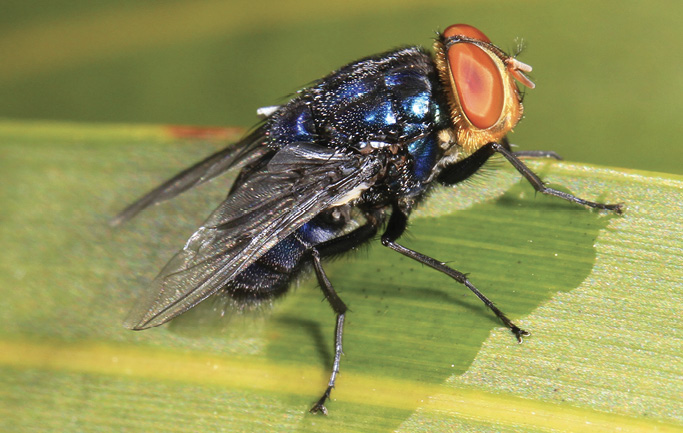
Figure 1. Live male NWS or Cochliomyia hominivorax in its natural habitat. Note the bright colors of a live specimen. Photo by Judy Gallagher.
Introduction
The blow fly, Cochliomyia hominivorax (Coquerel, 1858) (Diptera: Calliphoridae), often referred to as the “New World screwworm” or “NWS”, ranks among the most destructive insect pests of livestock in the Western Hemisphere (Figure 1). This insect is named after its origin in the New World (Americas), the screw-like spines that project and wrap around the body of the larva (maggot), and the worm-like appearance of “vermiform” fly larvae.
The New World Screwworm is an obligate parasite of warm-blooded animals. It has the ability to infest living animals through a condition known as myiasis. Myiasis causes direct damage to animals as larvae consume living tissue and increases the risk of secondary bacterial infection. Both direct larval feeding and secondary infections can be lethal if not promptly treated. Parasitism from NWS causes billions of dollars in economic damage, disrupting livestock production and exports, and incurring high costs associated with veterinary intervention for both livestock and pets.
NWS also causes major harm to wildlife, which could threaten hunting-related economic activity that roughly contributes $840 million to New Mexico’s economy each year.1 Significant economic and ecological impacts of NWS in the Americas led to the development of the sterile insect technique, a pest control method that involves mass rearing and sterilization of flies followed by release in the environment where they mate with wild females, resulting in no offspring.2,3 This method successfully eradicated the fly from the United States and the country was officially declared free of screwworm in 1966.4 However, outbreaks persisted through the early 1980s due to recurrent introductions from Mexico and some Caribbean Islands5,6 until 1983 when no more cases were reported and the eradication efforts expanded to Mexico and Central America.4 In 2023, NWS surpassed a barrier established between the Colombia and Panama border and spread from Central America to Mexico, posing a threat to the livestock industry in the United States.7 As of June 3rd, 2026, the presence of NWS has been confirmed by the USDA from a cattle ranch near La Pryor, Texas and has officially re-emerged as a pest in the United States.
Many blow fly species found in the United States appear similar to NWS, especially to individuals without specialized training. Identification of NWS requires knowledge of the active species in the collection area and differences in their appearance from NWS. Final identification of collected specimens should be conducted by qualified experts as listed below, but this resource provides guidance for entomologists and other people working with NWS on distinguishing it from similar-looking species. Differentiating NWS from other flies is challenging, but early detection is important. It is essential that all suspected NWS specimens be reported immediately for evaluation by appropriate personnel, typically requiring specimens to be sent for testing at a diagnostic lab with assistance from a health official. Sample collection kits with detailed instructions are available at all New Mexico Extension offices. If a kit is unavailable when a sample is collected, record the affected animal species, describe the wound or infestation, and, when possible, preserve specimens in 70% isopropyl alcohol for laboratory confirmation. The resources provided below are intended primarily for entomologists and for informational purposes only. These resources are not a substitute for professional diagnostic evaluation.
If you believe you have seen NWS adults or larvae in New Mexico, contact the following agencies:
- Report suspected cases in livestock: New Mexico Livestock Board front desk (505) 841-6161
- Report suspected cases in wildlife: New Mexico Department of Game and Fish (888) 248-6866 or ispa@dgf.nm.gov
- Report suspected issues in public health: New Mexico Department of Health’s epidemiology line (505) 827-0006
- Contact NMSU Cooperative Extension: https://extension.nmsu.edu/
In Arizona:
- Report suspected cases in livestock: AZDA main line (602) 542-4291
In Texas:
- Report suspected cases in livestock: TAHC – Veterinarian on call 1-800-550-8242
- Report suspected cases in wildlife: TPWD – Call the toll-free hotline at 1-866-536-7593. It will pick up your area code and send your call to the nearest USDA office.
Standard operating procedure for reporting possible detection of NWS via the USDA:
Identification resource for North American blow flies:
- Jones et al., 2019 dichotomous key: doi:10.3752/cjai.2019.398
Early detection and identification of NWS in southwestern states is particularly important as they are likely to be the first states impacted by NWS. Part of this process is ruling out similar flies that could cause undue concern. Blow flies commonly found in New Mexico, Arizona, and Texas are presented here, along with morphological traits that differentiate NWS from abundant species.
Blow Fly Characteristics
General Biology
Blow flies are classified as the scientific family Calliphoridae. Members of this family are abundant, ubiquitous insects that play a significant and beneficial role in the decomposition of organic matter and waste. There are nearly 2,000 species of calliphorids worldwide, few of which are strictly parasites of vertebrates.9 The blow fly species that are commonly mistaken for NWS are closely related to it but are not strict vertebrate parasites. These flies are typically found feeding on garbage, roadkill, animal feces, human food, and other waste. The presence of blow flies can be largely prevented through proper waste management and integrated pest management techniques.
General Morphology
Blow flies are medium to large (slightly larger than a house fly), robust flies, usually with a metallic blue, green, copper, or black color. They typically have large, red eyes and many bristles (hairs) on their face, body, and legs. Blow flies can be differentiated from most of the commonly observed medium to large flies (house flies, flesh flies) by their colorful, metallic sheen.
Sex Determination
You can differentiate most male and female blow flies based on the size and orientation of the eyes. Male blow flies tend to have larger eyes that are holoptic (meet in the middle) (Figure 2), whereas the eyes of female blow flies are dichoptic (completely separated) and have a wide frons (a large gap between the eyes).
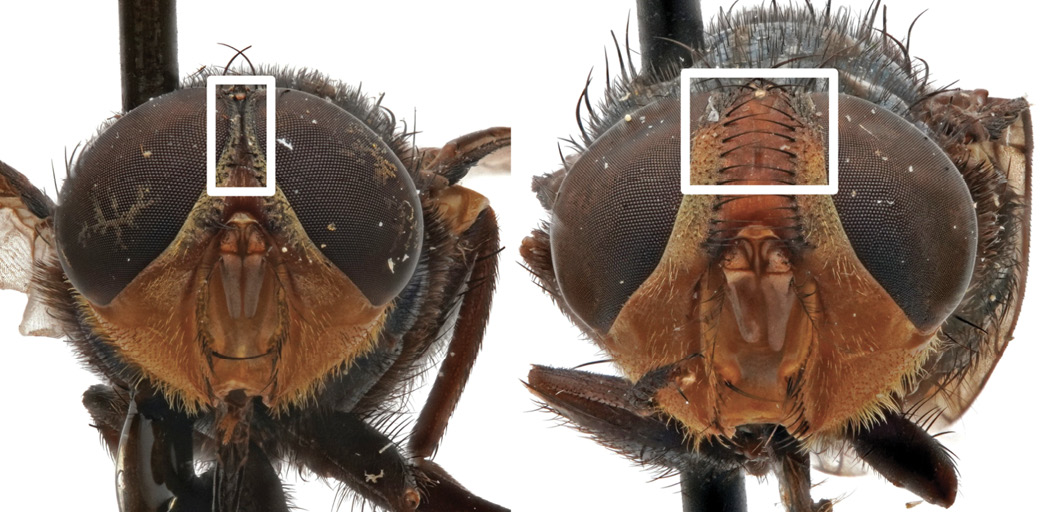
Figure 2. Views of preserved C. hominivorax head, male with holoptic (large, touching) eyes (left) and female with dichoptic (separated) eyes (right). Note the dark eyes of a preserved specimen. Frons (gap) enclosed in white. Photos by Kenneth A. Geisert.
New World Screwworm: Cochliomyia hominivorax (Coquerel, 1858)
If a fly is metallic green to blue with stripes on the mesonotum (back) (Figure 25, left), it may be NWS. Use the following characteristics to become more confident in your identification and report it to authorities for confirmation: 1) the presence of black setulae on fronto-orbital plates (Figure 5), 2) the orange color of the spot on the back of the head of females (Figure 6), 3) the lack of white tomentum on the ventral side of the abdomen (Figure 7), 4) and the black basicosta color of females (Figure 8).
Adult NWS flies have a blue to green metallic exoskeleton (body) (Figures 3–8). The coloration of NWS is variable and can be unreliable for identification, as it has been observed to change with age and diet. NWS have bright yellow-orange gena (cheeks) (Figures 1, 3), red eyes (Figures 1, 3), and three dark stripes on its mesonotum (back) (Figure 4). These colors and stripes are often faded in recently deceased NWS and very discolored in preserved NWS. This species prefers warm-temperate to tropical climates.
The middle stripe on the mesonotum (back) of NWS usually begins further from the head than the outside stripes (Figure 4). This feature has been described historically, but recent field collections indicate it is no longer a completely reliable diagnostic feature.
The best characteristic to separate male or female NWS from its closest relative (Secondary Screwworm: Cochliomyia macellaria, Fabricius, 1775) is the presence of black setulae (small hairs) on the fronto-orbital plates (yellow-orange part of face between midline and eyes) (Figure 5). These setulae are present in both male and female NWS, but absent in both male and female Secondary Screwworm (Figure 22).
One helpful feature to help distinguish female NWS from its closest relative (Secondary Screwworm: C. macellaria) is an “orange spot” located on the back of the head and between the eyes towards the occiput area (Figure 6). This “spot” is orange to light brown in female NWS, but dark brown to black in female Secondary Screwworm (Figure 23).
Another helpful feature to help distinguish NWS from its closest relative (Secondary Screwworm) is that the venter (underside) of the abdomen is primarily blue (Figure 7) compared to patches of white tomentum (white dust) in Secondary Screwworm (Figure 24).
Finally, another important characteristic for differentiation in females is the basicosta (base of wing). In female NWS, the basicosta is dark brown to black (Figure 8), while in its closest relative (Secondary Screwworm: C. macellaria) the basicosta is yellow to orange (Figure 11). If a microscope is available, you can identify this feature in females. This characteristic is not useful to distinguish males, given that the basicosta is black in both species.
The following two species are the most morphologically similar to NWS, with other common and relatively similar species following these.
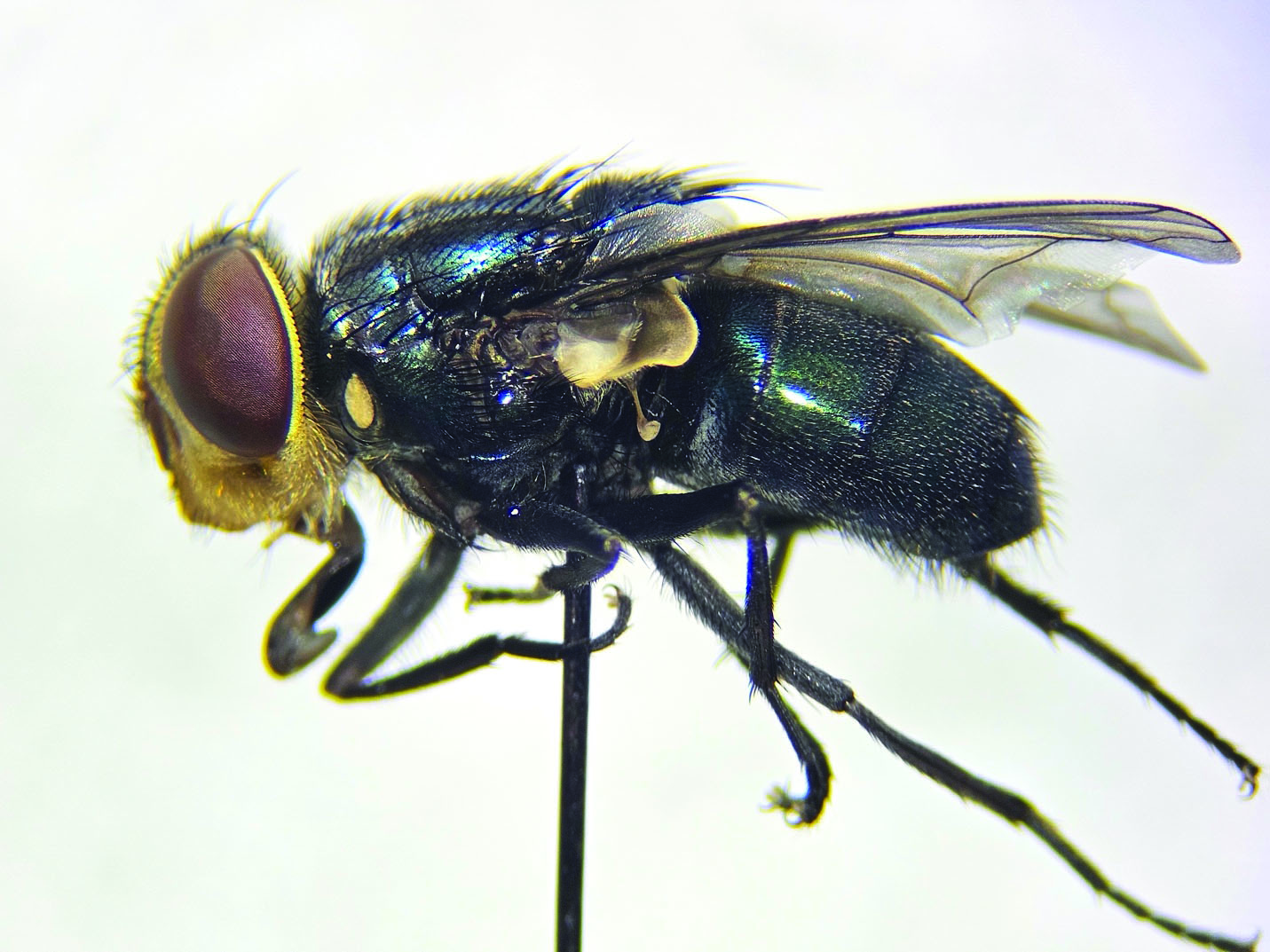
Figure 3. Lateral (side) view of wild Cochliomyia hominivorax or NWS. Photo by Sohath Zamira Yusseff-Vanegas.
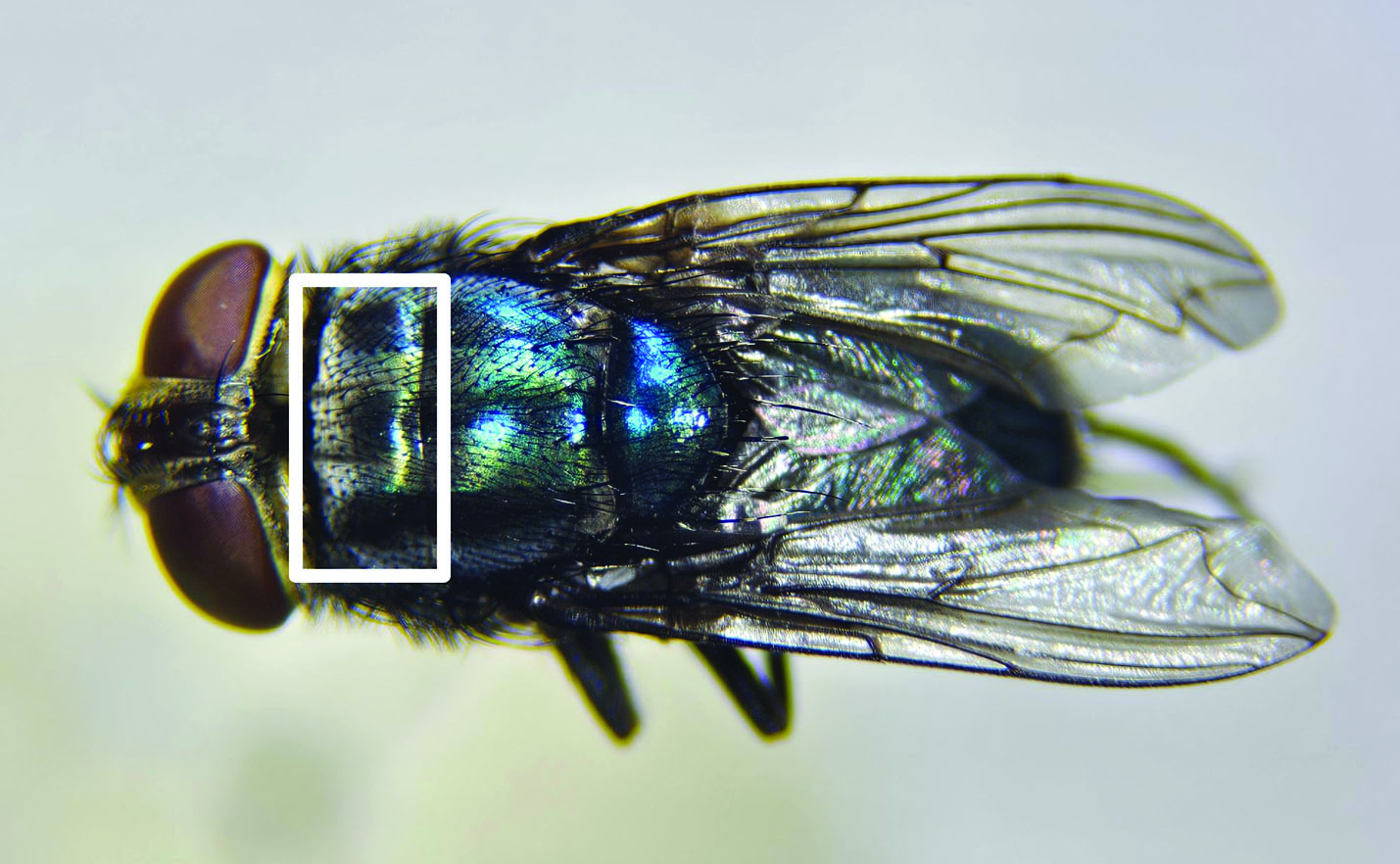
Figure 4. Dorsal (top-down) view of wild female C. hominivorax. Note the middle black stripe on the mesonotum usually beginning furthest from the head. Top of stripes enclosed in white. Photo by Sohath Zamira Yusseff-Vanegas.
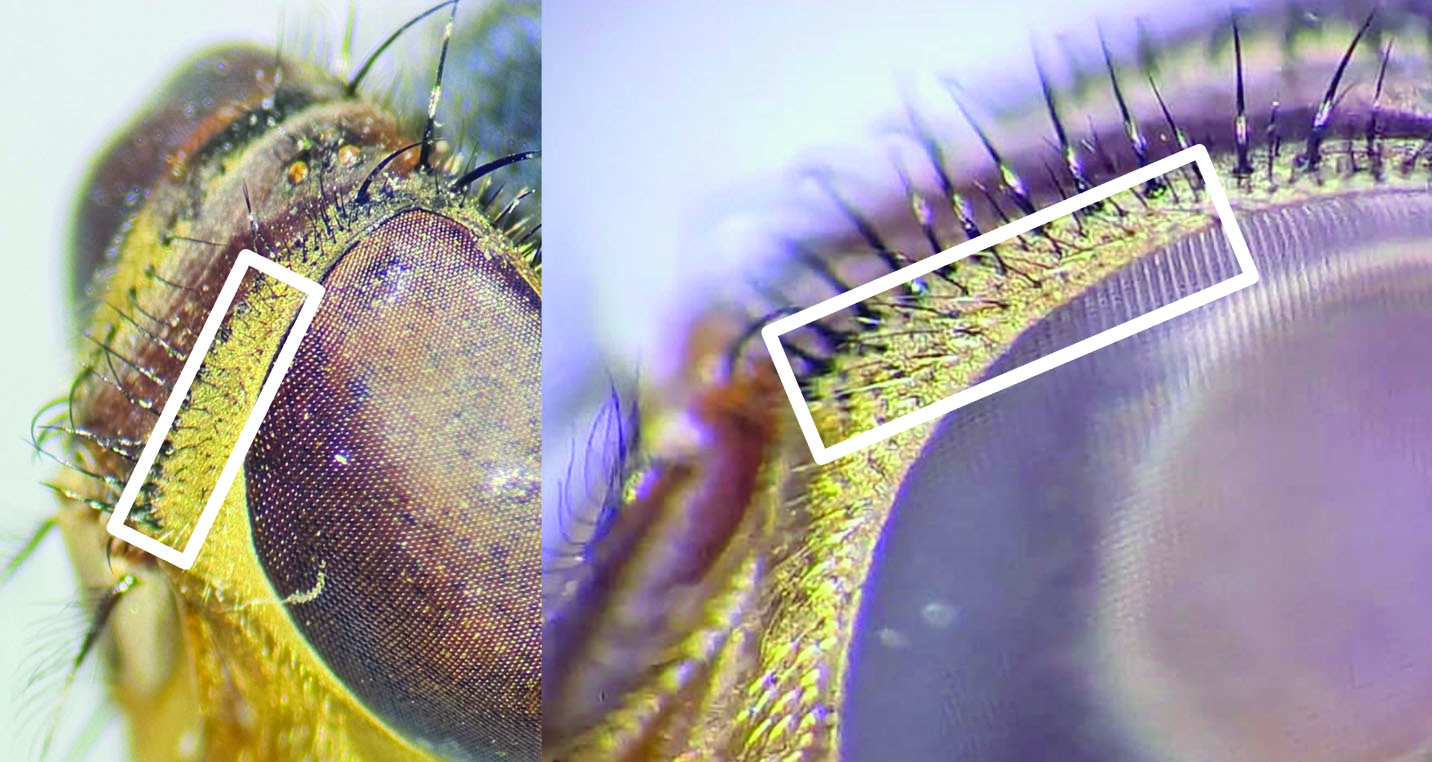
Figure 5. View of female C. hominivorax head. Note the black setulae on the fronto-orbital plates enclosed in white. Photos by Sohath Zamira Yusseff-Vanegas.
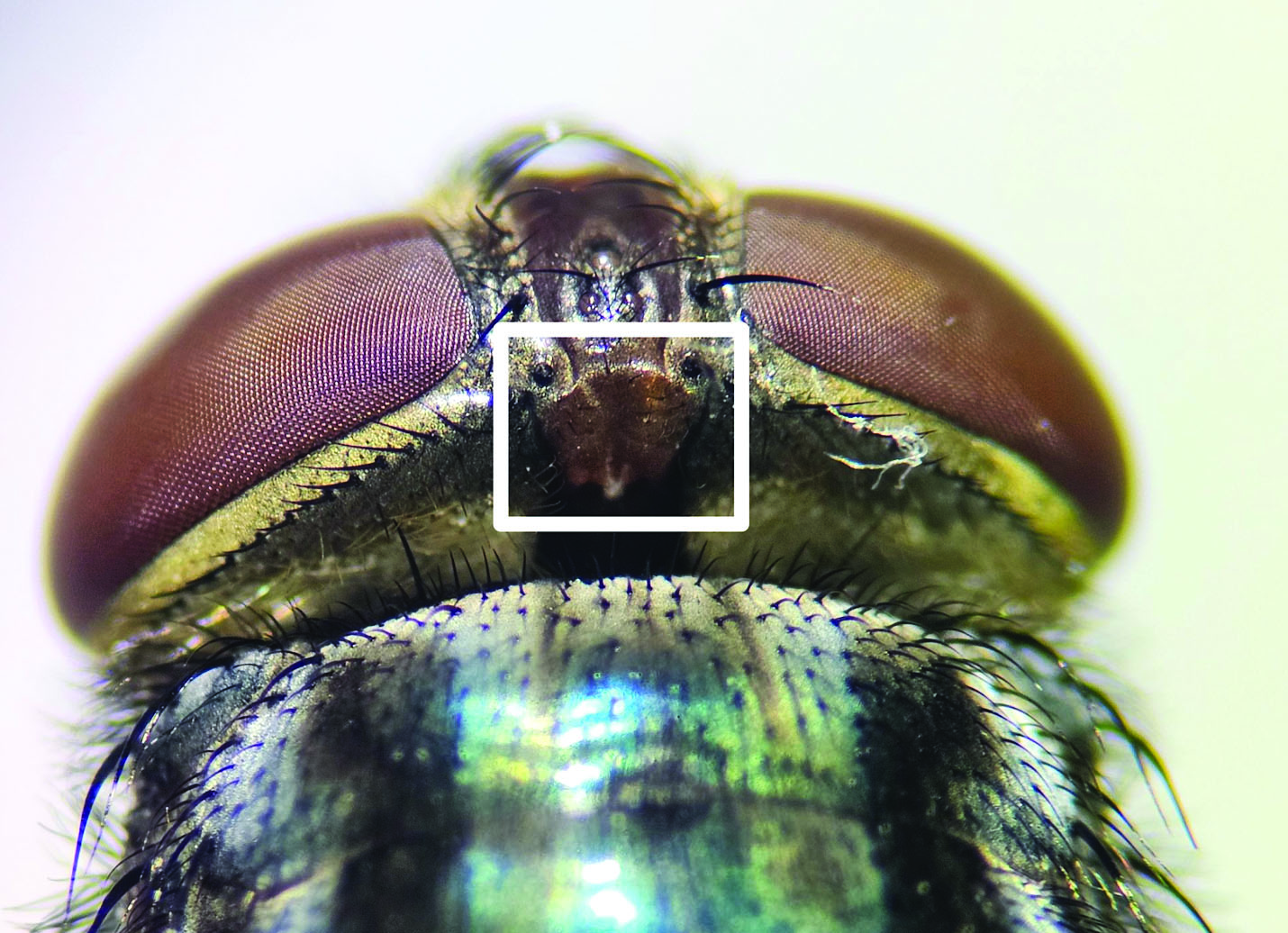
Figure 6. View of the orange to light brown “spot” on the back of the head and between the eyes of a female C. hominivorax. Photo by Sohath Zamira Yusseff-Vanegas.
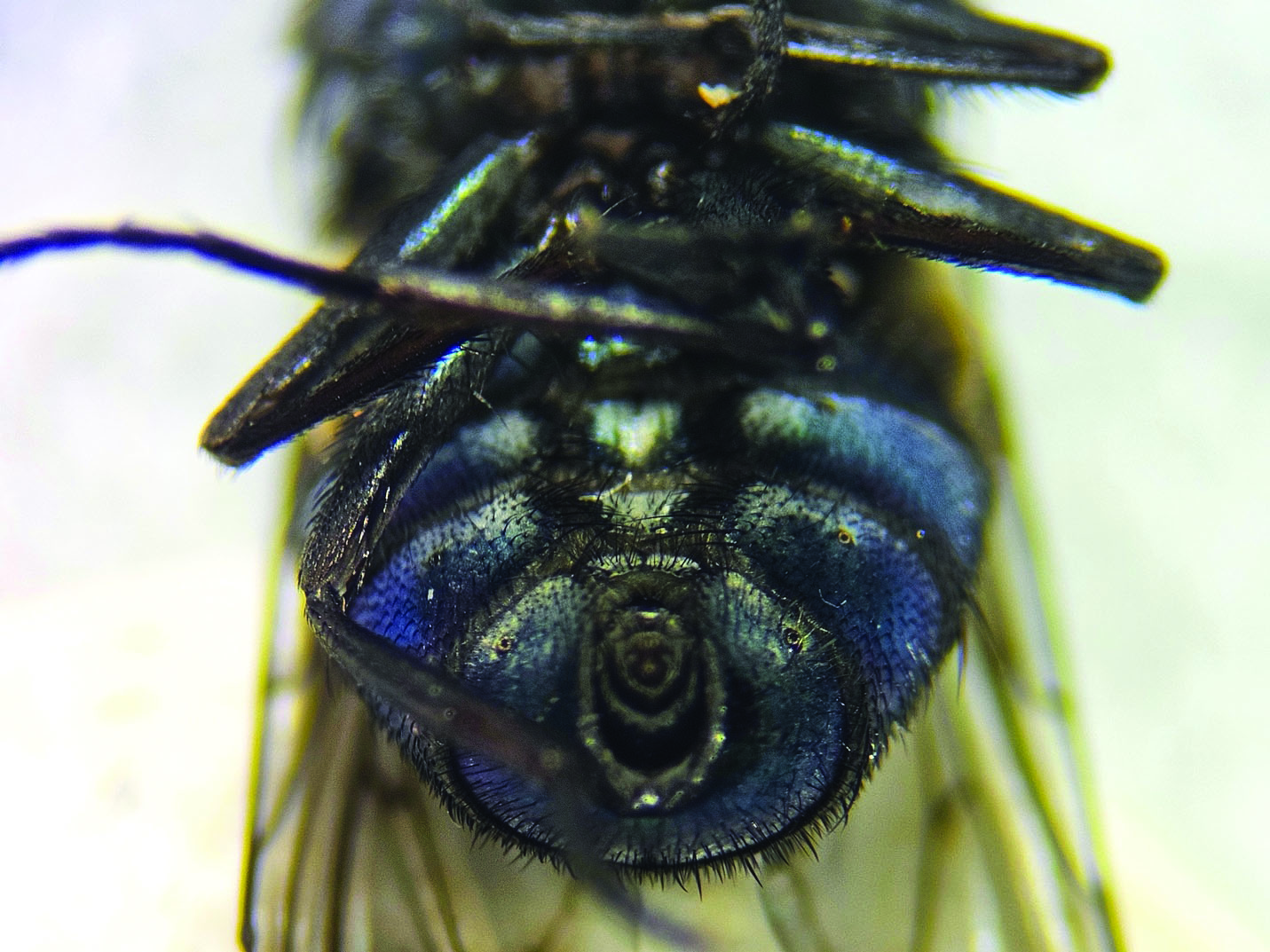
Figure 7. Ventral (underside) view of wild C. hominivorax abdomen. Note the generally consistent blue color with very limited patches of white tomentum (white dust). Photo by Sohath Zamira Yusseff-Vanegas.
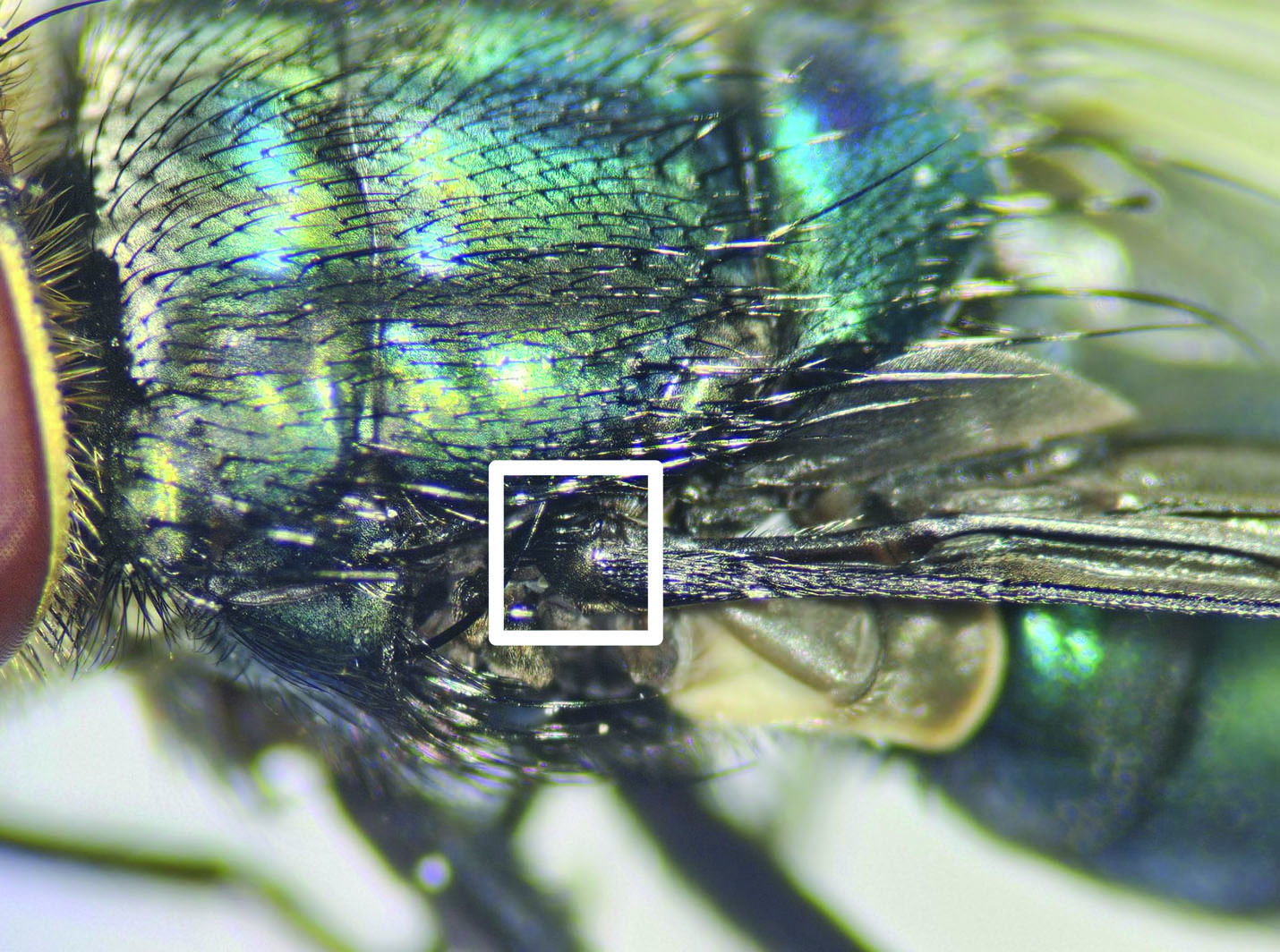
Figure 8. Close-up view of wild female C. hominivorax basicosta (base of wing). Dark brown to black color of the basicosta enclosed in white. Photo by Sohath Zamira Yusseff-Vanegas.
Blow fly species you are likely to encounter and how to identify them: Most similar blow fly species to NWS
Secondary screwworm: Cochliomyia macellaria (Fabricius, 1775)
Cochliomyia macellaria is the closest relative of NWS and the most likely species to be confused with NWS. Due to their similarity, it is important to contact the relevant authorities to confirm species identification. It is called the “Secondary Screwworm” as it also features screw-like spines that wrap around its larval body; however, C. macellaria is a secondary myiasis producer as it arrives later than primary colonizers who initially colonize the wound. Similar to NWS, C. macellaria has a blue to green exoskeleton (body) with bright yellow-orange gena (cheeks) (Figure 9), red eyes, and three dark stripes on its mesonotum (back) (Figure 10).
Cochliomyia macellaria is generally smaller (6–9 mm) than NWS (8–10 mm). This species tends to have a more teal or green exoskeleton compared to most NWS, which are usually a bright blue, though this feature varies significantly and is not a reliable diagnostic tool. Additionally, the three dark stripes on the mesonotum of C. macellaria usually all begin at the same point near the head (Figure 10), while the middle stripe on the mesonotum of NWS usually begins further from the head than the outside stripes (Figure 4). As aforementioned, this feature has been recently found to show variation, so expert diagnosis is necessary. Cochliomyia macellaria females have a yellow/orange basicosta (Figure 11).
Cochliomyia macellaria can feed opportunistically on dead tissue in existing wounds. Cochliomyia macellaria is found in much of the United States, especially the South, and is most active in the fall and summer months. This species prefers temperate to tropical climates and is also typically associated with more rural areas. Notably, this species is often very abundant compared to NWS, even where myiasis is occurring.
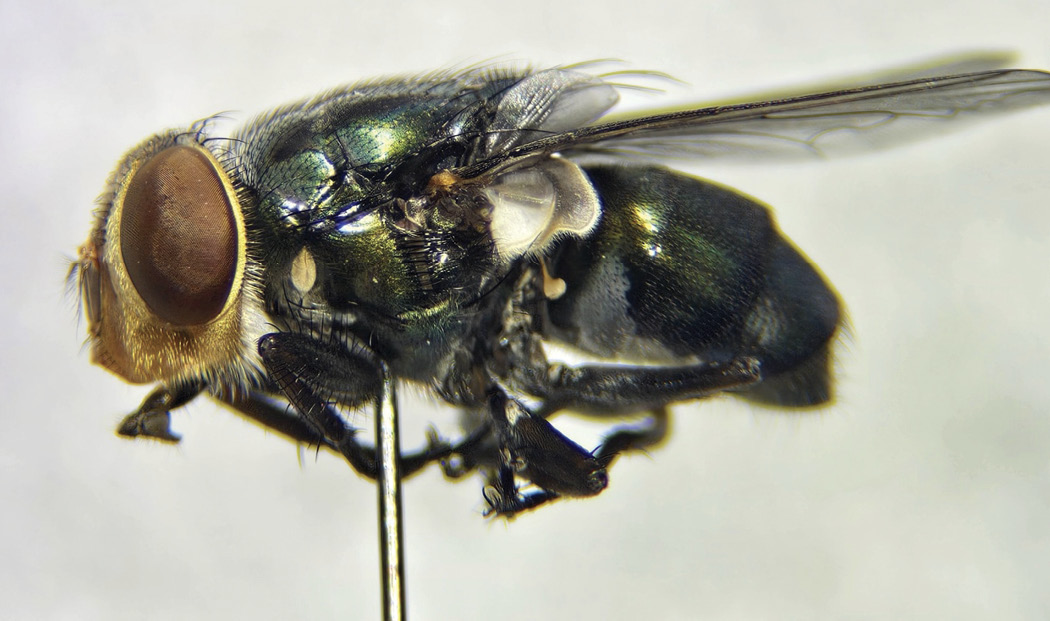
Figure 9. Lateral (side) view of female C. macellaria. Photo by Sohath Zamira Yusseff-Vanegas.
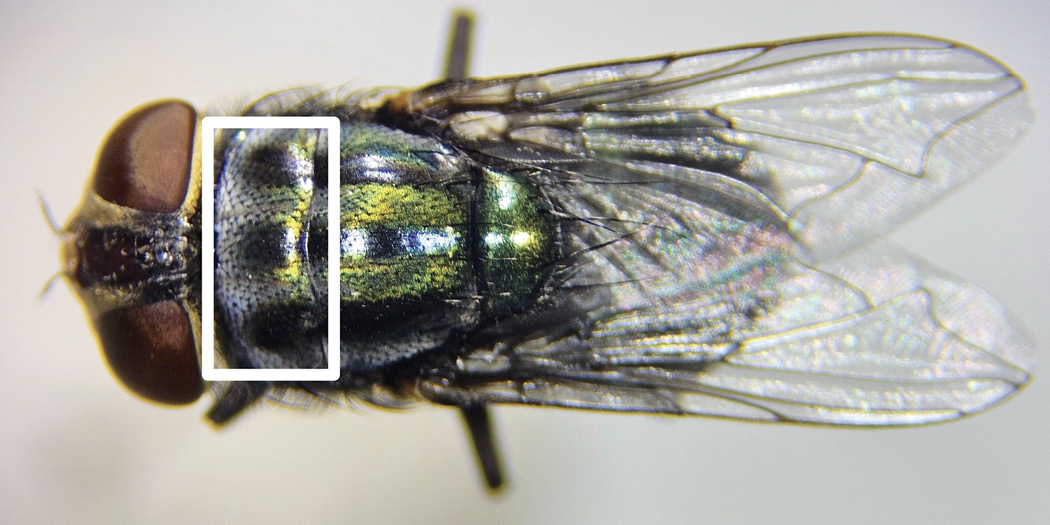
Figure 10. Dorsal (top-down) view of female C. macellaria mesonotum (back). Note that all black stripes usually begin at the same distance from the head. Top of stripes enclosed in white. Photo by Sohath Zamira Yusseff-Vanegas.
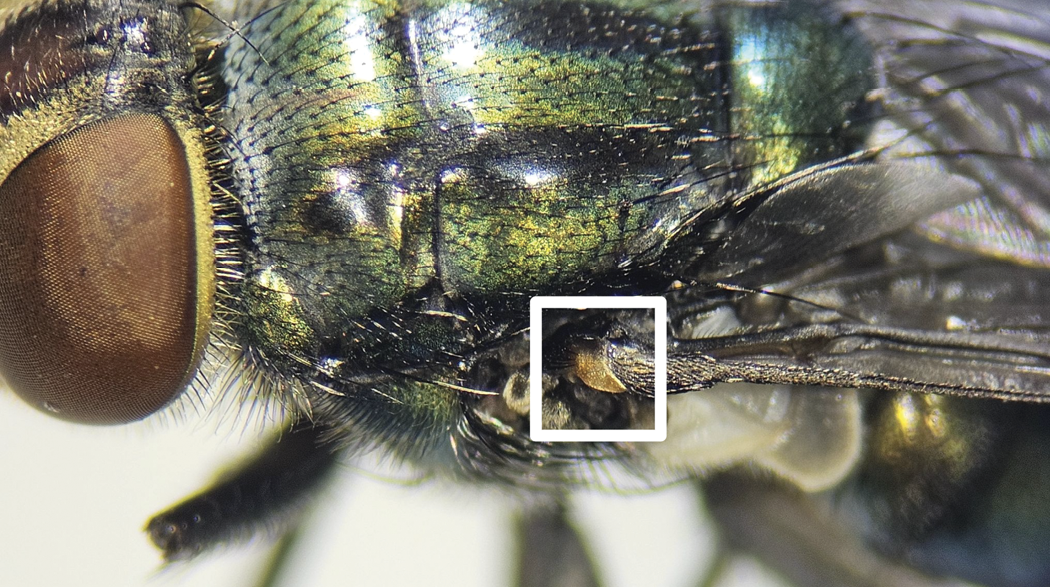
Figure 11. Close-up view of female C. macellaria basicosta (base of wing). Whitish to yellow or orange color of the basicosta enclosed in white. Photo by Sohath Zamira Yusseff-Vanegas.
Compsomyiops callipes (Bigot, 1877)
Compsomyiops callipes is not currently known by a common name but is another close relative of NWS. This species is native to the Western Hemisphere and uncommonly collected, but it bears a striking resemblance to NWS. Compsomyiops callipes has a blue exoskeleton (body) and bright yellow-orange genae (cheeks) like NWS (Figure 12), as well as dark stripes on the mesonotum (back) (Figure 13). However, the stripes in C. callipes start at the beginning of the thorax, nearly touching the head (Figure 13), while in the NWS and the Secondary Screwworm the stripes begin a little further down on the thorax (Figures 4 and 10).
This species’ calypters (the two small, round lobes adjacent to the wings of some flies, including all blow flies) are dark brown. The color of these two calypters distinguishes it from species like the Secondary Screwworm. One important characteristic to separate this species from the NWS is the palps (near the mouth parts). The palps on Compsomyiops callipes are clavate instead of filiform as in the genus Cochliomyia (see Whitworth, 2006: Figures 3 and 20). Compsomyiops callipes is found in the southern and southwestern United States.
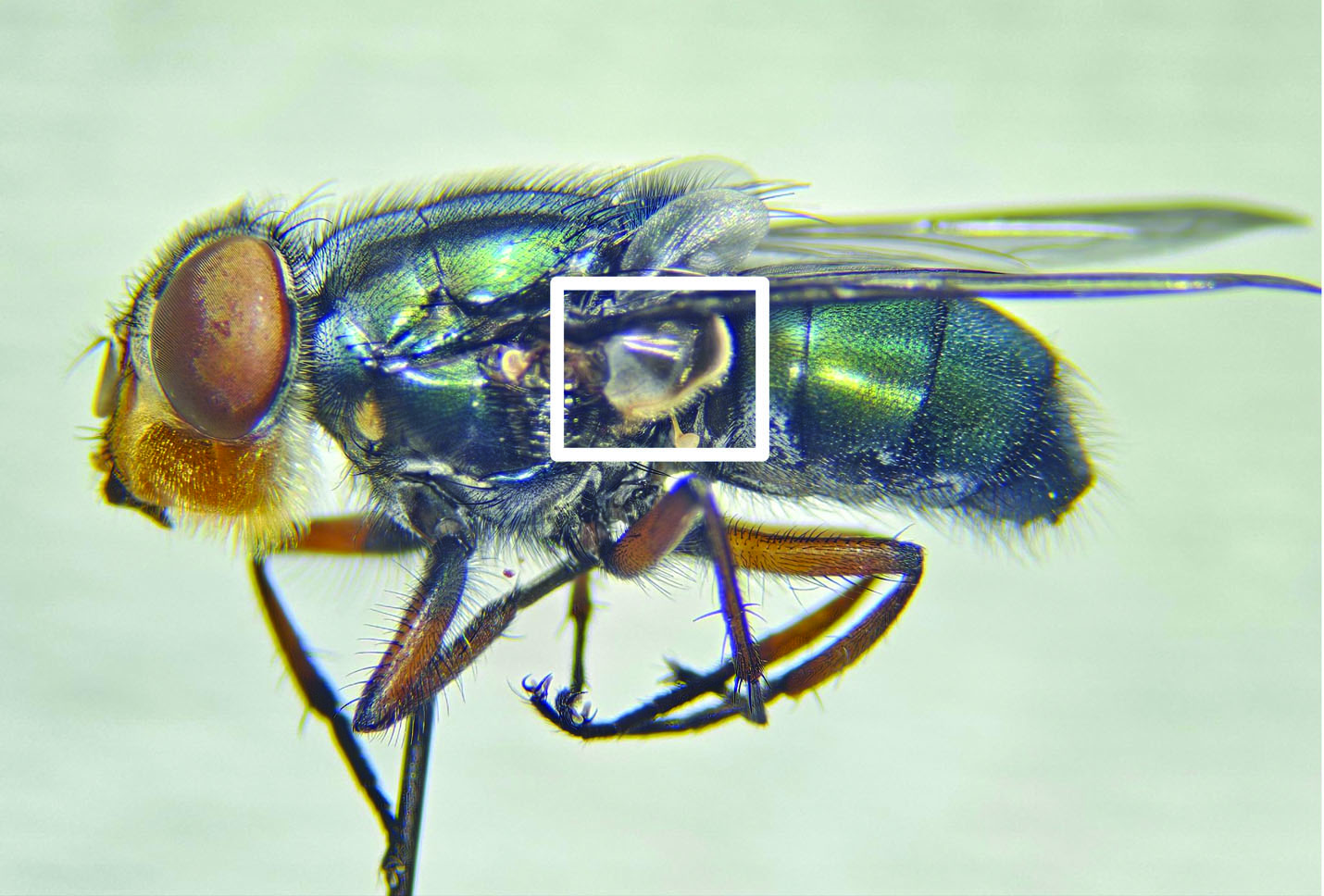
Figure 12. Lateral (side) view of female C. callipes. Dark brown calypters enclosed in white. Photo by Sohath Zamira Yusseff-Vanegas.
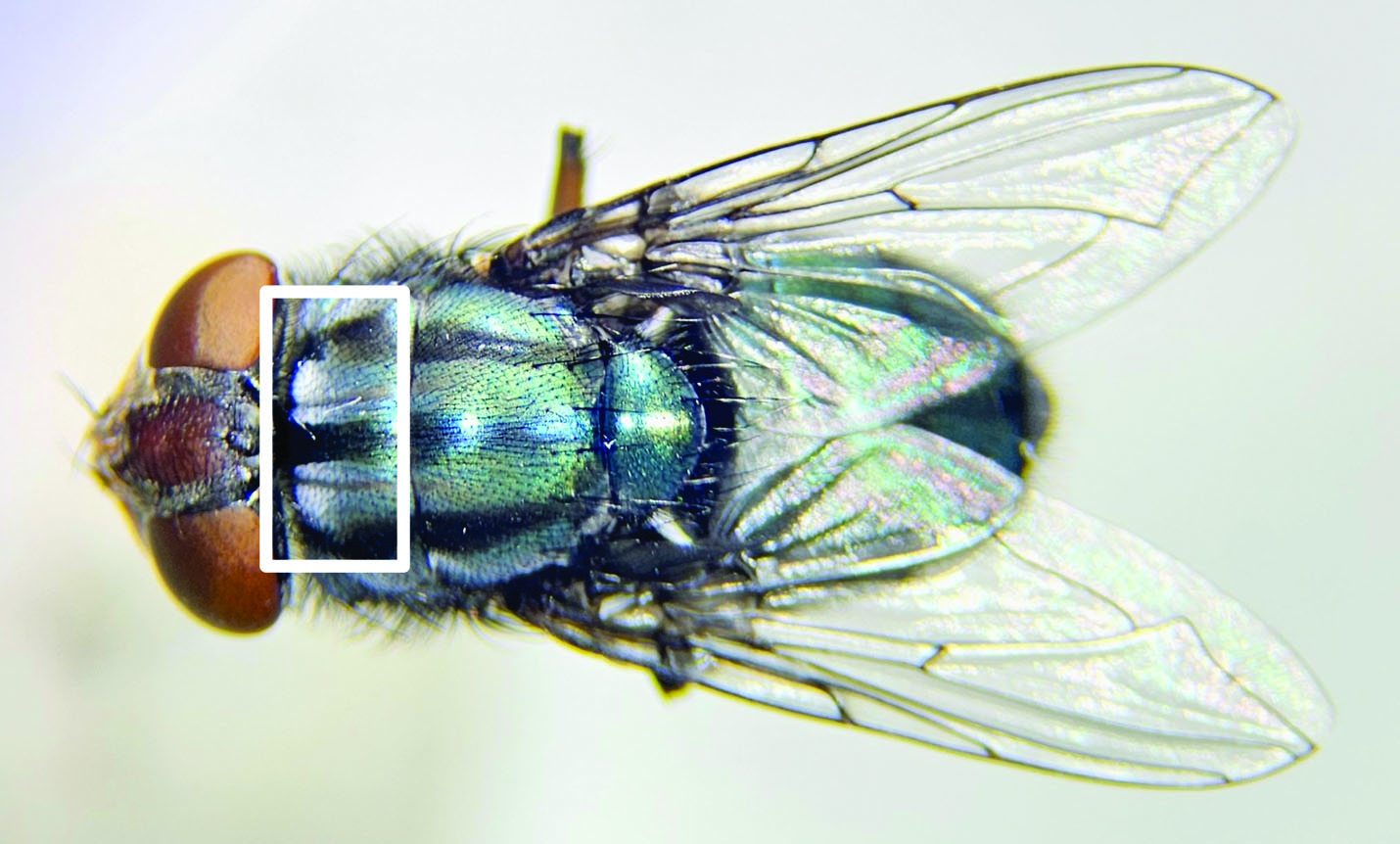
Figure 13. Dorsal (top-down) view of female C. callipes mesonotum (back). Note all black stripes begin very close to the head. Top of stripes enclosed in white. Photo by Sohath Zamira Yusseff-Vanegas.
Blow fly species you are likely to encounter and how to identify them: Other common blow fly species
Oriental latrine fly: Chrysomya megacephala (Fabricius, 1794)
Chrysomya megacephala is also a close relative of NWS. Native to the Eastern Hemisphere, C. megacephala is an invasive species in the United States. Many people confuse C. megacephala with NWS because of its deep blue to blue-green exoskeleton (body), yellow genae (cheeks) (Figure 14), and robust body. However, it lacks the dark stripes on the mesonotum (back) (Figure 15), which distinguishes it from NWS. This species has dark, transverse (side to side) bands along the edges of its abdominal segments. Chrysomya megacephala is found in the southern United States.
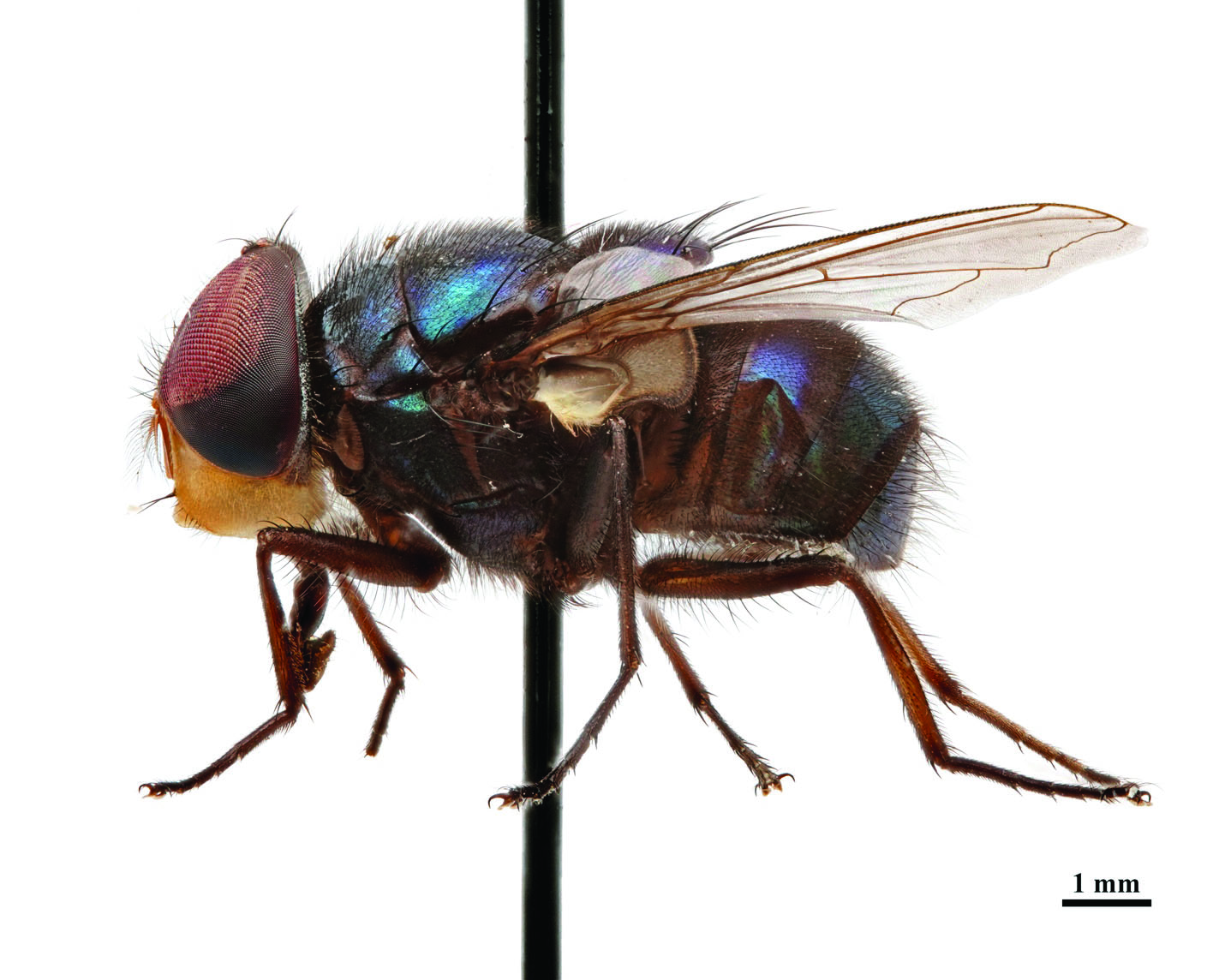
Figure 14. Lateral (side) view of male C. megacephala with scale. Note the dark, transverse bands along its abdominal segments. Photo by Kenneth A. Geisert.
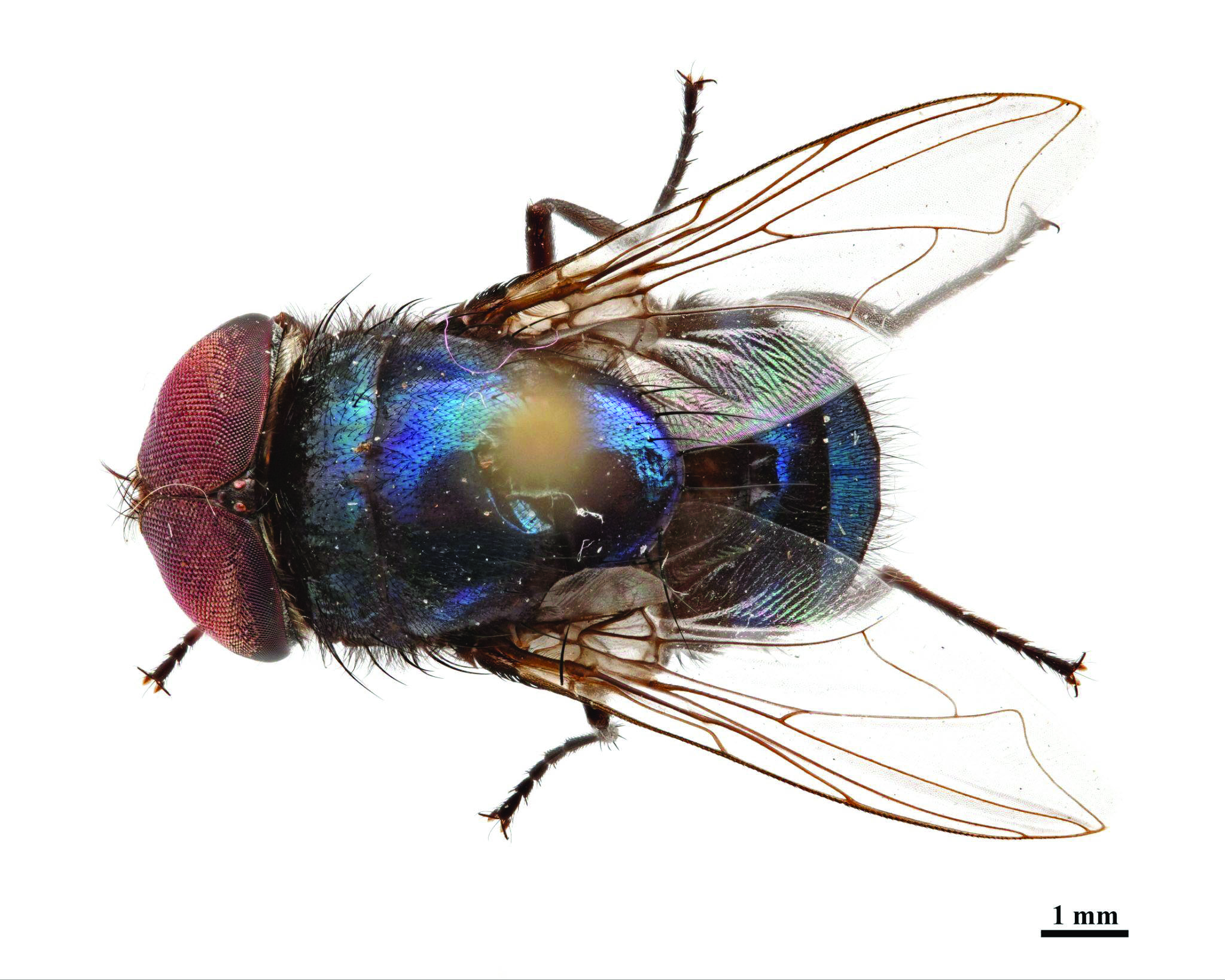
Figure 15. Dorsal (top-down) view of male C. megacephala mesonotum (back) with scale. Note the lack of stripes on this species’ mesonotum (back). Photo by Kenneth A. Geisert.
Hairy maggot blow fly: Chrysomya rufifacies (Macquart, 1843)
Chrysomya rufifacies is a close relative of C. megacephala and NWS. This species is native to the Eastern Hemisphere. It is an invasive species that was introduced to Western Hemisphere in the 1970s and is now well established in the United States. Chrysomya rufifacies has a green exoskeleton (body) but has silver genae (cheeks) (Figure 16) and lacks any dark stripes on the mesonotum (back) (Figure 17). This species, similarly to C. megacephala, has dark, transverse bands along its abdominal segments (Figures 16). Chrysomya rufifacies is abundantly found in the southern United States during warm months.
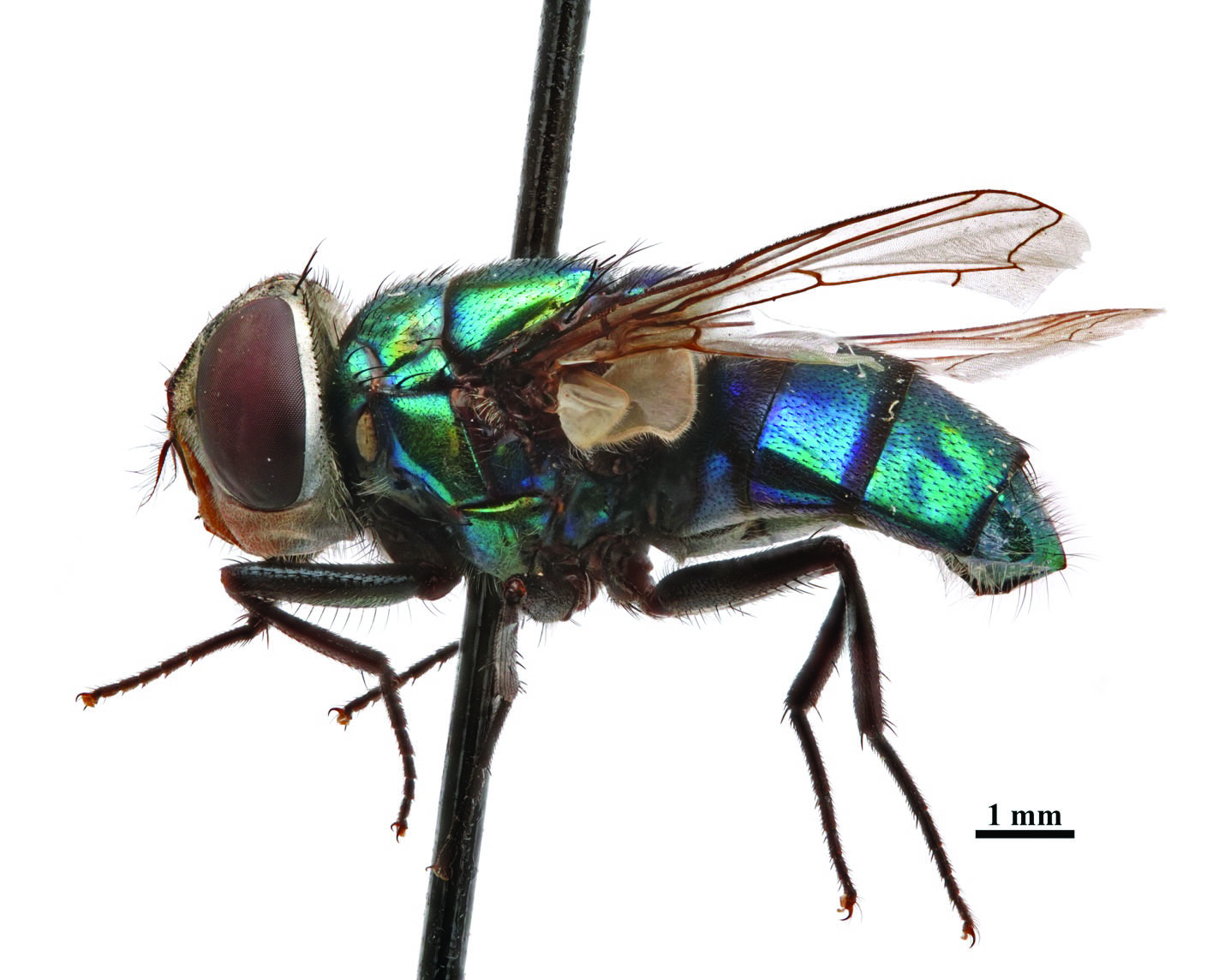
Figure 16. Lateral (side) view of female C. rufifacies with scale. Note the dark bands along its abdominal segments. Photo by Kenneth A. Geisert.
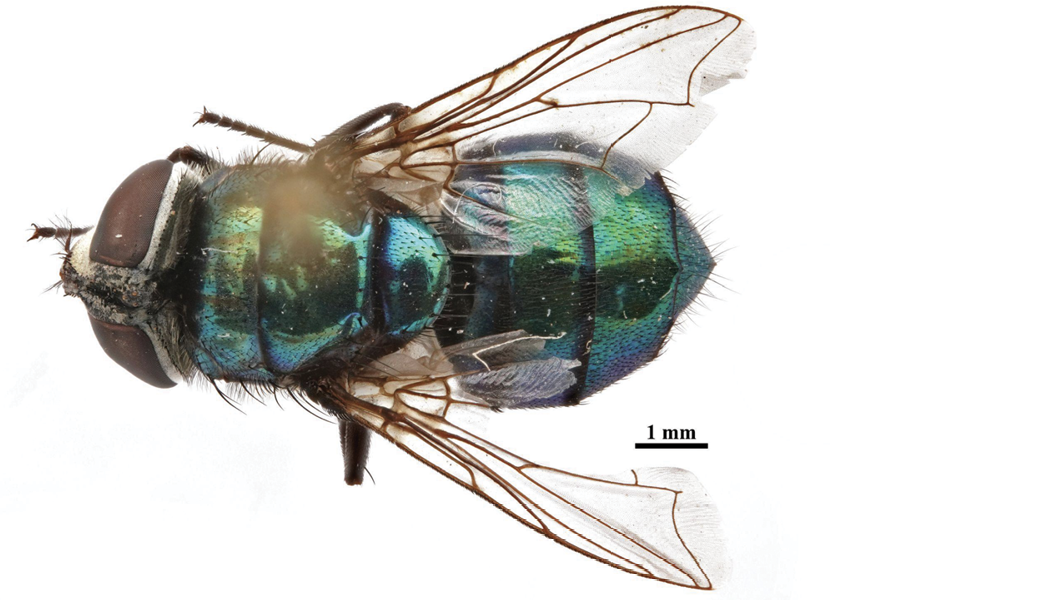
Figure 17. Dorsal (top-down) view of female C. rufifacies mesonotum (back) with scale. Note the lack of stripes on this species’ mesonotum (back). Photo by Kenneth A. Geisert.
Black blow fly: Phormia regina (Meigen, 1826)
Phormia regina is a close relative of NWS and is commonly known as the black blow fly. This species is abundant in the Northern Hemisphere. Despite its common name, P. regina has a dark teal to olive exoskeleton, with silver, grey, or somewhat black genae (cheeks) (Figure 18) and lack any dark stripes on the mesonotum (Figure 19). Different from all other blow flies presented here, this species has bright orange anterior (towards the front) “spiracles”, an opening in insects that allows them to passively breathe (Figure 18). The spiracle of interest here is located on the sides of the mesonotum close to the head. Phormia regina is found throughout the United States and is one of the few blow fly species active in cold weather.
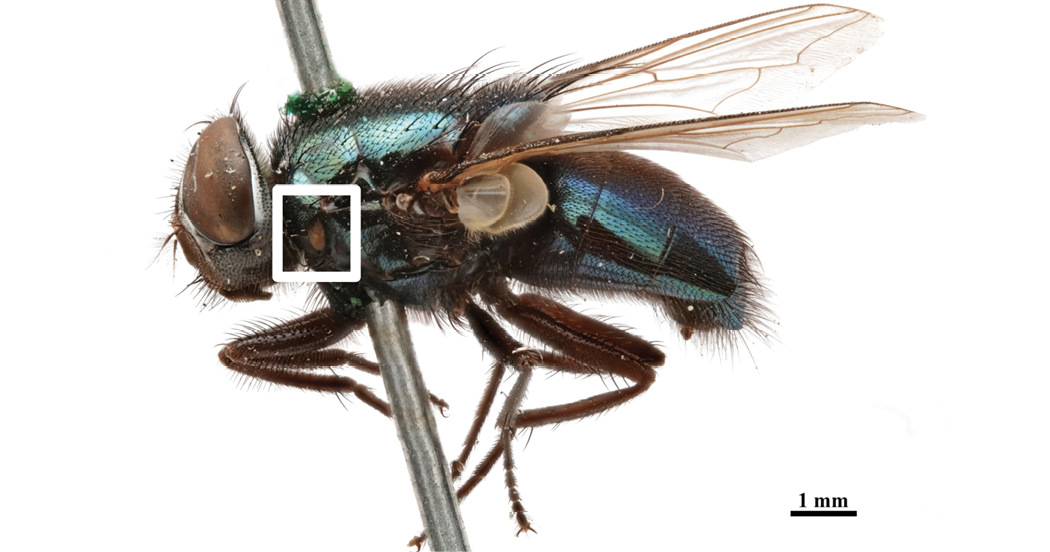
Figure 18. Lateral (side) view of male P. regina with scale. Note the orange spiracle enclosed in white. Photo by Kenneth A. Geisert.
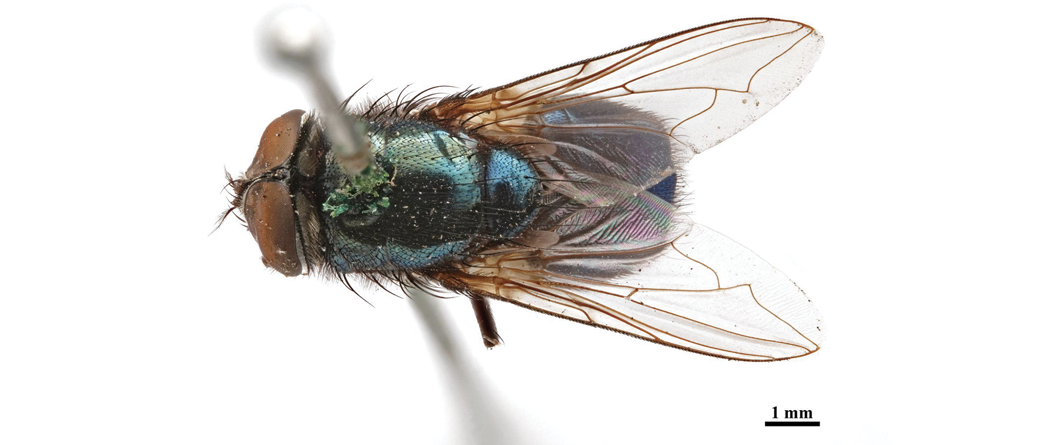
Figure 19. Dorsal (top-down) view of male P. regina mesonotum (back) with scale. Note the lack of stripes on this species’ mesonotum. Photo by Kenneth A. Geisert.
Green bottle flies: Lucilia sericata (Meigen, 1826)
Lucilia sericata (Figs. 20 & 21) is only distantly related to NWS. This species is abundant and found globally. Lucilia sericata does not have yellow-orange genae (cheeks) or three dark stripes on their mesonotum (back). They have bright blue-green to bright green exoskeletons that sometimes cause them to be confused with NWS (Fig. 3) or Secondary Screwworm (Fig. 9). This species has nearly white genae (cheeks) (Figs. 20 & 21). Lucilia sericata is found throughout the United States and is active most of the year. This species is strongly associated with human-dense areas and are often found in or near human structures.
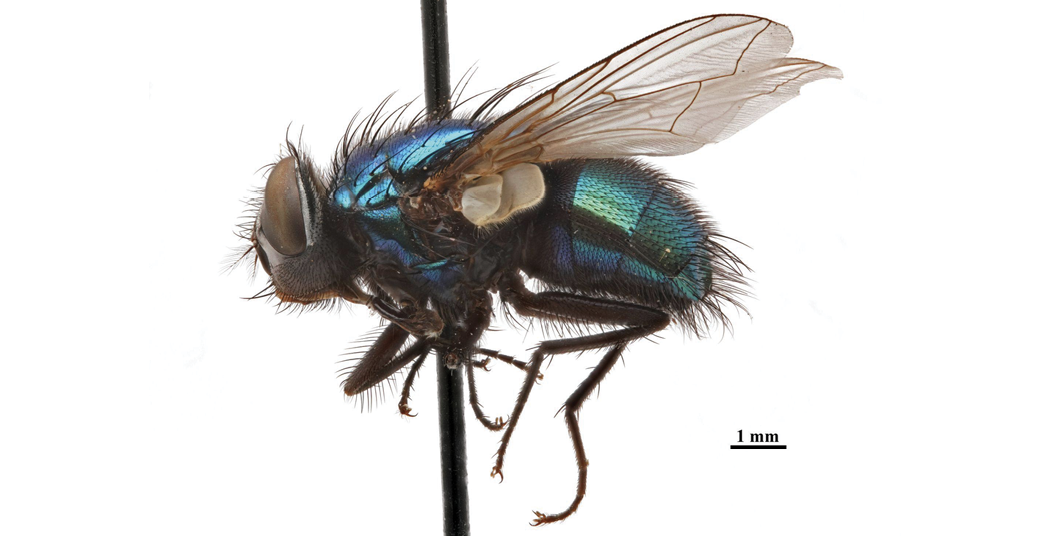
Figure 20. Lateral (side) view of male L. sericata with scale. Photo by Kenneth A. Geisert.
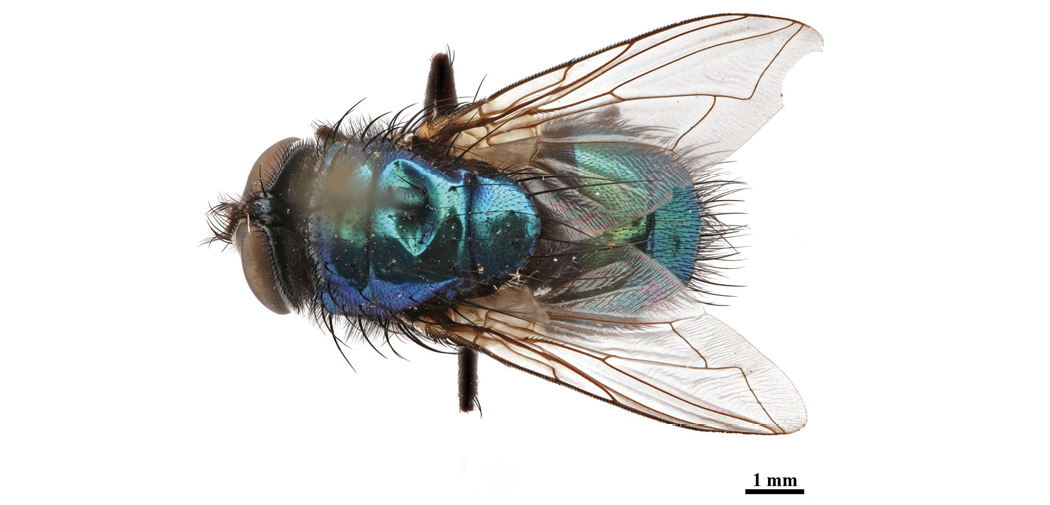
Figure 21. Dorsal (top-down) view of male L. sericata mesonotum (back) with scale. Note the lack of stripes on this species’ mesonotum. Photo by Kenneth A. Geisert.
Identification Features
The most abundant blow flies in New Mexico, Arizona, and Texas commonly confused with NWS require careful examination to differentiate. We summarize the features of these frequently misidentified species to aid in the identification of an adult blow fly on Table 1.
The resources provided below are for informational purposes only and are not a substitute for professional diagnostic evaluation.
|
Table 1. Summary of important identification features of common blow fly species. |
|||||||
|---|---|---|---|---|---|---|---|
|
Mesonotum stripes |
All mesonotum stripes same length |
Color of |
Basicosta |
Color of spot on back of head of species with stripes (Fig. 23) |
Color of |
Black setulae on |
|
|
Cochliomyia hominivorax |
Yes |
Usually no |
Light (females) to smoky (males) |
Dark brown to black (black in males) |
Orange to light brown |
Primarily |
Yes |
|
Cochliomyia |
Yes |
Usually yes |
Light |
Whitish to yellow (black in males) |
Dark brown to black |
Abundant |
No |
|
Compsomyiops callipes |
Yes |
Usually yes |
Dark brown |
Black |
Black |
N/A |
N/A |
|
Chrysomya megacephala |
No |
No stripes |
Light and brown |
N/A |
N/A |
N/A |
N/A |
|
Chrysomya |
No |
No stripes |
Light |
N/A |
N/A |
N/A |
N/A |
|
Phormia |
No |
No stripes |
Light |
N/A |
N/A |
N/A |
N/A |
|
Lucilia |
No |
No stripes |
Light |
N/A |
N/A |
N/A |
N/A |
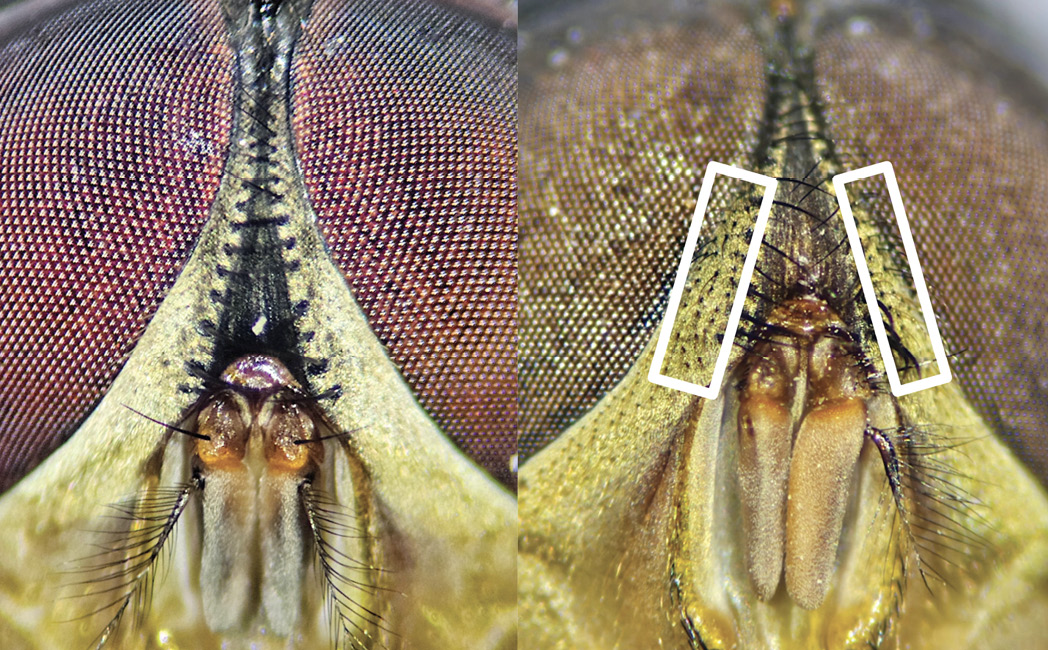
Figure 22. Comparison of the fronto-orbital plates enclosed in white Secondary Screwworm with no black setulae (left) to male NWS with black setulae (right). Photos by Sohath Zamira Yusseff-Vanegas.
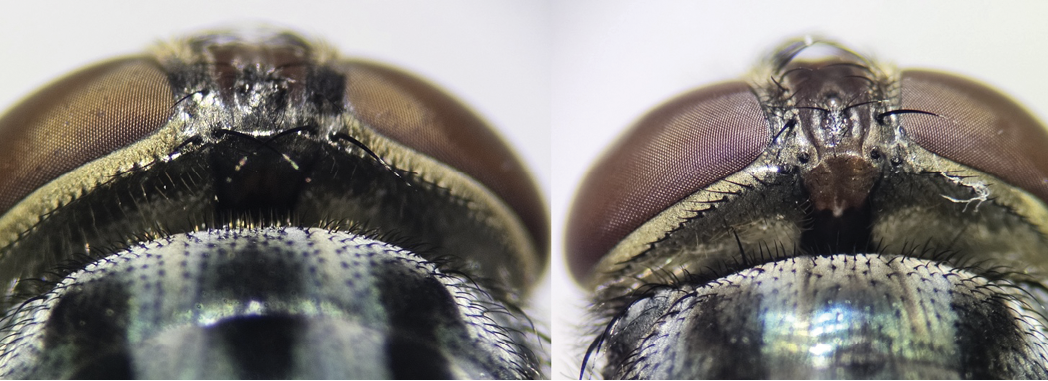
Figure 23. Comparison of the “spot” located on the back of the head and between the eyes in female Secondary Screwworm as dark brown to black (left) to female NWS as orange to light brown (right). Photos by Sohath Zamira Yusseff-Vanegas.
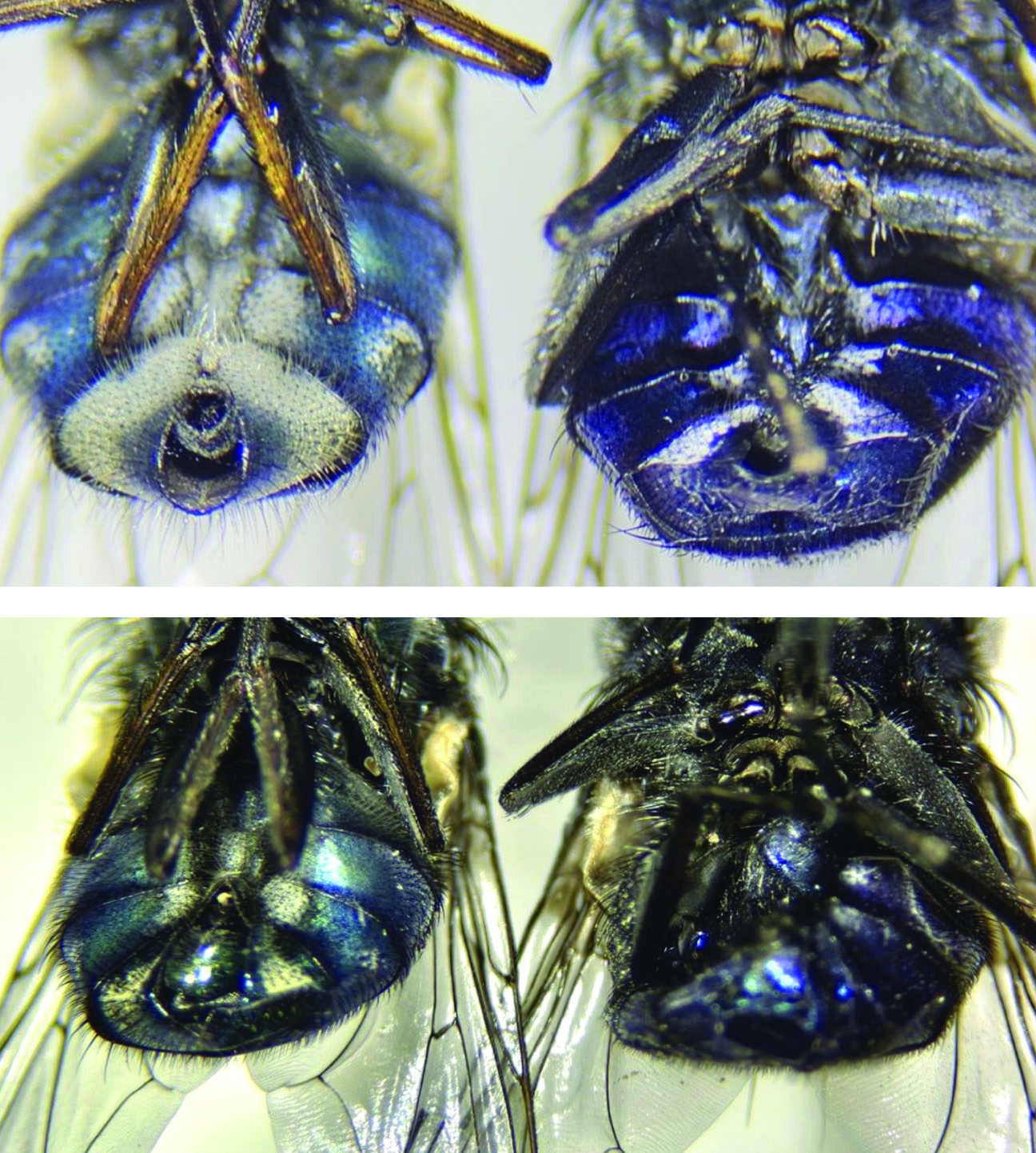
Figure 24. Comparison of color of ventral abdomen of Cochliomyia species in Secondary Screwworm with more patches of light color (left) to NWS as primarily metallic blue (right) in females (top) and males (bottom). Photos by Sohath Zamira Yusseff-Vanegas.
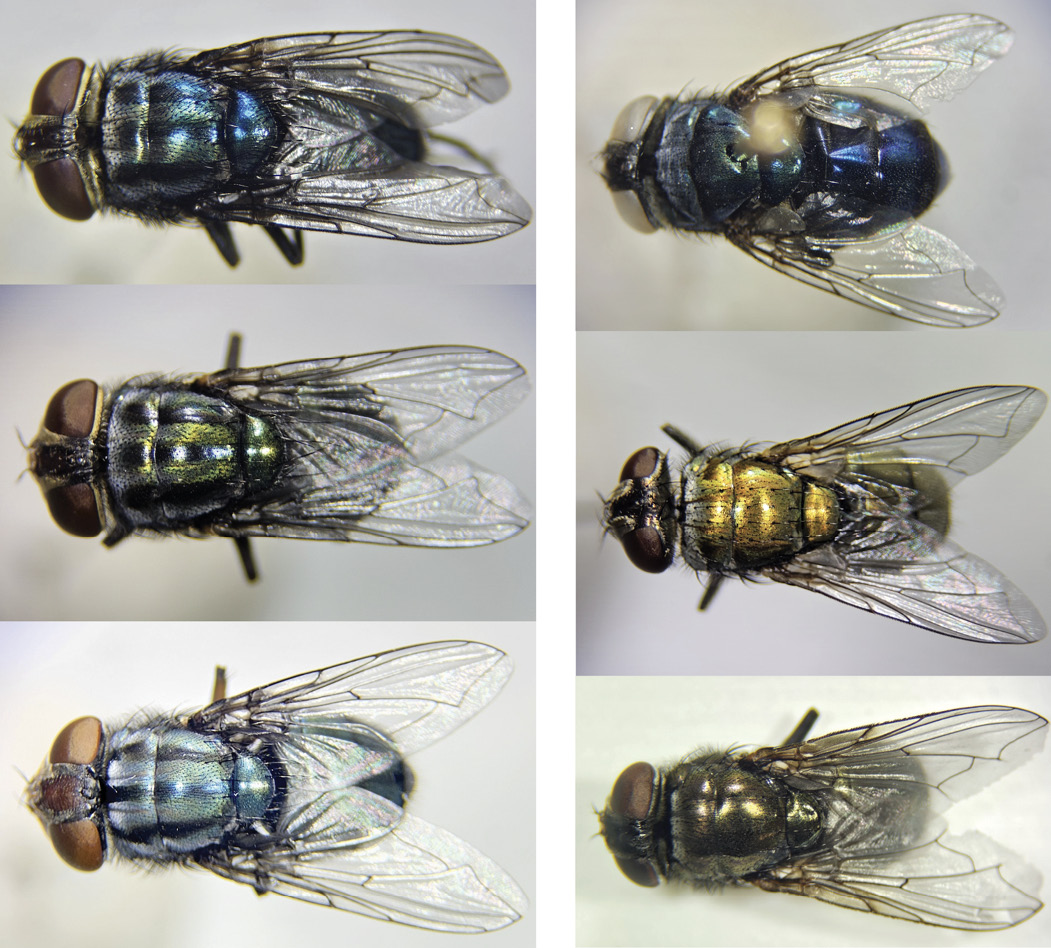
Figure 25. Comparison of species with mesonotum stripes to examples of species without mesonotum stripes. From top to bottom, with stripes (left): NWS or d, Secondary Screwworm or Cochliomyia macellaria, Compsomyiops callipes. From top to bottom, without stripes (right): Oriental latrine fly or Chrysomya megacephala, green bottle fly/Australian sheep blow fly or Lucilia cuprina (the closest relative of Lucilia sericata); Black blow fly or Phormia regina. Photos by Sohath Zamira Yusseff-Vanegas.
Summary
Identification of NWS is difficult considering the number of blow fly species found in the southern United States. The photographs included here are provided as an educational resource comparing NWS by sex, age, and to closely related species. Because NWS is a serious livestock and wildlife pest, any suspected case should be reported immediately. If you find a metallic fly with three stripes on the back, immediately report the specimen to the proper authorities. Animals with worsening open wounds or unusual maggot infestations should be reported immediately to a veterinarian or local agricultural authorities in the contact listed provided above, who can contact state or federal officials if needed. Quick reporting allows experts to confirm the identity and take action to prevent spread. The NWS is a major human health, animal welfare, and economic concern. Reporting suspected New World screwworm protects your operation first. These infestations worsen quickly, so waiting can mean more animals infected, higher treatment costs, and livestock losses. Early reporting also limits the biggest financial losses through mortality, treatment costs, and lost market access.
References
- New Mexico Department of Game and Fish. (2014). Study: N.M. hunters, anglers spend more than $613 million. https://wildlife.dgf.nm.gov/study-n-m-hunters-anglers-spend-more-than-613-million/
- Klassen, W., Curtis, E.C., & Hendrichs, J. (2021). History of the sterile insect technique. In V.A. Dyck, J. Hendrichs, & A.S. Robinson (Eds.), Sterile Insect Technique (pp. 1-44). CRC Press.
- Bourtzis, K., & Vreysen, M.J. (2021). Sterile insect technique (SIT) and its applications. Insects, 12(7), 638. doi: 10.3390/insects12070638
- Meyer, N.L. (1996). History of the Mexico-United States Screwworm Eradication Program. Vantage PR.
- Rawlins, S.C., Alexander, F.C., Moe, V., Caesar, E., Moll, K., & Applewhaite, L. (1983). Screwworm (Diptera: Calliphoridae) myiasis in the southern Caribbean, and proposals for its management. Journal of Economic Entomology, 76(5), 1106-1111. https://doi.org/10.1093/jee/76.5.1106
- Grant, G.H., Lazarus, C., Snow, J.W., & Teran, M.V., (1998). The Screwworm as a Pest in the Caribbean and Plans for its Eradication from Jamaica and the Other Infested Islands Using the Sterile Insect Technique (SIT). Caribbean Food Crops Society, 34th Annual Meeting.
- Valdez-Espinoza, U.M., Fadda, L.A., Marques, R., Osorio-Olvera, L., Jiménez-García, D., & Lira-Noriega, A. (2025). The reemergence of the New World screwworm and its potential distribution in North America. Sci Rep, 15, 23819. https://doi.org/10.1038/s41598-025-04804-9
- Jones, N., Whitworth, T., & Marshall, S.A. (2019). Blow flies of North America: Keys to the subfamilies and genera of Calliphoridae, and to the species of the subfamilies Calliphorinae, Luciliinae and Chrysomyinae. Canadian Journal of Arthropod Identification, 39, 191. doi:10.3752/cjai.2019.39
- Beza-Beza, C.F., Soghigian, J., Bailey, E., Johnston, N.P., Cassel, B.K., Bayless, K.M., Wells, J.D., Yeates, D.K., Wallman, J.F., Yan, L., Thomas-Cabianca, A., Hickner, P.V., Grzywacz, A., Meiklejohn, K.A., Torres, T.T., Scott, M.J., Mikaelyan, A., Zhang, D., Cerretti, P., Szpila, K., Pape, T., Wiegmann, B.M. (2025). Phylogenomics and the evolution of larval feeding habits in the blow flies (Diptera: Calliphoridae). Systematic Entomology, 51(1), e70018. https://resjournals.onlinelibrary.wiley.com/doi/10.1111/syen.70018


Caleb B. Hubbard is an Assistant Professor of Urban Entomology at New Mexico State University. He holds two degrees from land-grant institutions: a B.S. in Biology and a Ph.D. in Entomology from the University of California, Riverside. His research program integrates insect behavior, genetics, and applied pest management to address challenges in urban environments.
To find more resources for your business, home, or family, visit the College of Agricultural, Consumer and Environmental Sciences on the World Wide Web at pubs.nmsu.edu.
Contents of publications may be freely reproduced, with an appropriate citation, for educational purposes. All other rights reserved. For permission to use publications for other purposes, contact pubs@nmsu.edu or the authors listed on the publication.
New Mexico State University is an equal opportunity employer and educator. NMSU and the U.S. Department of Agriculture cooperating.
June 2026 Las Cruces, NM