Guide A-155
Rajan Ghimire, Juan P. Frene, and John Idowu
College of Agricultural, Consumer and Environmental Sciences, New Mexico State University
Author(s): Respectively, Associate Professor and Cropping Systems Specialist, Department of Plant and Environmental Sciences, Agricultural Science Center in Clovis, New Mexico; Post-Doctoral Researcher, Department of Plant and Environmental Sciences, Agricultural Science Center in Clovis, New Mexico; and Extension Agronomist Specialist, Department of Plant and Environmental Sciences and Department of Extension Plant Sciences. All from New Mexico State University. (Print Friendly PDF)
Sustainable Agriculture in Arid and Semi-Arid Environments
Sustainable agriculture involves a range of plant and animal production practices that satisfy human food and fiber needs over extended time, enhance environmental quality and the natural resource base upon which the agriculture economy depends. It aims to make the most efficient use of local resources and natural biological cycles, and sustain the economic viability of farm operations, enhancing the quality of life for farmers and society as a whole. In the arid and semi-arid Southwest, agricultural production faces challenges due to rainfall scarcity and strong winds, which increase soil erosion and crop stress, reducing yields and exacerbating economic instability. Therefore, farmers in the region recognize the necessity of adopting sustainable practices to mitigate both soil- and weather-related challenges, a practice dating back to the Dust Bowl era. However, the concept of sustainable agriculture and food systems was widely recognized only after World War II, and the adoption of sustainable practices gained momentum following the publication of the Brundtland Report in 1987, which emphasized the interrelationships between people, resources, the environment, and development to achieve sustainability goals.1
Many farmers and landowners have recognized the need to adopt sustainable agricultural practices to maintain long-term soil health and resilience. Farmland productivity is closely tied to soil health and the soil’s capacity to support crop growth, both of which have been compromised by declining soil fertility over the years of intensive tillage and crop production practices that deplete soil resources. Sustainable agriculture helps in building soil health because it is based on four principles: (1) no-till to minimize mechanical soil disturbance, (2) crop rotation or diversification, (3) keeping the soil covered more than 30% throughout the year, and (4) optimal nutrient management.1 Implementing sustainable approaches has become an urgent priority in arid and semi-arid regions, yet no locally relevant, economically and environmentally sustainable solution has been identified.
What is the role and effectiveness of biochar in sustainable agriculture?
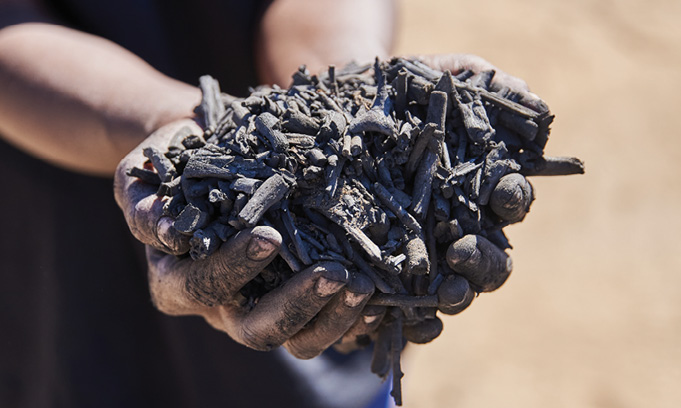
Biochar amendment has been considered a promising approach in sustainable agriculture in arid and semi-arid regions. Biochar is a carbon-rich material produced by burning organic biomass under low- or no-oxygen conditions. It can support crop production by providing favorable physical, chemical, and biological soil conditions. For example, biochar enhances soil organic matter while also increasing the availability of essential nutrients to crops, facilitating good air and water movement in the soil, and promoting soil microbial growth and activity. It has emerged as a two-part solution in sustainable agriculture: i.e., increasing crop production and improving soil health; and utilizing organic waste from farming, gardening, or forestry, leading to a “circular agricultural economy”.
The effectiveness of biochar in sustainable agriculture depends on selecting the right feedstock tailored to specific soil needs, which can vary depending on soil health and desired improvement goals. Biochar is produced from a variety of materials, including tree trimmings, crop stalks/husks, sewage waste, or manure. Biochar produced from woody-type biomass is rich in carbon and has more surface area and porosity than biochar from animal wastes. Biochar from animal waste, on the other hand, is rich in nutrients, specifically in nitrogen and phosphorus. A study conducted by Colorado State University researchers suggested that biochar produced from softwood, crop biomass (corn stalk, wheat straw, etc.), and animal manure is suitable for enhancing available nitrogen, while biochar from corn, wheat, and rice straw/husk is suitable for increasing available phosphorus.2 Likewise, biochar derived from hardwoods, softwoods, and wheat is ideal for increasing soil potassium availability.
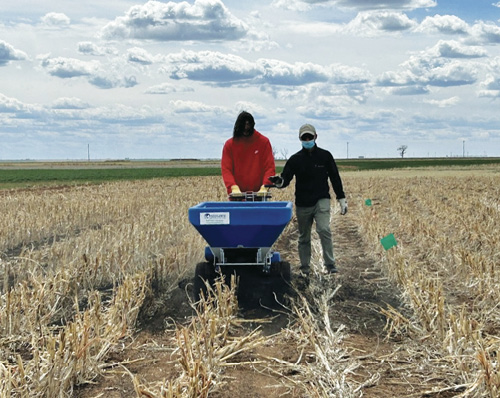
Figure 1a. Biochar application in research plots at Agricultural Science Center, Clovis, NM. This spreader could be useful in small farms and gardens. Large spreaders are available in the market to use in a big-farm conditions. Photo: Rajan Ghimire.
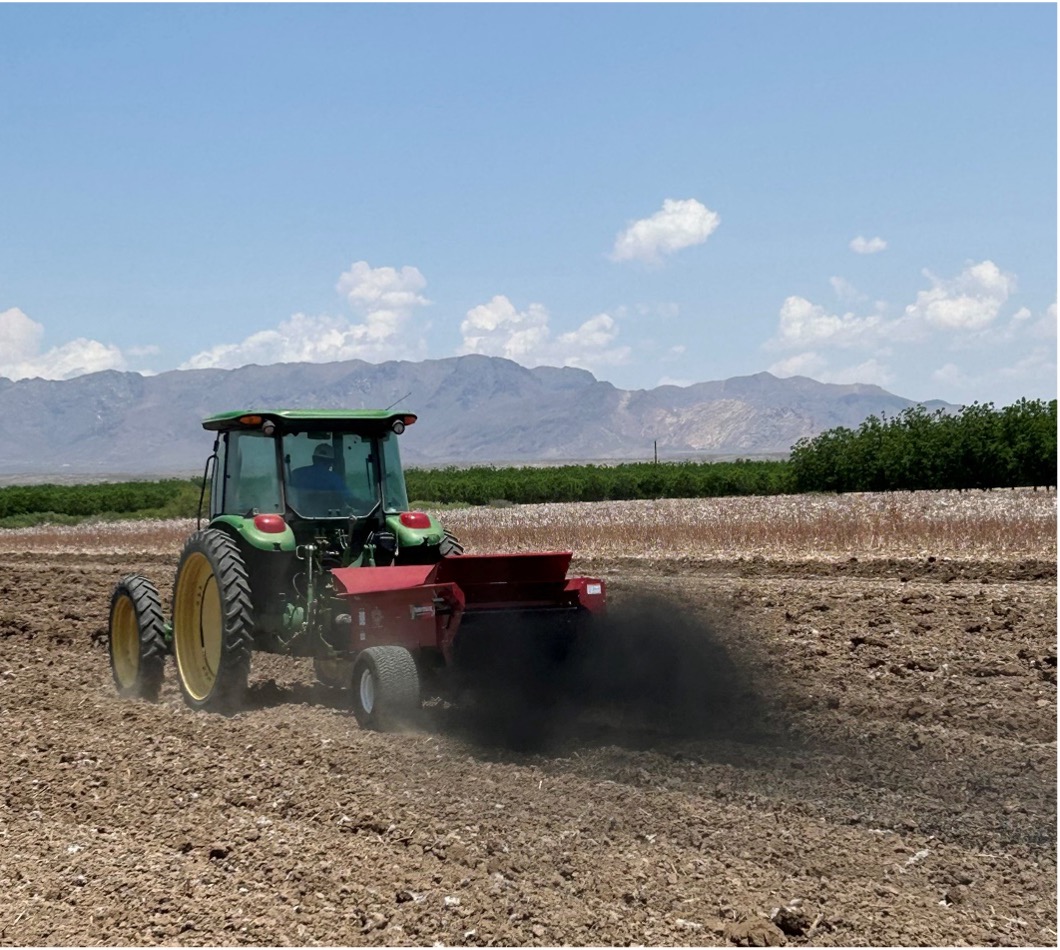
Figure 1b. Biochar application in research plots at Leyendecker Plant Science Center, Las Cruces, NM. This spreader could be useful in a larger setting. Large spreaders are available in the market to use in a big-farm conditions. Photos: Rajan Ghimire.
Biochar properties are also affected by the temperature at which biomass is burnt; producing biochar at very high temperatures (600°C or higher) makes it harder to decompose and results in a higher pH. These biochars persist longer in the soil than biochar produced at 300 to 500°C. Low temperatures (<400°C) produce a large quantity of biochar and consume less energy. A study conducted in Clovis, NM (Figure 1) showed that biochar produced at higher temperatures retains more soil carbon due to slower decomposition, while biochar produced at lower temperatures supports higher sorghum yields even in the same year it is applied.3 If a farmer’s goal is to increase soil carbon, biochar produced at higher temperatures could be beneficial. However, given the high soil pH in the arid and semi-arid Southwest, biochar prepared at low to medium temperatures might be a better option for New Mexico, as it provides both crop yield and environmental benefits. For more guidance on selecting the right type of biochar for your farm, refer to Extension Circular 690 (see the Additional Resources section). This guide focuses on key questions about the potential to modify biochar to achieve targeted agronomic and environmental benefits in areas that are not responsive to many other sustainable agriculture practices.
Can biochar be modified to improve its effectiveness?
Over the past several years, biochar has been modified to develop specific characteristics that help achieve certain ecosystem functions. Common changes to biochar structure can be physical—such as steaming or gasification—or chemical, including metal doping (e.g., alkali or acid modifications). These changes create irregularly charged sites within the carbon structure of the biochar, producing an active material that has multiple uses. These modifications open a new window of opportunities for biochar use in sustainable agriculture.
What are common modifications useful in sustainable agriculture in dry areas?
Common modifications include chemical treatments that add minerals such as magnesium, aluminum, calcium, and iron. These modifications help supply specific nutrients to plants or enhance their ability to adsorb these nutrients, thereby reducing environmental pollution more effectively than unmodified biochar. Common modifications in biochar include:
- Iron-modified biochar is produced by soaking the raw material in iron chloride solution for 24 hours before pyrolysis. The addition of iron can increase phosphorus adsorption sites, improving its utilization efficiency and minimizing environmental concerns caused by phosphorus leaching. This addition also lowers the pH in the biochar and can alter the availability of adsorbed nutrients.
- Magnesium-modified biochar is produced by soaking the raw material in magnesium chloride solution for 24 hours before pyrolysis. This biochar increases magnesium content in the soil and ultimately in plants. Increased magnesium in plants increases leaf greenness and enhances photosynthesis, thereby reducing plant stress. Magnesium addition also provides adsorption sites for nutrients, so this biochar can reduce phosphorus and sulfur losses via leaching.
- Sulfur-modified biochar is made by the addition of sulfur compounds before pyrolysis. Specifically, the addition of sulfate-based functional groups to biochar via potassium thiosulfate doping enabled plants to better maintain and utilize nutrients at the appropriate time. It enhances both soil organic carbon stability and crop yields, increases soil fungal biomass, improves soil potassium and sulfur content, and maintains low sodium concentration.
What are the benefits of modified biochar?
1. Adsorb contaminants
Biochar can adsorb a wide range of soil pollutants, including heavy metals, pesticides, and excess nitrates, thereby reducing their bioavailability and leaching into water systems. Modified biochar, composed of nano-sized particles of iron and magnesium oxide, showed a strong affinity for phosphorus in soil solutions.4 Modified biochar with coated elements can also improve the availability of phosphorus, nitrogen, potassium, and iron in soil. For example, magnesium-modified biochar adsorbed high quantities of phosphate,5 and aluminum-modified biochar adsorbed both nitrate and phosphate.6 Additionally, biochar is modified to enhance its adsorption efficiency of various heavy metal ions in wastewater, including arsenic, cadmium, chromium, copper, mercury, and lead.5 The addition of iron-modified biochar to crops decreased the plant uptake of heavy metals, such as cadmium and lead.7 The capacity of iron-modified biochar to remove phosphorus from contaminated water was 18 times higher than that of the unmodified biochar.8 While adsorption of nutrients might reduce nutrient availability, adding modified biochar in areas where nutrient loss or heavy metal contamination is a problem provides a sustainable solution to mitigate their impact on crop production.
2. Retention of nutrients applied as fertilizers in the soil
The constant addition of higher doses of synthetic and organic fertilizers, such as urea and compost, can increase the risk of nutrient loss either in surface water or via leaching, leading to pollution of drinkable water and financial losses to farmers. Biochar can enhance nutrient retention, particularly nitrogen and phosphorus, thereby contributing to nutrient use efficiency in crops. Modified biochar can further enhance these properties, increasing the soil’s capacity to retain essential nutrients such as nitrogen, reducing the need for synthetic fertilizers. However, some modifications can hold nutrients too tightly, affecting crop production; for example, certain types of iron-modified biochar may not readily release the nutrients it has adsorbed, thereby prolonging their residence time in the soil.9 This reduces their mobility and bioavailability, thereby protecting groundwater quality and minimizing ecological risks. In turn, this minimizes fertilizer loss through leaching or volatilization, and supports healthy plant growth even in nutrient-poor or degraded soils. When designing such modifications, one should be cautious of excessive nutrient tie-up and low fertilizer efficacy.
3. Reducing greenhouse gas emissions
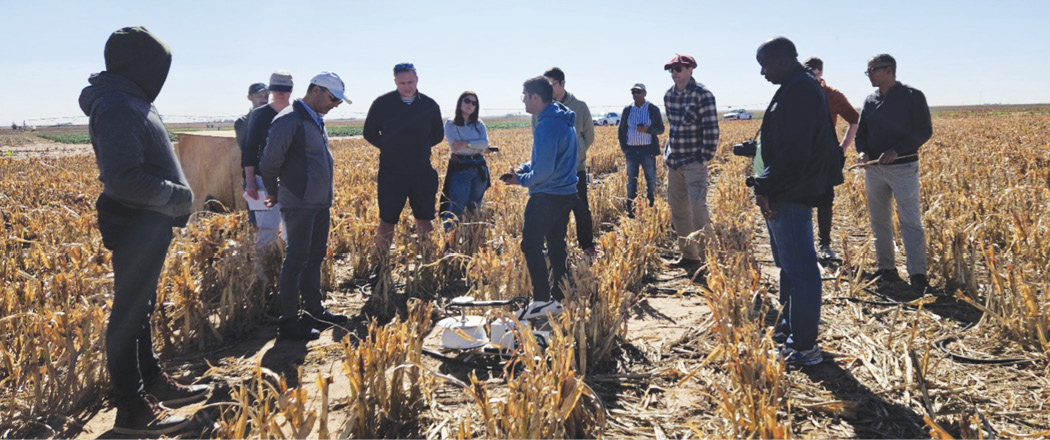
Biochar, in addition to enhancing nutrient retention, also reduces greenhouse gas emissions and helps mitigate global warming (Figure 2). Our study showed up to 70% reduction in nitrous oxide emissions in sorghum production both under supplemental irrigation3,10 and under drought stress conditions.11 By modifying the surface characteristics of biochar, researchers can enhance its ability to sequester atmospheric carbon dioxide (CO2) through both direct capture during pyrolysis and long-term carbon retention in the soil, contributing to the reduction of net global warming potential.11 Additionally, there is evidence that various modifications can reduce trace gases, such as the release of sulfite from soils.
4. Improving other soil properties and crop production
Biochar has been shown to improve soil structure, increase water-holding capacity, and increase soil organic matter in semi-arid regions. Its properties, such as high porosity, cation exchange capacity (CEC), and pH, stimulate carbon storage, stabilize soil, and reduce labile carbon loss.12 Soil pH modification with acidic biochar, such as iron-modified biochar, can be especially beneficial for soils in New Mexico, which typically have a high pH. Lowering soil pH makes nutrients, such as potassium, magnesium, and manganese, available to plants.4 Notably, Iron-biochar adsorbs and retains more phosphorus, thereby optimizing phosphorus fertilizer utilization efficiency (i.e., producing more plant biomass with less phosphorus). In a study, magnesium and sulfur-modified biochar increased the sorghum grain production by 15%, demonstrating its potential to improve plant productivity and soil health.12 In another study, modified biochar increased grain sorghum yield by up to 27% by substantially improving phosphorous use efficiency.4 Overall, modified biochar offers a promising solution to enhance crop production in soils with low nutrient levels, serving as an alternative to improve nutrient use efficiency, conserve water, and promote sustainable agriculture in dry areas.
Conclusions
In arid and semi-arid areas, biochar can be a valuable tool for enhancing soil health and crop yields, both in the short and long term. Modified biochar can further improve soil nutrient retention and crop growth. New Mexico State University researchers are conducting multiple trials to make modified and unmodified biochar more useful, economical, and accessible to growers and land managers. If you need more information about biochar, please visit your local NMSU Cooperative Extension Service County office at http://aces.nmsu.edu/county/ or agricultural science centers across the state to learn from these ongoing studies.
Additional resources on the topic
- Frene, J.P., Kesera, N., Jaisi, D.P., Sapkota, S., O’Connell, D.W., Higginse, S., Adhikari, S., & Rajan Ghimire. (2025). Enhancing soil health and phosphorus use efficiency with modified biochar amendment. Science of The Total Environment, 1004, 180794.
- Idowu, J., & Brewer, C. (2018). Biochar for arid and semi-arid agricultural soils [Circular 690]. New Mexico State University, Cooperative Extension Service.
- Sapkota, S., Frene, J.P., Kasera, N.K., Adhikari, P., Adhikari, S., & Ghimire, R. (2026). Microbial community responses to feedstock type and modifications determine soil organic carbon sequestration and crop yield in biochar-amended arid soils. Frontiers in Soil Science, 6, 1669356\
Funding Acknowledgement
This work was supported by USDA National Institute of Food and Agriculture (grant 2023- 69016-39062) and National Science Foundation (Grant No. 2316278).
References
- Velten, S., Leventon, J., Jager, N., Newig, J., 2015. What is sustainable agriculture? A systematic review. Sustainability, 7(6), 7833-7865.
- Ippolito, J.A., Cui, L., Kammann, C., Wrage-Mönnig, N., Estavillo, J.M., Fuertes-Mendizabal, T., Cayuela, M.L., Sigua, G., Noival, J., Spokas, K., & Borchard, N. (2020). Feedstock choice, pyrolysis temperature, and type influence biochar characteristics: a comprehensive meta-data analysis review. Biochar, 2(4), 421–438.
- Sapkota, S., Ghimire, R., Bista, P., Hartmann, D., Rahman, T., & Adhikari, S. (2024). Greenhouse gas mitigation and soil carbon stabilization potential of forest biochar varied with biochar type and characteristics. Science of Total Environment, 931, 172942.
- Frene, J.P., Kesera, N., Jaisi, D.P., Sapkota, S., O’Connell, D.W., Higginse, S., Adhikari, S., & Rajan Ghimire. (2025). Enhancing soil health and phosphorus use efficiency with modified biochar amendment. Science of The Total Environment, 1004, 180794
- Kasera, N.K., Kolar, P., & Hall, S.G. (2022). Nitrogen-doped biochars as adsorbents for mitigation of heavy metals and organics from water: A review. Biochar, 4(1), 17.
- Yin, Q., Ren, H., Wang, R., & Zhao, Z. (2018). Evaluation of nitrate and phosphate adsorption on Al-modified biochar: influence of Al content. Science of The Total Environment, 631, 895–903.
- Oliveira, F. R., Patel, A. K., Jaisi, D. P., Adhikari, S., Lu, H., & Khanal, S. K. (2017). Environmental application of biochar: Current status and perspectives. Bioresource technology, 246, 110–122.
- Biswas, B., Adhikari, S., Jahromi, H., Ammar, M., Baltrusaitis, J., Torbert, A., & Lamba, J. (2024). Magnesium-doped biochar for simultaneous adsorption of phosphate and nitrogen ions from aqueous solution. Chemosphere, 358, 142130.
- Kumar, R., Lamba, J., Adhikari, S., Kasera, N., & Torbert, H.A. (2025). Influence of iron-modified biochar on phosphate transport and deposition in saturated porous media under varying pH, ionic strength, and biochar dosage. Chemosphere, 370, 143932.
- Sharma, B., Ghimire, R., Sapkota, S., Shrestha, P., Brewer, C. E., & Adhikari, S. (2025). Nitrous oxide mitigation potential of biochar derived from agricultural and forest biomass: Effects of feedstock composition and pyrolysis temperature. Journal of Environmental Quality, 54(6), 1746-1758.
- Madhuwanthi, P., Ghimire, R., Sapkota, S., Norris-Parish, S. and Ulery, A. (2026). Contrasting effects of biochar and compost on greenhouse gas emissions and the global warming potential of semi-arid cropping systems. https://doi.org/10.1038/s41598-026-42554-4
- Sapkota, S., Frene, J.P., Kasera, N.K., Adhikari, P., Adhikari, S., & Ghimire, R. (2026). Maximizing soil carbon sequestration and crop yield co-benefits with modified biochar. Under revision at Frontiers in Agriculture.

To find more resources for your business, home, or family, visit the College of Agricultural, Consumer and Environmental Sciences on the World Wide Web at pubs.nmsu.edu.
Contents of publications may be freely reproduced, with an appropriate citation, for educational purposes. All other rights reserved. For permission to use publications for other purposes, contact pubs@nmsu.edu or the authors listed on the publication.
New Mexico State University is an equal opportunity employer and educator. NMSU and the U.S. Department of Agriculture cooperating.
March 2026 Las Cruces, NM