Guide ER-2
Series 2 of 3
Allen Malone, Pilja Vitale, Jon Boren, Richie Roberts
College of Agricultural, Consumer and Environmental Sciences, New Mexico State University
Authors: Respectively, Associate Director, Cooperative Extension Service, New Mexico State University (NMSU); State-wide Extension Economist, Agricultural Economics & Agricultural Business (AEAB), NMSU; Associate Dean and Director, Cooperative Extension Service, NMSU; and former Professor and Department Head, Department of Agricultural and Extension Education, NMSU. (Print Friendly PDF)
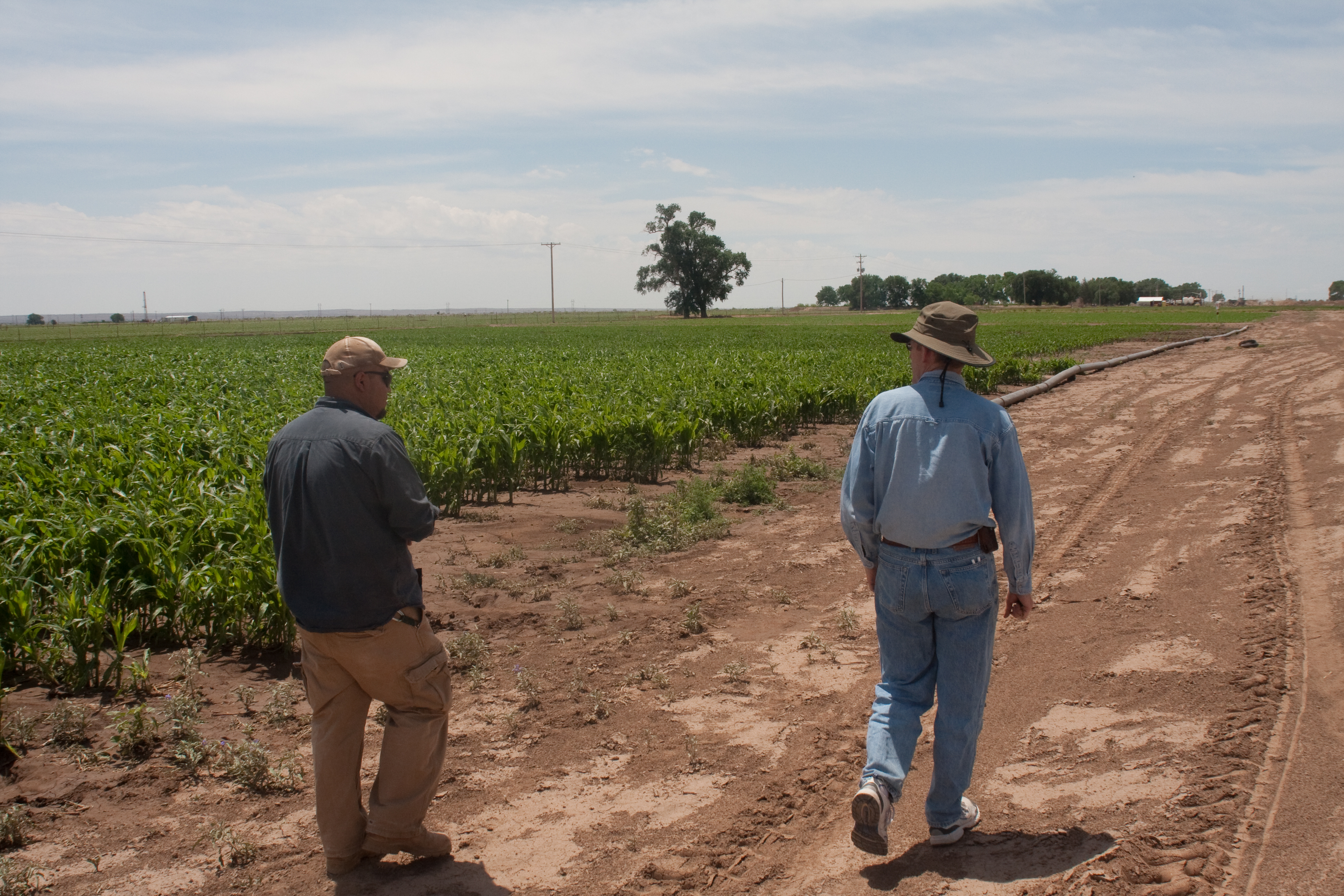
Photo by Khushroo Ghadiali. NMSU, 2009.
Introduction
Effective Extension programs are built on an understanding of local communities and their needs. Needs assessments provide a systematic process for identifying community concerns, opportunities, and priorities that can guide program development.1 By identifying community priorities and using data to guide decision-making, Extension agents can develop programs that are relevant, responsive, and impactful. This planning approach is widely recognized as a core component of effective Cooperative Extension programming.2
The NMSU Self-Study Guide for New Extension Agents provides orientation to county characteristics, stakeholders, and Extension responsibilities.3
A series of publications was developed to provide practical guidance for Extension agents. Series 1, County Needs Assessment Workbook for New Mexico Extension Agents4, focuses on identifying community needs through surveys, interviews, focus groups, and SWOT analysis.
This publication, Series 2: From Community Needs Assessment to Program Planning, focuses on the next step in the process - using assessment results to develop Extension programs. Topics include interpreting assessment findings, prioritizing community needs, selecting program areas, and developing county program priorities. The publication is designed to help Extension agents translate community needs into program priorities that address local issues and opportunities.
Using Assessment Findings for Decision-Making
Collecting information is only the first step in the needs assessment process. Surveys, interviews, focus groups, and SWOT (strengths, weaknesses, opportunities, threats) analyses can generate large amounts of information, but the data has little value unless they are carefully organized and interpreted. Extension agents must be able to identify key findings, recognize recurring issues, and determine which concerns are most important to local stakeholders.
The goal of this step is to organize assessment results so they can be used to make programming decisions. By organizing findings and identifying common themes, Extension agents can gain a clearer understanding of community strengths, challenges, opportunities, and priorities.
Each assessment method provides different types of information. Surveys can help quantify community concerns and preferences. Interviews provide detailed perspectives from key stakeholders. Focus groups offer insights into community perceptions and group priorities. SWOT analyses help identify internal strengths and weaknesses as well as external opportunities and threats. When findings from multiple methods point to similar issues, agents can have greater confidence that those issues represent important community needs.
This section provides practical guidance for organizing and interpreting needs assessment findings. Topics include summarizing survey results, reviewing interview and focus group data, organizing SWOT findings, and identifying common themes across multiple sources of information. This concludes with approaches for summarizing assessment findings and preparing for the next step in the planning process—prioritizing community needs.
Organizing Survey Results
Survey data provide a useful summary of community concerns, interests, and priorities. After surveys have been collected, responses should be summarized and organized to identify the issues most frequently mentioned by participants.
One simple approach is to calculate the number and percentage of respondents selecting each issue. Results can then be ranked from highest to lowest priority. Table 1 shows the example.
|
Table 1. Example of Community Survey Results |
||
|---|---|---|
|
Community Issue |
Number of |
Percentage |
|
Water shortages |
85 |
68% |
|
Youth leadership development |
72 |
58% |
|
Farm profitability |
64 |
51% |
|
Workforce development |
55 |
44% |
|
Community beautification |
28 |
22% |
In this example, water shortages, youth leadership development, and farm profitability were identified as the highest priorities by survey respondents.
Survey results may also include open-ended responses. These comments should be reviewed and grouped into common categories. Similar responses can then be summarized to identify recurring concerns and suggestions.
Organizing Interview Results
Interviews provide detailed information from key stakeholders and community leaders. Because interview responses are primarily qualitative, the goal is to identify recurring themes and patterns across interviews. A simple method is to review interview notes and group similar comments together. After reviewing multiple interviews (Table 2), the agent may identify recurring concerns such as rising irrigation costs, drought and forage availability, or workforce shortages. When helpful, the frequency with which a theme is mentioned may be noted in parentheses to indicate its prevalence across interviews (e.g., Rising Irrigation Costs (7); Drought and Forages (5)). These recurring themes help identify county priorities and provide a foundation for program planning and decision-making.
|
Table 2. Example of Interview Summary |
|
|---|---|
|
Stakeholder Group |
Key Concern |
|
Farmers |
Rising irrigation costs |
|
Ranchers |
Drought and forage shortages |
|
School administrators |
Limited youth leadership opportunities |
|
Business owners |
Workforce shortages |
|
Community leaders |
Economic development |
Organizing Focus Group Results
Focus groups provide an opportunity for participants to discuss community issues in greater depth. Notes should be reviewed carefully to identify areas of agreement, differences of opinion, and potential solutions. The goal is not to record every comment but to summarize the major themes that emerged during the discussion. Table 3 shows the example of focus group findings.
|
Table 3. Example of Focus Group Findings (Topic: Agricultural Development) |
|
|---|---|
|
Common Concerns |
Suggested Solutions |
|
Limited water availability |
Irrigation efficiency training |
|
Rising input costs |
Alternative crop production |
|
Lack of local processing facilities |
Value-added processing opportunities |
Organizing SWOT Findings
SWOT analysis helps identify internal strengths and weaknesses as well as external opportunities and threats. SWOT findings can help agents understand both the challenges and opportunities that may influence future programming. Table 4 shows the example of SWOT summary.
|
Table 4. Example of County SWOT Summary |
|
|---|---|
|
Strengths |
Weaknesses |
|
•Strong agricultural industry • Active community organizations • Experienced Extension volunteers |
• Limited staff resources • Aging producer population |
|
Opportunities |
Threats |
|
• Growing interest in local foods • New agricultural technologies • Available grant funding |
• Drought • Rising production costs • Population decline |
Synthesizing Assessment Findings
After organizing survey, interview, focus group, and SWOT results separately, the next step is to compare findings across assessment methods. Extension agents should look for issues that appear repeatedly, even if they are described differently. Similar findings can be grouped into broader themes that represent community-wide concerns.
For example, survey respondents identified water shortages, farmers interviewed discussed rising irrigation costs, focus group participants emphasized limited water availability, and the SWOT analysis identified drought as a major threat. Although these findings use different wording, they all describe the broader issue of water resource management. Likewise, survey responses on farm profitability, interview concerns about forage shortages, focus group discussions of rising input costs, and the SWOT threat of rising production costs can be synthesized into the broader theme of agricultural profitability.
Table 5 illustrates how findings from the previous tables can be synthesized into common themes that provide the foundation for prioritizing community needs.
|
Table 5. Synthesizing Findings Across Assessment Methods |
||||
|---|---|---|---|---|
|
Broad Theme |
Survey Results (Table 1) |
Interview Results (Table 2) |
Focus Group Results (Table 3) |
SWOT Results (Table 4) |
|
Water resource management |
Water shortages |
Rising irrigation costs |
Limited water availability |
Drought |
|
Agricultural profitability |
Farm profitability |
Drought and forage shortages |
Rising input costs |
Rising production costs |
|
Youth development |
Youth leadership development |
Limited youth leadership opportunities |
— |
Population decline |
|
Workforce and economic development |
Workforce development |
Workforce shortages |
Value-added processing opportunities |
Growing interest in local foods |
Prioritizing Community Needs
After organizing assessment findings and identifying common themes, the next step is to determine which needs should receive priority attention. Prioritization is a critical component of the program development process because it helps allocate limited resources to issues that are most important to stakeholders and where educational programs can have the greatest impact (Boone et al., 2002).5 Surveys, interviews, focus groups, and SWOT analyses often identify multiple concerns within a community. However, Extension personnel typically have limited time and resources and cannot address every issue simultaneously. Prioritization helps identify the issues that are most important to the community and most appropriate for Extension programming.
Importance
The common themes identified in the previous section should first be evaluated based on their importance to the community. Issues that are consistently identified across multiple assessment methods may indicate broader community concern than issues identified through only one source. For example, if water shortages are identified in surveys, interviews, focus groups, and SWOT analyses, the issue may be considered more important than an issue mentioned only occasionally by stakeholders.
Importance may also be reflected by the number of people affected by the issue and the potential consequences if the issue is not addressed. Issues affecting agricultural production, youth development, family well-being, economic development, or natural resources often have widespread impacts across the community.
Urgency
Assessment findings may also help determine the urgency of a particular issue. Some concerns require immediate attention, while others may be addressed over a longer period. Stakeholder comments, survey responses, and SWOT findings often provide insight into whether an issue is becoming more severe or creating immediate challenges for the community.
For example, prolonged drought conditions, declining water supplies, or emerging agricultural pests may require timely educational programs and outreach efforts. In contrast, other issues may be important but less time sensitive.
Extension Capacity
Not all identified community needs can be effectively addressed through Extension programming. After reviewing assessment findings, Extension personnel should consider whether Extension has the expertise, resources, and partnerships necessary to address the issue.
Extension is often well positioned to address issues through education, demonstrations, technical assistance, applied research, and community partnerships. However, some community concerns may require policy changes, infrastructure investments, long-term research, or services beyond the scope of Extension. In these cases, Extension can share assessment findings with appropriate organizations, agencies, or decision-makers while focusing its programming on areas where it can make the greatest contribution. Prioritization should therefore consider where Extension can make a meaningful contribution. Available staffing, funding, and partnerships may also influence which priorities can realistically be addressed. Counties often face resource limitations and may need to focus on a smaller number of high-priority issues where Extension can have the greatest impact.
Stakeholder Support
The assessment process also provides information about stakeholder support for potential programming areas. Issues frequently discussed during interviews, focus groups, advisory committee meetings, and community discussions often indicate strong stakeholder interest.
Programs are generally more successful when stakeholders recognize the importance of the issue and are willing to participate in educational activities, partnerships, and community initiatives. Strong stakeholder support can increase participation, strengthen collaborations, and improve program outcomes.
Prioritization Matrix
A prioritization matrix can help organize assessment findings and support decision-making. Each identified community need (broad theme) can be evaluated according to importance, urgency, Extension capacity, and stakeholder support. Scores can then be compared to identify potential priority areas using the worksheet in Appendix 1. Table 6 shows the example of community needs prioritization matrix. In this example, water resource management received the highest score and would likely become a county program priority.
|
Table 6. Example of Community Needs Prioritization Matrix |
|||||
|---|---|---|---|---|---|
|
Community Need (Broad Theme) |
Importance |
Urgency |
Extension Capacity |
Stakeholder Support |
Total |
|
Water resource management |
5 |
5 |
5 |
5 |
20 |
|
Agricultural profitability |
4 |
4 |
4 |
4 |
16 |
|
Youth development |
4 |
3 |
5 |
5 |
17 |
|
Workforce & economic development |
3 |
3 |
3 |
4 |
13 |
After discussing each theme using the four prioritization criteria, Extension personnel may assign numerical ratings (for example, 1 = low to 5 = high) to facilitate comparison among community needs.
The matrix is intended to support discussion and decision-making rather than replace professional judgment. Local circumstances, emerging issues, and available resources should also be considered when establishing priorities.
Selecting Top Priorities
Once assessment findings have been reviewed and community needs evaluated, Extension personnel can identify the issues that will become programming priorities. Many counties focus on a limited number of priority areas to ensure that available resources can be used effectively and that programs can achieve meaningful outcomes. Based on the prioritization matrix (Table 6), Water Resource Management and Agricultural Profitability receive the highest scores and would become the primary county program priorities. After comparing total evaluation scores in the prioritization matrix, the highest-ranked community needs can be translated into county Extension program priorities. Community needs should be evaluated using multiple criteria because no single factor determines program priority. Some issues may be highly important but not urgent, while others may be urgent but beyond Extension’s capacity to address. Evaluating each broad theme using the four criteria below helps identify priorities that are both responsive to community needs and appropriate for Extension programming. Table 7 illustrates this process.
|
Table 7. Translating Community Needs into County Extension Program Priorities |
||
|---|---|---|
|
Community Need (Broad Theme) |
Total Score |
Selected Extension Program Priority |
|
Water resource management |
20 |
Irrigation Efficiency and Water Conservation |
|
Youth development |
17 |
4-H Youth Leadership and Workforce Readiness |
|
Agricultural profitability |
16 |
Farm and Ranch Business Management |
Considerations for Developing County Program Priorities
Selecting priorities does not automatically determine Extension programming. Extension personnel must next decide which community needs fall within the Extension mission and where educational programs can have the greatest impact. They should also consider whether they have the expertise, resources, and capacity to address each priority effectively. If additional expertise is needed, agents may collaborate with Extension specialists or partner with other organizations that have relevant knowledge and resources.
Community needs and Extension program priorities are not always the same. A need describes a problem, concern, or opportunity identified during the assessment process. A program priority describes the area where Extension will focus its educational efforts in response to that need.
What Should Extension Address?
Extension programs should focus on issues that are important to the community and where Extension can make a meaningful contribution through education, technical assistance, demonstrations, applied research, or partnerships.
When selecting program priorities, Extension personnel should consider:
- Community needs identified through the assessment process.
- Stakeholder interests and concerns.
- Availability of Extension expertise and resources.
- Opportunities to improve knowledge, skills, behaviors, or practices.
- Alignment with Extension and university missions.
County advisory committees should review and discuss proposed program priorities before they are finalized. Advisory committee members provide valuable local perspectives, help confirm that priorities reflect community needs, and strengthen stakeholder support for Extension programming. The strongest program priorities are supported by assessment findings and address issues that stakeholders consider important.
What Should Extension Not Address?
Not every community issue should become an Extension program priority. Some concerns may fall outside the mission and expertise of Extension. Others may be better addressed by government agencies, nonprofit organizations, private industry, or community groups.
For example, stakeholders may identify concerns related to road maintenance, law enforcement, utility infrastructure, or housing development. While these issues may be important to the community, they may not be appropriate Extension program areas unless there is a clear educational component where Extension can contribute.
The goal is not to solve every community problem but to focus on areas where Extension can provide meaningful educational leadership.
Developing county program priorities is an important step in the Extension program development process, but successful programming requires more than identifying priorities. Extension personnel must also develop educational programs, implement activities, evaluate outcomes, and document program impacts. These topics are addressed in Series 3, which focuses on program implementation, evaluation, impact reporting, and continuous program improvement. Together, the three publications provide a practical framework to guide New Mexico Extension personnel from community needs assessment through program planning, implementation, and evaluation.
Appendix 1. Community Needs Prioritization Worksheet
Instructions
Complete one worksheet for each broad theme identified from your community needs assessment (e.g., water resource management, youth development, agricultural profitability). Use information gathered from surveys, interviews, focus groups, SWOT analysis, advisory committee meetings, and other local data.
This worksheet is designed to help evaluate each community need before completing the Community Needs Prioritization Matrix (Table 6).
Broad Theme
Step 1. Evaluate Importance
Evidence to Consider
- Affects a large number of community members
- Identified through multiple assessment methods
- Significant economic impacts
- Significant environmental impacts
- Significant social or community impacts
- Frequently mentioned by stakeholders
- Consistent with county priorities
- Other:
Summary of Evidence
__________________________________________________________________________
__________________________________________________________________________
__________________________________________________________________________
__________________________________________________________________________
Importance Evaluation Score
|
Score |
Description |
|
1 |
Very little evidence that this is an important community issue. |
|
2 |
Limited evidence; affects a relatively small group. |
|
3 |
Moderate evidence; affects part of the community. |
|
4 |
Strong evidence; affects many people or has significant impacts. |
|
5 |
Very strong evidence; major county-wide issue with substantial impacts. |
Selected Score: _______
Step 2: Evaluate Urgency
Evidence to Consider
- Requires immediate attention
- Problem is becoming more severe
- Delaying action could increase negative impacts
- Emerging issue identified by stakeholders
- Immediate educational response is needed
- Other:
Summary of Evidence
__________________________________________________________________________
__________________________________________________________________________
__________________________________________________________________________
__________________________________________________________________________
Urgency Evaluation Score
|
Score |
Description |
|
1 |
Not time-sensitive; action can be delayed. |
|
2 |
Low urgency; should be monitored. |
|
3 |
Moderately urgent; should be addressed within the near future. |
|
4 |
Urgent; timely educational programming is recommended. |
|
5 |
Requires immediate attention because delaying action may result in significant impacts. |
Selected Score: _______
Step 3. Evaluate Extension Capacity
Evidence to Consider
- Fits the Extension mission
- Extension has appropriate expertise
- Educational programming can address the issue
- Staff time is available
- Funding is available
- Community partnerships are available
- Other:
Summary of Evidence
__________________________________________________________________________
__________________________________________________________________________
__________________________________________________________________________
__________________________________________________________________________
Extension Capacity Evaluation Score
|
Score |
Description |
|
1 |
Extension has little or no ability to address the issue. |
|
2 |
Limited expertise, resources, or partnerships are available. |
|
3 |
Extension can address some aspects of the issue. |
|
4 |
Extension has strong capacity through education and partnerships. |
|
5 |
Extension is exceptionally well positioned to address the issue effectively. |
Selected Score: _______
Step 4. Evaluate Stakeholder Support
Evidence to Consider
- Strong stakeholder interest
- Advisory committee support
- Community partners are willing to collaborate
- Participation in educational programs is likely
- Local organizations support the effort
- Other:
Summary of Evidence
__________________________________________________________________________
__________________________________________________________________________
__________________________________________________________________________
__________________________________________________________________________
Stakeholder Support Evaluation Score
|
Score |
Description |
|
1 |
Little or no stakeholder interest or support. |
|
2 |
Limited stakeholder support. |
|
3 |
Moderate stakeholder interest and willingness to participate. |
|
4 |
Strong stakeholder support and collaboration. |
|
5 |
Very strong stakeholder commitment with high potential participation and partnerships. |
Selected Score: _______
Step 5. Synthesize the Evaluation
|
Criterion |
Evaluation Score (1–5) |
Summary of Evidence |
|
Importance |
____________________ |
__________________________________________ |
|
Urgency |
____________________ |
__________________________________________ |
|
Extension Capacity |
____________________ |
__________________________________________ |
|
Stakeholder Support |
____________________ |
__________________________________________ |
|
Total Score |
______ / 20 |
Step 6. Overall Assessment
Based on the evaluation above:
Recommendation
- Recommend as a County Extension Program Priority
- Consider for Future Programming
- Do Not Recommend at This Time
Step 7. Transfer the Results
Transfer the evaluation scores for Importance, Urgency, Extension Capacity, and Stakeholder Support to the Community Needs Prioritization Matrix (Table 6). Compare the total scores for all broad themes to identify the county’s highest Extension program priorities.
References
- Witkin, B. R., & Altschuld, J. W. (1995). Planning and conducting needs assessments: A practical guide. Sage Publications.
- Malone, A. (2025). Assessing needs and program effectiveness of the Cooperative Extension Service in the case of New Mexico. Journal of NACAA, 18(2). https://www.nacaa.com/journal/f95c9db3-dbfa-43d8-bc47-d5567559085a
- NMSU Cooperative Extension Service. (2018). Self-study guide for the new Extension agent. https://aces-employee.nmsu.edu/documents/2018-self-study-guide.pdf
- Malone, A., Vitale, P., Boren, J., & Roberts, R. (2026). County needs assessment workbook for New Mexico Extension agents (Series 1 of 3) [Guide ER-2]. NMSU Cooperative Extension Service.
- Boone, E. J., Safrit, R. D., & Jones, J. (2002). Developing programs in adult education: A conceptual programming model (2nd ed.). Waveland Press.

Dr. Allen A. Malone is the Associate Director for the Cooperative Extension Service at New Mexico State University. He is an Agricultural Economics graduate of Prairie View A&M University and holds a dual doctorate degree in Agricultural Education & Leadership from Texas A&M and Texas Tech University. His extension career expands over 30 years in which he has served in several capacities, working with youth and advocating and supporting their education.
To find more resources for your business, home, or family, visit the College of Agricultural, Consumer and Environmental Sciences on the World Wide Web at pubs.nmsu.edu.
Contents of publications may be freely reproduced, with an appropriate citation, for educational purposes. All other rights reserved. For permission to use publications for other purposes, contact pubs@nmsu.edu or the authors listed on the publication.
New Mexico State University is an equal opportunity employer and educator. NMSU and the U.S. Department of Agriculture cooperating.
August 2026 Las Cruces, NM