Guide H-340
Shengrui Yao
College of Agricultural, Consumer and Environmental Sciences, New Mexico State University
Extension Fruit Specialist, Extension Plant Sciences, New Mexico State University. (Print-Friendly PDF)
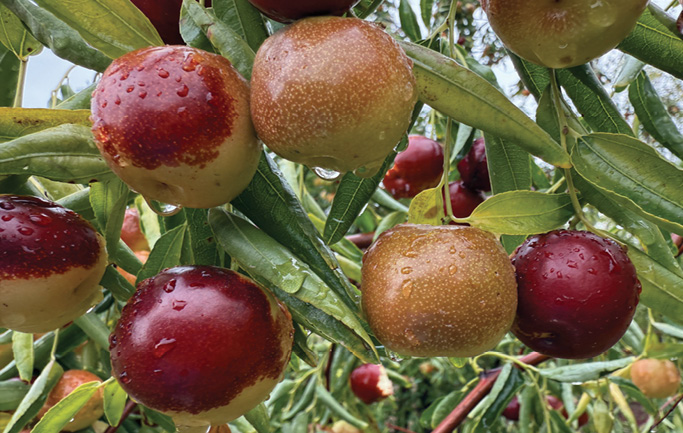
Dongzao at Leyendecker Plant Science Research Center. Photo by Shengrui Yao, 2025.
Jujube (Ziziphus jujuba Mill.), also called Chinese date, originated in China from its wild relative sour jujube (Ziziphus spinosa). Jujubes have been cultivated in China for over 4000 years. There are also reports that the history of jujube cultivation in China dates back over 8,000 years.
Jujube cultivars were first imported into the United States by USDA Agriculture Explorer Frank N. Meyer from 1908 to 1918. Since the initial U.S. introductions, several additional acquisitions have been made, including the importation of more than 30 cultivars in 2011 by New Mexico State University (NMSU). On the other hand, undocumented importations always exist in the U.S. especially with the evolving of international shipping strategies. Currently, there are 100 or more jujube cultivars in the U.S. and most of which were imported directly from jujube-producing countries like China, South Korea, and Ukraine.
Jujube research and cultivar information have been limited in the U.S. To address this knowledge gap, we established jujube cultivar trials at multiple NMSU Agricultural Science Centers (ASCs), including Alcalde and Los Lunas in 2015 and the Leyendecker ASC in Las Cruces in 2017. In addition, NMSU ASCs in Artesia, Farmington, and Tucumcari maintain small-scale jujube plantings.
After 10 years of research, jujube cultivar evaluations have shown strong performance across New Mexico test sites, particularly in southern and central regions (Los Lunas and Las Cruces). As a result, both home gardeners and commercial growers have increasingly planted jujubes, either for commercial production or in home gardens. To provide a clearer understanding of cultivar performance, we describe selected cultivars from our trials and recommend top performers for growers in southern, central, and northern New Mexico. Growers outside the state may also use these findings as a reference.
Fresh Eating Cultivars:
- Alcalde#1 (七月鲜, Qiyuexian, Amerizao™1, Alcalde #1, Autumn Beauty™): Large-fruited, early-ripening.
- Origin: Northwest A&F University, Shaanxi, China, released 2003. Imported separately by James Gilbert (year not known) and NMSU Alcalde ASC in 2011.
- Fruit: Large, 25-30 g; ovoid; skin dark red, shiny; 28.9-32.3_ Brix for full-red fruit in central and northern New Mexico; flavor good; ripens early, half red/half creamy in early September at Los Lunas, NM, and mid-September at Alcalde, NM.
- Tree: Compact, vigor moderate to weak; blooms June-July at Alcalde; yield medium; good for fresh use, also for drying in semiarid areas; suitable for marginal regions with short growing seasons.
- Fucuimi (伏翠蜜):
- Origin: Imported from China and was released by Zaozhuang Forest Bureau, Shandong Province, China in 2010. A selection from ZaoZhuangCuiZao.
- Fruit: An early cultivar with medium oval or short columnar shaped fruit. It has a relatively long creamy stage than other cultivars. Great fresh eating quality. 9-11 g, 25_Brix, productive. Mature mid-late August at Las Cruces, NM. We regularly missed premium fruit due to its early maturation and bird damage when they were harvested in early Sept. If it rains, fruit cracks. At Alcalde, it also did well but fruit cracking.
- Tree: Nice early cultivar for home gardeners across New Mexico. Commercial growers should be aware of its fruit cracking if it rains often in your area during harvest season.
- Honeyjar (蜂蜜罐, Fengmiguan, Honey Jar): Small fruit of excellent quality, for home gardens.
- Origin: China; imported by Roger Meyer; released 1995.
- Fruit: Small, 6.5-7.8 g, but if cropped less, can be larger; short obovate; skin very thin; flesh texture fine, very juicy; fresh eating quality excellent; 27.5-30_ Brix in northern to central New Mexico; ripens early; full red fruit shrank sooner than other cultivars.
- Tree: Midsize; leaves half-folded; productive; suitable for home gardeners, especially in marginal regions with short growing seasons; small fruit size and higher picking cost may limit commercial use.
- Maya (马牙枣, translation “horse tooth”; Amerizao™ Maya): Small, attractive fruit with excellent fresh eating quality, for home use.
- Origin: Beijing, China; imported to U.S. 2011 by NMSU.
- Fruit: Small, 6-7 g; tapered on both ends with largest diameter in the middle (American football shaped); fresh eating quality excellent, 28-33.5 _Brix in central and southern New Mexico; harvest season long.
- Tree: Upright, few large branches, with long side branches; early and productive; suitable for fresh use in home gardeners and marginal regions with short growing seasons; small fruit and higher picking costs may limit commercial use.
- Russian 2 (Black Sea™): Small fruit, suited to home gardens, especially in areas with short growing seasons.
- Origin: Nikita Botanical Garden, Ukraine; imported by James Gilbert, named BLACK SEA™; renamed ‘Russian 2’ or ‘Kitaiski 2’ by Roger Meyer.
- Fruit: Small, 6-7 g; ovoid; skin dark brown/red; flesh very crisp and juicy; 30-33 _Brix in central and northern New Mexico; fresh eating quality excellent; ripens early.
- Tree: Compact tree; productive; suitable for home gardens, especially in marginal regions with short growing seasons; small fruit size and higher picking cost may limit commercial use.
- Zaocuiwang (早脆王, translation “early crisp king”; Amerizao™ Zaocuiwang, Amerizao™ ZCW): Early to midseason with large fruit, for fresh use.
- Origin: Cangzhou Jinsixiaozao Nursery, Cangzhou, Hebei Province, China. ‘Shandong Lizao’ (‘山东梨枣’, ‘Shandong Pear’) selection, with DNA sequences identical to parent in genotyping with single nucleotide polymorphism (SNP) markers; released 2001; imported to U.S. 2011 by NMSU.
- Fruit: Large, 22-26 g; ovoid, slightly tapered at stem end; skin bright brown/red; texture fine; flavor excellent; 28-33.6 _Brix for full-red fruit in New Mexico; ripens early.
- Tree: Midsize; growth habit spreading; precocious, yield medium to high; fruits hang ornamentally on branches; only jujube cultivar in the U.S. without pollen; suitable for home gardeners and commercial production, including marginal regions with short growing seasons.
- Chico (GI 7-62): Midseason jujube for fresh use.
- Origin: Chico Plant Introduction Station, Chico, CA, by William L. Ackerman. An open-pollinated seedling of ‘So’.
- Fruit: Medium to large, 15-17 g; oblate; texture fine; flavor tartsweet, 26.2-32.5_ Brix for full red fruit in New Mexico (NM); ripens midseason, harvest period long; productive; for fresh use.
- Tree: Spreading, bushy with plenty of branches; spiny; popular in Australia, cultivation limited in U.S.
- Dabailing (大白铃; Amerizao™ Dabailing):
- Origin: Shandong Institute of Pomology, Taian, Shandong Province, China; released 1999. Imported into the US in 2011 by NMSU.
- Fruit: Fresh eating cultivar with large fruit. 25-30 g, 25-30_ Brix. ‘Li’ and ‘Dabailing’ had identical DNA sequences in genotyping with SNP markers. See ‘Li’.
- Daguazao (大瓜枣,Amerizao™ Daguazao):
- Origin: A selection from Donge county, Shandong Institute of Pomology, released in 1998. imported into the U.S. in 2011 by NMSU.
- Fruit: Large fruit, 25-30 g in central and southern New Mexico. 18-20 g in northern NM. 25-30_Brix. Mid-season cultivar.
- Tree: Productive trees, medium-sized canopy.
- Dongzao (冬枣 , Winter Jujube; Amerizao™ Dongzao): Top-quality Chinese cultivar for fresh eating; crisp, juicy, with melting texture.
- Origin: Traditionally grown in northern Shandong Province and eastern Hebei Province, China, near Bohai Bay; imported to the U.S. by NMSU. There have been other selections from ‘Dongzao’, such as strains of ‘Zhanhua Dongzao’ (沾化冬枣). See also ‘Sandia’.
- Fruit: Midsize, 12-13 g in northern New Mexico; 14-17 g in central and southern New Mexico, maximum weight 24 g; globose; can be eaten starting from creamy stage; fresh eating quality best, sweet, crisp, juicy, with melting texture; 30-36_Brix in New Mexico; ripens late.
- Tree: Midsize; bushy, plenty of branches; not precocious; yield medium without cultural intervention (girdling or gibberellin spray); suitable for commercial growers and home gardeners; suitable for USDA Zone 7 and higher. In Zone 6b, home gardeners can still try them. Trees will be less productive with smaller fruits that may or may not fully mature, but Dongzao taste okay at creamy stage with its high Brix.
- Jing 39 (京枣39, Amerizao™ Jing 39):
- Origin: A selection from Haidian District by Beijing Institute of Forestry and Pomology in 2002. Imported into the U.S. in 2011 by NMSU.
- Fruit: Large and uniform, early-mid season cultivar, 22-25 g at Las Cruces, NM. 25.5-26.0_Brix. Heavy producer.
- Tree: Very productive, limited branches. Produced 90-100lb fruit for a single 5–6-year-old tree at Las Cruces, NM.
- Li (梨枣; 临漪梨枣, Linyi Li; 山西梨枣, Shanxi Li): Large, highly productive cultivar, formerly dominant for fresh use in U.S.
- Origin: Anyi County, Shanxi Province, China; imported to U.S. 1914 by F.N. Meyer, USDA, with Plant Introduction number (PI) 38249; introduced 1924. See also ‘Dabailing’.
- Fruit: Large, 25-30 g; globose to ovoid; skin brown; 25.7-32.8 _Brix for full red fruit in New Mexico; ripens midseason; flavor good at half red/half creamy stage to full-red stage; primarily for fresh use; flavorless and retaining scratches when harvested at creamy or earlier stage.
- Tree: Large; growth habit spreading, branches bent down due to heavy crop on current-year shoots; yield heavy fruit; maturity non-uniform, multiple harvests recommended; formerly dominant fresh-use cultivar in the U.S., used for drying in Lucerne Valley, California.
- Li-2: From the late Roger Meyer in California.
- Origin: Unknown.
- Fruit: Fresh eating cultivar. Some people say it matures later and more productive than Li.
- Tree: DNA genotyping revealed Li-2 with identical sequences with Li.
- Redlands #4 (Redlands, Redland): Large, round fruit similar to ‘Li’.
- Origin: Dr. Berry, Redlands, California. Identical DNA sequences with ‘Li’ in genotyping with SNP markers; synonym or mutation of ‘Li’.
- Fruit: Large, 27-28.5g; 25.0-31.0 _Brix.
- Tree: Similar to ‘Li’. See ‘Li’.
- Liuyuexian (Amerizao™ Liuyuexian):
- Origin: Shandong Province, China. Imported into the U.S. in 2011 by NMSU.
- Fruit: Medium sized fruit 10 g in northern and 13 g in southern New Mexico with 29-32_Brix. Kongfucui was more productive with smaller fruit than Liuyuexian, while Liuyuexian had relatively larger fruit, crop load also played a factor here.
- Tree: Genotyping with SNP markers indicated that Liuyuexian and Kongfucui had identical sequences. See Kongfucui.
- Kongfucui (孔府脆; KFC; Amerizao™ Kongfucui, Amerizao™ KFC): Fresh use or multipurpose jujube for commercial production.
- Origin: Shandong Institute of Pomology, Shandong Province, China. Selection from existing trees, parentage unknown; released 2000; imported to U.S. 2011 by NMSU.
- Fruit: Midsize, 11.5-14.0 g; oblong; skin shiny, bumpy; flavor excellent, 26-32 _Brix for full red fruit in New Mexico; ripens mid- to mid-late season; very good for fresh use, good for drying.
- Tree: Branches limited, but existing fruit spurs keep producing heavy crops; reliably productive across New Mexico.
- Sandia:
- Origin: Imported from China to the U.S. in 2011 by NMSU. Identical DNA sequence with ‘Dongzao’ in genotyping with SNP markers; synonym or mutation of ‘Dongzao’. See ‘Dongzao’.
- GA866: Very sweet, late ripening, mainly for fresh use.
- Origin: Chico Plant Introduction Station, Chico, CA, by William Ackerman. Parentage unknown.
- Fruit: Midsize, 15-18 g; elongated, can be slightly curved, stigma end tapered; flavor very sweet, 36-39.5_ Brix in central and southern New Mexico; ripens late; mainly for fresh use, also good for drying.
- Tree: Growth habit very upright, with few branches on trunk; not precocious, nor productive for young trees; yield medium.
Drying cultivars:
- Banzao (板枣, Amerizao™ Banzao):
- Origin: Imported into the U.S. in 2011. Originally from Shanxi Province, China. It is one of the dominant drying cultivars there.
- Fruit: High in sugar content, column shaped but flat on one side, medium in size, 9.5-11.0 g, 34-38.0_Brix, early-mid season. Fruit drops near maturation.
- Huizao (灰枣, Amerizao™ Huizao):
- Origin: Henan Province, China. Imported into the U.S. by NMSU in 2011. A slow growing cultivar. Medium sized fruit 12.5 g in southern NM with 34.8_Brix.
- Fruit: Mid-season, oblong, good for fresh eating, excellent for drying.
- Tree: Trees were smaller than other cultivars except Dragon. Potential for commercial production.
- Globe (灵宝大枣; Lingbaodazao): Round jujube for drying.
- Origin: Henan Province, China; imported to U.S. by Roger Meyer in 1990s.
- Fruit: Midsize, 25 g, uniform; globose; skin medium-thick, dark red; flesh thick, firm, sweet, with little juice; 23-26_Brix; for drying only, not for fresh use; yield medium; suffers from preharvest fruit drop.
- Tree: Growth habit upright.
- Jinchang #1 (Hupingzao, 壶瓶枣, Amerizao™ Jinchang):
- Origin: A selection of Hupingzao in Shanxi Province, China. Imported into the U.S. by NMSU in 2011.
- Fruit: Large fruit, average weight 21.8 g with 36.2_ Brix, not uniform size, pear shaped fruit but the diameter differences between two ends were smaller than Lang. Low fruit set, not productive.
- Tree: Jinchang #1, Junzao and Lang had identical DNA sequences in genotyping with SNP markers.
- Junzao (骏枣, 交城骏枣 Jiaocheng Junzao; [American] Lang; Amerizao™ Junzao): Original cultivar known as ‘Lang’ for the past century in the U.S.
- Origin: Shanxi Province, China; imported to the U.S. through NMSU in 2011. ‘Junzao’ and ‘Lang’ had identical DNA sequences in genotyping with SNP markers. See ‘Lang’.
- Lang (Junzao; Don Polensky): Major cultivar in the U.S., with medium to large pear-shaped fruit, primarily for drying use.
- Origin: China; imported to the U.S. in 1908, reportedly from Tsintse, Shanxi Province, by F.N. Meyer, USDA, PI 22686; introduced 1924. ‘Lang’ fruit in the U.S. resembles fruit of ‘Junzao’ (‘骏枣’), which is pear-shaped, and not the ‘Lang’ (‘郎枣’) of China, which is cylinder-shaped. See also ‘Don Polensky’, ‘Junzao’, ‘Thornless’, and ‘Xingguang’.
- Fruit: medium to large, 15.1-18.2 g; pyriform; skin dark red/brown; flavor mild; 29.8-38.4 _Brix for full-red fruit in central and southern New Mexico; suitable for drying, harvest at full-red stage; acceptable for fresh use.
- Tree: large, upright; mature trees almost spineless; yield medium to high; drying cultivar for commercial production.
- Xingguang: (星光, translation “starlight”; Amerizao™ Xingguang): Junzao (‘骏枣’) selection reportedly tolerant to witches’ broom disease (Candidatus phytoplasma ziziphi), selected by Hebei Agricultural University, Hebei Province, China. See ‘Junzao’.
- Thornless: ‘Lang’ mutation with fewer spines.
- Origin: Chico Plant Introduction Station, Chico, California, by W. Ackerman and Smith. Similar to ‘Lang’, with fewer spines, or virtually spineless. DNA sequence identical to ‘Lang’ in genotyping with SNP markers. See ‘Lang’.
- Jixin (鸡心枣 translation “chicken heart”, Amerizao™ Jixin): Drying cultivar for commercial production.
- Origin: Henan Province, China; imported to the U.S. 2011 by NMSU.
- Fruit: Midsize, 9.5-10.5 g; elongated/cylindrical, slightly tapered at stylar end; 39.1-41.2 _Brix in central and southern New Mexico; ripens midseason; very good for fresh use, excellent for drying, with shiny skin, fine flavor, and attractive dried fruit.
- Tree: growth habit upright; yield medium.
- Xiang (相枣, Amerizao™ Xiang): A late maturing drying cultivar, not suitable for fresh eating.
- Origin: Imported into the U.S. in 2011 by NMSU.
- Fruit: Ovate shaped with a larger shoulder end, size not uniform. Large fruit 18-19.5 g, with 34-38_Brix. Good drying quality, dark color.
- Tree: Productive in southern NM, not suitable for northern NM.
- Youzao (Amerizao™ Youzao):
- Origin: Shaanxi Province, China. Imported into the U.S. in 2011 by NMSU.
- Fruit: Medium in size, oblong shaped, uniform in size. A very late drying cultivar, high in vitamin C content. Ripens too late for Alcalde area.
- Tree: Not included in the cultivar trials. Limited information.
- Yuanling (圆铃枣, Amerizao™ Yuanlingzao):
- Origin: Shandong province, China. Imported into the U.S. by NMSU in 2011. Dominant drying cultivar in the Southwestern Shandong Province in China.
- Fruit: Oval shaped, not uniform in size. Excellent drying cultivar, good for drying/processing, not suitable for fresh eating.
Multipurpose Cultivars:
- Abbeville: Found in Abbeville, LA, origin unknown. New Mexico had similar cultivar planted in 1910 at Gila with identical SNP markers. A productive late cultivar with small fruit. Best fruit set among all cultivars tested at Alcalde, NM. Mediocre for fresh eating and drying. Fruit hanging well on the trees after maturation.
- Chaoyang (朝阳大平顶, Chaoyangdapingding, Chaoyang flattop, Amerizao™ Chaoyang):
- Origin: Imported into the U.S. in 2011 by NMSU. Originally from Chaoyang area, Liaoning province, China.
- Fruit: Small to medium in size, 5.6 g in northern NM and 7.5 g in central NM, 31.5-33.0_Brix, column shaped, light brown/red color, uniform fruit, slightly tart flavor. Early to mid-season in maturation. Fresh eating or drying.
- Tree: Suitable for marginal regions with short growing season.
- Sugar Cane (Sugarcane; Yalta #1, Coco™): Midsize, ovoid, very sweet and crunchy.
- Origin: Nikita Botanical Garden, Ukraine; imported by James Gilbert in 1990s and named Coco™; renamed ‘Sugar Cane’ by Roger Meyer. Based on recent DNA genotyping results with SNP markers, ‘Sugarcane’ and Coco™ refer to the same cultivar.
- Fruit: Midsize, 9-11.5 g; ovoid; skin reddish-brown; flesh sweet, crunchy; 25-30 _Brix in New Mexico; ripens early-midseason; fresh eating quality and drying quality very good.
- Tree: Growth habit spreading; canopy dense, with plenty of primary branches; spiny; yield medium to high; suitable for marginal regions with short growing seasons.
- Jin: Origin unknown. Could be imported from China. A productive cultivar at Alcalde. Non-uniform medium sized fruit. Good for both fresh eating and drying. Not included in the cultivar trials. Limited information.
- Shuimen: Elongated fruit, for fresh use and drying.
- Origin: Imported to the U.S. in 1914 from Paihsiangchen, Shanxi Province, China by F.N. Meyer as PI 38245; introduced 1924.
- Fruit: Midsize; elongated, tapered at stigma end; ripens early to midseason; for fresh use and drying; lower in vitamin C content (200mg/100g FW) than other cultivars.
- Tree: Growth habit moderately upright; yield medium to high; suitable for marginal regions with short growing seasons.
- Jinsi 2 (金丝二号; Amerizao™ Jinsi 2): Drying or multipurpose, adapted to marginal regions with short growing seasons.
- Origin: Shandong Institute of Pomology, Shandong Province, China. ‘Jinsixiaozao’ selection; released 1998; imported to U.S. 2011 by NMSU.
- Fruit: Midsize, 6.8-8.4 g; ovoid; texture firm; 35-42.0_Brix for full red fruit in New Mexico; ripens early to midseason; good for fresh use; drying quality excellent, with typical ‘Jinsixiaozao’ sweet-tart flavor.
- Tree: Vigor medium to weak; midsize; canopy full.
- Miyunxiaozao (Amerizao™ Miyun):
- Origin: Miyun County, Beijing, China. Imported into the U.S. in 2011 by NMSU. One of the Amerizao™ Jinsi series cultivars.
- Fruit: Medium to small in size. Very sweet. Excellent for fresh eating and drying. Not included in the cultivar trial. Limited information. DNA genotyping indicated Miyunxiaozao with identical sequences with other Jinsi series cultivar.
- Pitless (无核小枣, Wuhexiaozao, Wuhezao; Amerizao™ Pitless): Small-fruited, very sweet.
- Origin: Traditionally grown in northern Shandong and eastern Hebei Provinces, China, near Bohai Bay; imported to U.S. by NMSU in 2011. ‘Jinsi’ mutation with incomplete kernel and exposed seeds inside.
- Fruit: Small, 4-6 g; ovoid; skin bright red; 35-40 _Brix in New Mexico; ripens early to midseason; dried fruit quality excellent, similar to ‘Jinsi’ series; suitable as an amendment of tea or as a component of ‘Eight treasures’ tea.
- Tree: Medium to large, canopy full; productive across New Mexico; for home gardeners or special use in commercial production, and suitable for marginal regions with short growing seasons.
- Jinsi 4 (金丝四号, Amerizao™ Jinsi 4): Drying or multipurpose, adapted to marginal regions with short growing seasons.
- Origin: A seedling from open-pollinated Jinsi #2, Shandong Institute of Pomology, Shandong Province, China, released 1990. Imported to the U.S. in 2011 by NMSU.
- Fruit: Small size, 6.9-7.5 g; slim long column shape; texture firm; 29.5-35.5 _Brix for full red fruit in New Mexico; ripens early to midseason; good for fresh use; drying quality excellent, with typical ‘Jinsixiaozao’ sweet-tart flavor.
- Tree: Weak; small sized. It was reported the early setting fruit were larger in China. DNA genotyping with SNP markers revealed that Jinsi 4 was not grouped together with Jinsi #2, Jinsi #3 and JKW.
- Sihong (泗洪大枣, Sihongdazao): High-quality multipurpose jujube.
- Origin: Sihong County, Jiangsu Province, China; imported by R. Meyer through Nanjing Botanical Garden; released 1995.
- Fruit: Medium to large, 14.8-17.9 g; ovoid; skin attractive brown/red, slightly bumpy; texture firm; very sweet, 34-36.8 _Brix; fresh eating quality excellent; drying quality excellent, with fine wrinkles and thick flesh.
- Tree: Vigor high, with plenty of branches; side branches straight, easy to stimulate primary shoots at ends of side branches; bears more on current-year shoots than older branches; yield moderate; for drying or multipurpose, suitable for home gardens and commercial production.
- Jinsi 3 (金丝三号; Amerizao™ Jinsi 3): Drying or multipurpose cultivar for commercial production.
- Origin: Shandong Institute of Pomology, Shandong Province, China. Selection from Weihai area, Shandong Province; released 1998; imported to the U.S. in 2011 by NMSU.
- Fruit: Midsize, 12.5-13.3 g; ovoid; texture firm; 35-40.7 _Brix for full red fruit in New Mexico; ripens mid- to late-season; very good for fresh use, excellent for drying, with typical ‘Jinsixiaozao’ sweet-tart flavor.
- Tree: Vigor medium to high, with full canopy, larger than ‘Jinsi 2’.
- Jinkuiwang (金魁王; Amerizao™ Jinkuiwang, Amerizao™ JKW): Drying or multipurpose, for commercial production.
- Origin: Cangzhou Jinsixiaozao Nursery, Cangzhou, Hebei Province, China; released 2001; imported to U.S. 2011 by NMSU.
- Fruit: 14-15 g; ovoid; skin russets in New Mexico; flesh thick; 35-40_Brix for full red fruit in south and central New Mexico; ripens mid-late season; good for fresh use, excellent for drying.
- Tree: Vigor high; canopy full, larger than ‘Jinsi 2’ and ‘Jinsi 3’; precocious and productive.
- Kongfucui (孔府脆; KFC; Amerizao™ Kongfucui, Amerizao™ KFC): Fresh use or multipurpose jujube for commercial production.
- Origin: Shandong Institute of Pomology, Shandong Province, China. Selection from existing trees, parentage unknown; released 2000; imported to the U.S. in 2011 by NMSU.
- Fruit: Midsize, 11.5-14.0 g; oblong; skin shiny, bumpy; flavor excellent, 26-32 _Brix for full red fruit in New Mexico; ripens mid- to mid-late season; very good for fresh use, good for drying.
- Tree: Branches limited, but existing fruit spurs keep producing heavy crops; reliably productive across New Mexico.
- Mu: Could be Mu Shing Hong imported by Frank Meyer in 1908 with PI 22684.
- Origin: China. Introduced 1924.
- Fruit: The current Mu had medium-sized fruit, not uniform.
- Tree: Large, young shoots had long nodes with curved side branches.
- Sept late (九月青, Jiuyueqing): Imported into the U.S. by Roger Meyer in 1990s. Late cultivar, yellowish brown/red color. A productive late cultivar. Light in fruit color when mature. Fine fruit texture. Cannot fully mature in northern New Mexico. Not included in the cultivar trial, may have good potential in southern New Mexico. High pollen germinating rate and good pollinizer tree. Good for fresh eating and drying.
- Sherwood: Late ripening, for fresh use and drying, for home gardens and commercial growers.
- Origin: Sibley, LA, by James S. Akin. Parentage unknown; sent to Louisiana from China.
- Fruit: Midsize, 17-18.2 g; elongated/cylindrical, uniform; 29-33 _Brix for full-red fruit in central and southern New Mexico; ripens late; for fresh use and drying.
- Tree: Growth habit upright in young trees, weeping in mature trees; yield heavy; suitable for home gardens and commercial production; USDA Zone 7a and higher.
- Topeka: A cultivar originated in Kansas State. Very late fresh eating cultivar. Too late for northern New Mexico. Not included in our cultivar trial. Limited information. Our genotyping results with SNP markers indicated that Topeka had identical sequences as Sherwood. See Sherwood.
- Yu:
- Origin: China. Imported into the U.S. in 1913 by Frank N. Meyer with PI 36854. Not introduced in 1924. The Yu (1913) described in 1996 as:
- Fruit: Large, elongated, tapering toward stylar end, skin reddish-brown, flesh sweet, firm, Keeping quality rather good.
- Tree: Tall; main branches with few side branches; leaves large. The current Yu from late Roger Meyer may or may not be the same as the 1913 Yu. The current Yu was a special germplasm with lots of tiny flowers. We never noticed it bloomed or set fruit for 15 years at Alcalde, NM.
Ornamental cultivars:
- So: Imported by Frank Meyer in 1914. Branches are zigzagged, very decorative trees even in winter. Compact tree with plenty of branches. Medium size, round fruit. 11-12 g, 29.5-31.5_ Brix in central and northern New Mexico. Non-uniform with two sized fruits, the smaller fruit weighed less than half of the larger ones. Sweet/tart balanced flavor. Good for fresh eating and mediocre for drying. Excellent four-season ornamental cultivar.
- Mushroom (磨盘枣, Mopanzao, Amerizao™ Mopanzao): Imported into the U.S. in 2011 by NMSU. Vigorous tree. Medium sized fruit. 9-11.0 g. 29-32_ Brix. Gourd or button- mushroom shaped beautiful fruit, sweet flavor, mid-season, ok for fresh eating. Dry fruit with similar shape. Good edible landscape cultivar.
- Dragon (龙枣, Longzao, Amerizao™ Dragon): Imported into the U.S. in 2011 by NMSU. Very gnarled cultivar with hair-pin structure. Both shoots and branchlets were twisted. Leafing out late, the latest among NMSU collection. Small fruit, pear shaped, OK flavor. Flowers with 5-8 sepals/petals/stamens. Smallest tree size in my jujube collections. 4-5 ft tall for 10 years old tree in northern NM, 5-6 ft in southern NM. Very good small/dwarf edible landscape tree.
- Teapot (茶壶枣, Chahuzao, Amerizao™ Teapot): Imported into the U.S. in 2011 by NMSU. Vigorous and upright tree. Medium fruit size, 8-9 g, 31-32_Brix in central and northern NM. Non-uniform fruit with 1-5 protuberances on the shoulder and the typical one with two - mimic a miniature teapot with spout and a handle. Medium to late season. Sweet fruit. Good edible landscape plant.
Cultivars for New Mexico
Here are the cultivar recommendations for New Mexico:
Southern New Mexico:
Fresh eating cultivars: Alcalde, Honeyjar*, Gaga/Maya, Russian 2, Zaocuiwang, Sugarcane, KFC, Li/Shanxi Li/Redland, Jing39, GA866, Sherwood, and Dongzao. *Honeyjar matures early, and fruits shrink sooner than other cultivars.
Drying cultivars: Jinsi 2, Jinsi 3, Jinkuaiwang, Jixin, Lang and Sihong.
Central New Mexico:
Fresh eating cultivars: Alcalde #1, Honeyjar, Maya/Gaga, Zaocuiwang, Sugarcane, Kongfucui (KFC), Li/Shanxi Li/Redland, GA866, Sherwood, and Dongzao
Drying cultivars: Jinsi 2, 3, Jinkuaiwang, Jixin, Lang and Sihong.
Northern New Mexico:
Fresh eating cultivars: Alcalde #1, Honeyjar, Maya/Gaga, Russian 2, Zaocuiwang, Sugarcane, Li, and KFC.
Drying cultivars: Lang, Jinsi 2.
Ornamentals: ‘So’ is the most productive and nice fruit quality ornamental cultivar, compact/large tree size with dense canopy. Highly recommended as four-season edible landscape tree. ‘Dragon’ is the dwarfing one, good from northern to southern New Mexico. ‘Mushroom’ has probably the most beautiful fruit, large tree, and performed well across New Mexico. It also has a variation cultivar called ‘Huluzao’ with more pointed top instead of flat top (we do not have it in our collection). ‘Teapot’ has unique unregular fruit shape, suitable for central and southern New Mexico.
For cultivar pictures, please view Figures 1-3. For more information, please visit: https://jujube.nmsu.edu
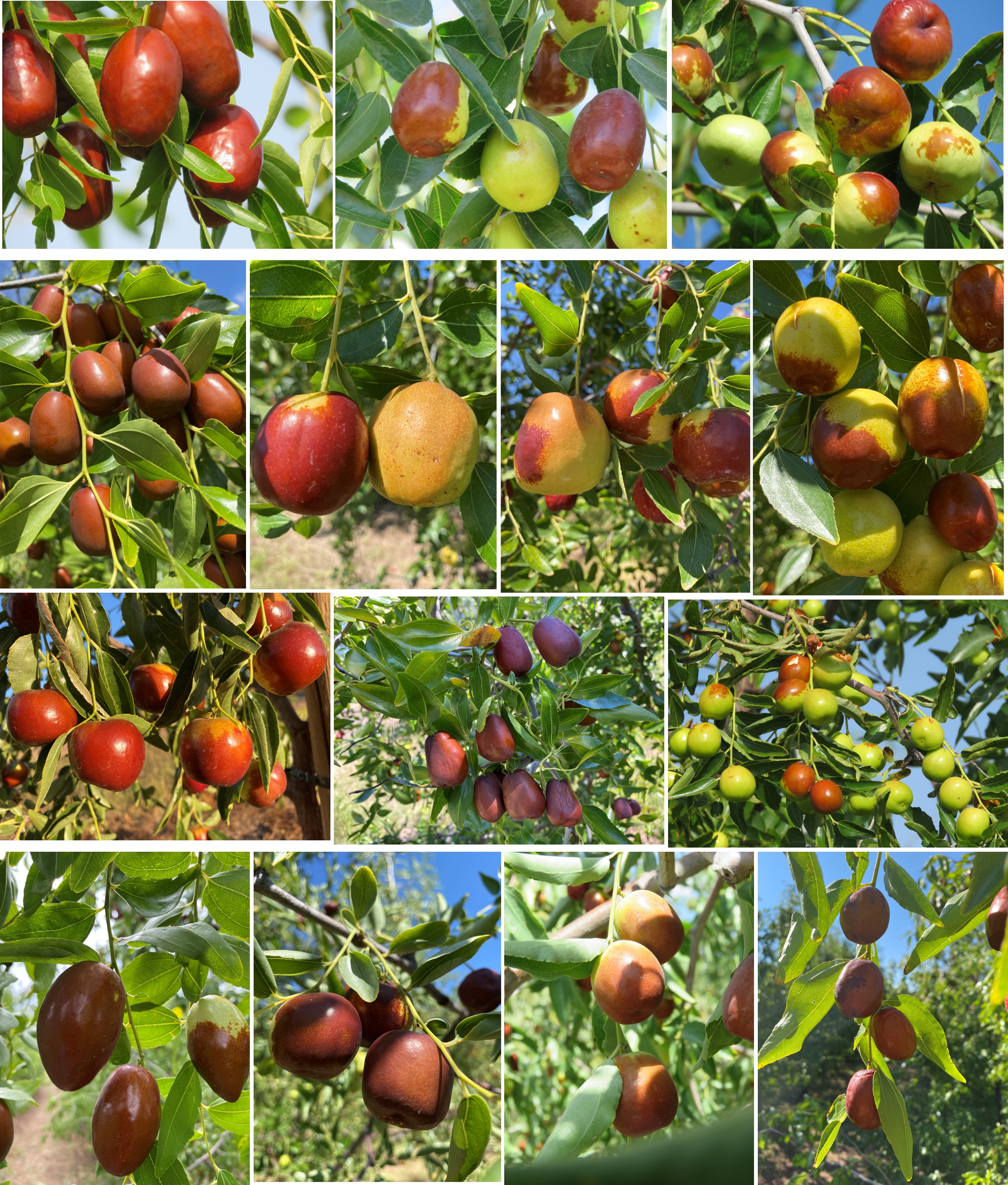
Figure 1. Plate I: Jujube cultivar fruit pictures (I). Row 1: Alcalde #1, Banzao and Chico; Row 2: Chaoyang, Dabailing, Daguazao and Fucuimi; Row 3: Dongzao, Dragon and Honeyjar; Row 4: GA866, Globe, Jinsi 2 and Jinsi 3.*
*Fruit images were taken in different years and on different dates, fruit shapes are true to type, but fruit sizes are not directly comparable.
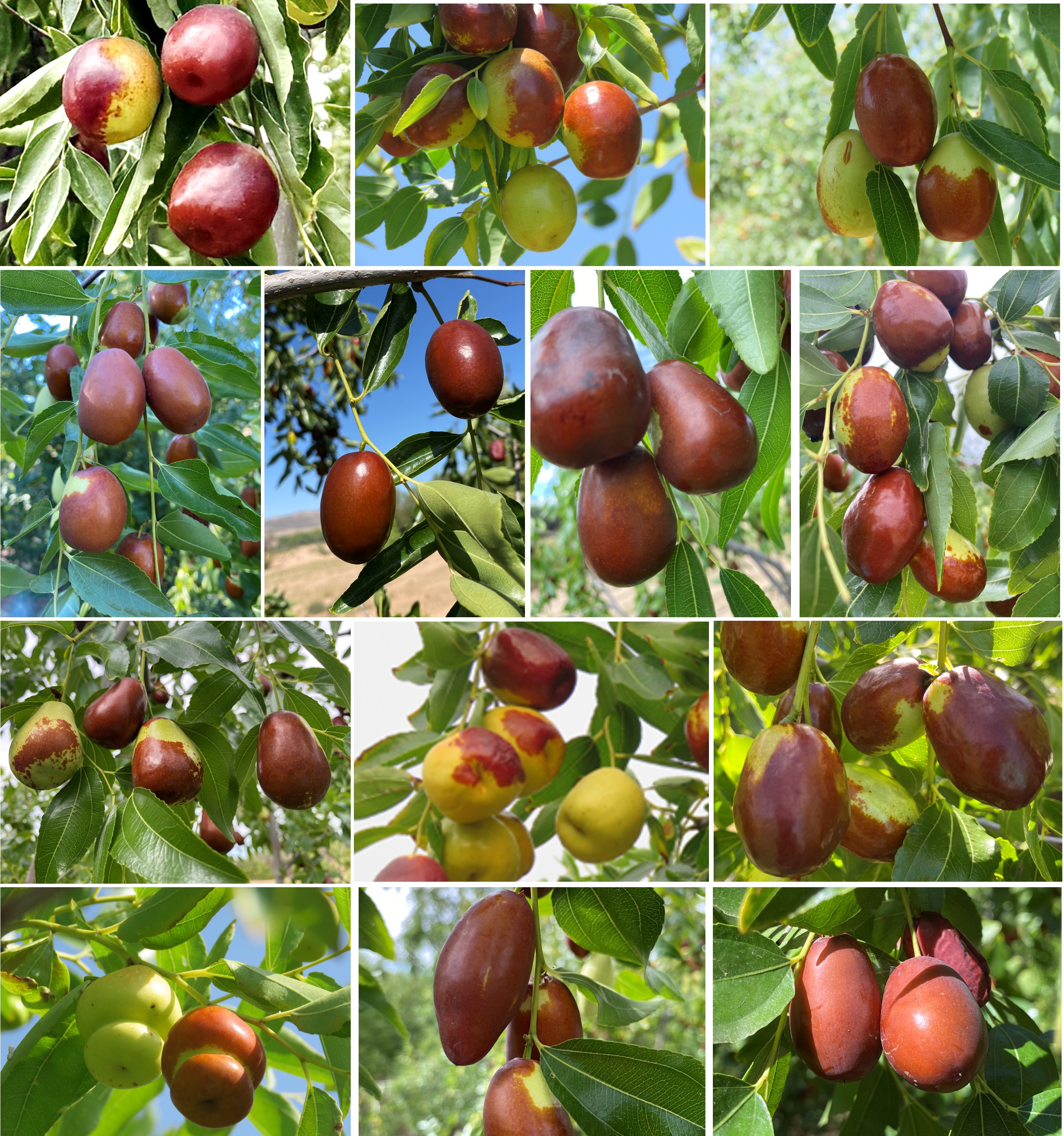
Figure 2. Plate II: Jujube cultivar fruit pictures (II). Row 1: Huizao, Jing 39, and Jinkuiwang; Row 2: Jinsi 4, Jixin, Junzao, and Kongfucui (KFC); Row 3: Lang, Li, and Liuyuexian; Row 4: Mushroom, Maya and Russian 2.*
*Fruit images were taken in different years and on different dates, fruit shapes are true to type, but fruit sizes are not directly comparable.
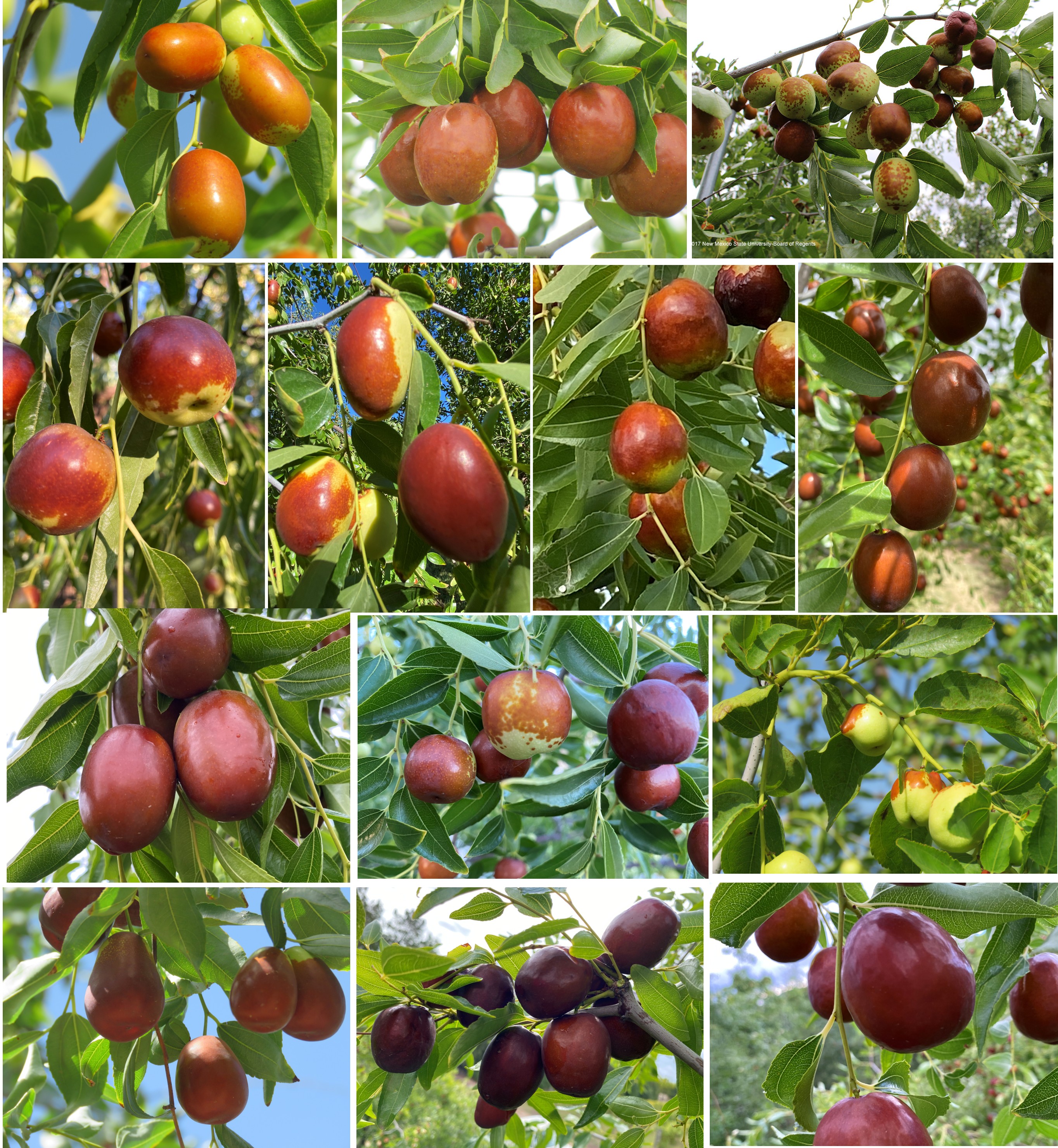
Figure 3. Plate III: Jujube cultivar fruit pictures (III). Row 1: Pitless, Redland, and Shanxi Li; Row 2: Sandia, Shuimen, Sihong and Sugarcane; Row 3: Sherwood, So, and Teapot; Row 4: Xingguang, Xiang and Zaocuiwang (ZCW).*
*Fruit images were taken in different years and on different dates, fruit shapes are true to type, but fruit sizes are not directly comparable.
Notes
- Amerizao used to be a registered trademark Amerizao® through the New Mexico State University Arrowhead Center in 2019. Due to communication issues, we lost the registered trademark and we use Amerizao™ instead.
References
Karp, D., Gasic, K., Yao, S. (2024). Register of New fruit and nut cultivars list 52 (jujube). HortScience, 59(8), 1220-1292, (1253-1256 for jujubes). https://doi.org/10.21273/HORTSCI18040-24

Shengrui Yao is Professor and Extension Fruit Specialist at New Mexico State University’s Sustainable Agriculture Science Center at Alcalde. She earned her Ph.D. in pomology/ horticulture at Cornell University.
To find more resources for your business, home, or family, visit the College of Agricultural, Consumer and Environmental Sciences on the World Wide Web at pubs.nmsu.edu/
Contents of publications may be freely reproduced for educational purposes. All other rights reserved. For permission to use publications for other purposes, contact pubs@nmsu.edu or the authors listed on the publication.
New Mexico State University is an equal opportunity employer and educator. NMSU and the U.S. Department of Agriculture cooperating.
December 2025, Las Cruces, NM