Guide H-190
Geraldine Diverres Naranjo, Joanie King, Donald Caldwell
College of Agricultural, Consumer and Environmental Sciences, New Mexico State University
Authors: Respectively, Viticulture Extension Specialist; Extension Entomology Specialist; and Extension State Enologist Agent. All from the Department of Extension Plant Sciences, New Mexico State University. (Print-Friendly PDF)
Introduction
Regular scouting and early detection of vineyard problems are essential to guide effective management practices. Many pests, diseases, and environmental stresses can produce similar symptoms in the field, and misidentification will lead to ineffective or unnecessary treatments. This guide is designed to help vineyard managers and field crews identify common vineyard pests based on what can be observed in the field. When using this guide, start by noticing the pattern of the observed symptoms. Are they uniform across rows, blocks, or irrigation zones? Do they appear scattered among random individual vines, or are they localized to specific parts of the canopy (whole vine, leaves only, western-facing side only, etc.)? Also consider the timing of appearance, including the vine phenological stage or whether the onset of symptoms occurs soon after a weather event or vineyard practice (e.g., frost, changes in irrigation scheduling, spraying, or after canopy management). After making these observations, compare the symptoms of your vine(s) with the pictures listed on each section. Because some problems can be difficult to diagnose by relying only on visual observations, laboratory testing may be necessary to confirm identification. When in doubt, collect samples and submit them to the New Mexico State University Plant Diagnostic Clinic (https://plantclinic.nmsu.edu) for accurate identification. This guide also includes a section of common look-alike problems with pointers that can help rule out other causes.
|
Table 1. Quick Start Guide |
||
|---|---|---|
|
Symptoms |
Things to look out for |
Implications and likely causes |
|
Symptom pattern |
Are symptoms uniform, scattered, or localized? |
|
|
Symptom location |
Where do symptoms appear first on the affected vine? |
|
|
Timing and phenology |
When did symptoms appear? Consider growth stage and recent events |
|
|
Compare your symptoms with the photographs in the guide. Match your observations with guide sections. Use Field symptoms and Key identification features to confirm diagnosis and/or rule out look-alikes. Confirm with the NMSU plant diagnostic clinic if needed. Is the diagnosis uncertain? Some problems, especially diseases and viruses, require laboratory testing for accurate identification. Collect samples and submit them to the NMSU Plant Diagnostic Clinic if confirmation is required for adequate management. |
||
Pests
Pests in vineyards are primarily insects that feed on leaves, shoots, or fruit, causing direct damage to vine tissues, or indirect damage by affecting vine health and performance. Accurate identification should rely whenever possible on observing the pest itself or one of its life stages (eggs, larvae, nymphs, or adults). However, the characteristic feeding damage can sometimes provide valuable identification clues about a pest and help guide scouting efforts. Recognizing the pattern and timing of damage, or the presence of the insect can help distinguish pest injury from diseases, nutrient deficiencies, or environmental stress.
Leafhoppers
Leafhoppers (Erythroneura spp.) are small insects with quick life cycles that can become a serious pest of grapevines across New Mexico.
Pattern: Scattered within canopy; infestations typically begin in lower or interior/shaded leaves.
Timing: Late spring through summer; often first seen on inner/lower canopy.
Location: Leaves
Field symptoms
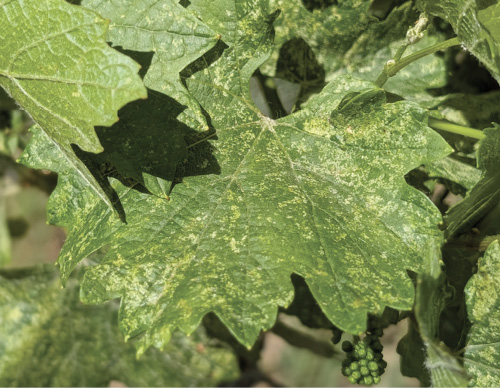
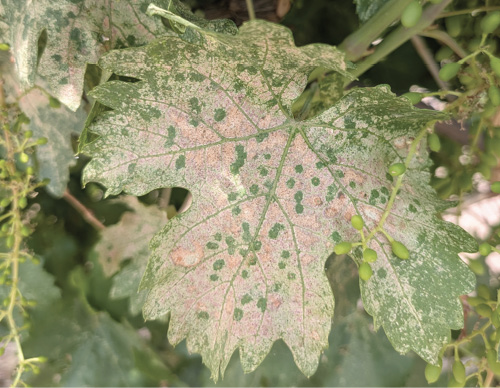
- Feeding damage first appears as tiny white or yellow spots on the leaf surface (“stippling”, Figure 1).
- Feeding starts on lower or interior canopy leaves
- Fine speckling may merge into larger chlorotic (yellow) areas
- Leaves can appear scorched under heavy infestations
- Some species can create a distinct pattern with well-defined spots (Figure 1).
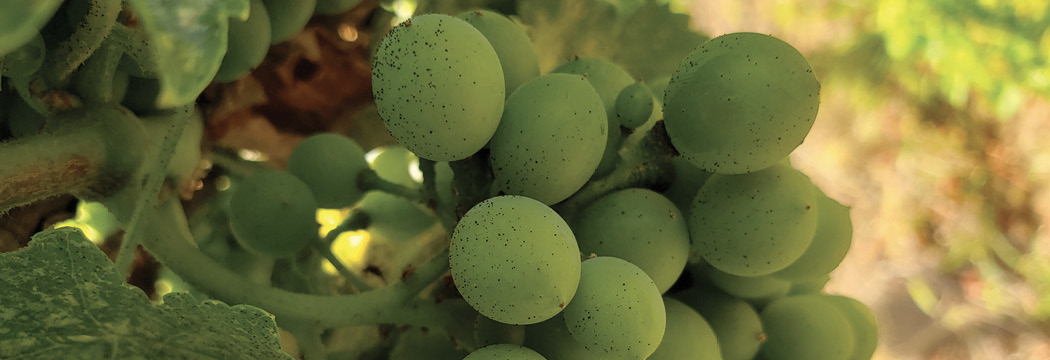
- Severe infestations can leave behind frass on leaves and grape berries (Figure 2)
Key identification features
Adults are wedge-shaped, about 0.12 inches long (3mm), and pale-yellow in color with colorful markings (Figure 3). Nymphs are smaller, wingless, translucent and paler in color (Figure 4). Both can be found on the undersides of leaves and feed. They jump and glide when the canopy is disturbed.
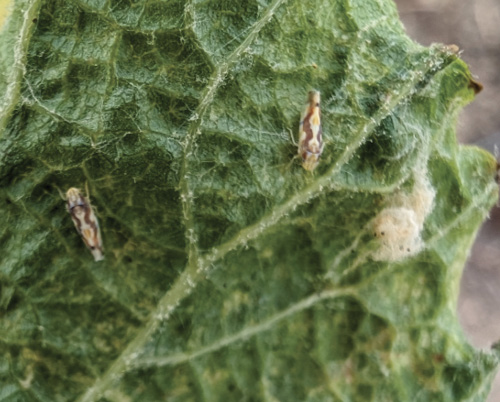
Figure 3. Adult leaf hoppers in the underside of a grapevine leaf.
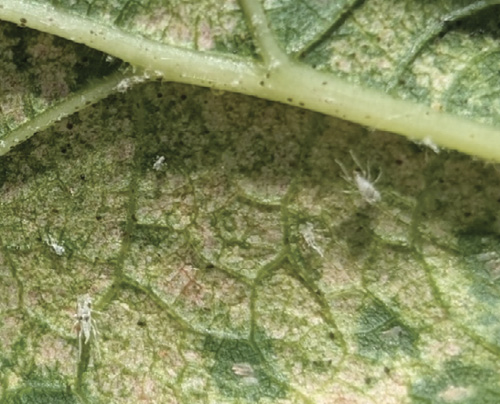
Figure 4. Leafhopper nymphs on the underside of a grapevine leaf.
Can be confused with
- Spider mites: They produce bronzing rather than discrete spots.
- White flies: These are also sap-sucking insects that have a white coating on their wings and bodies that look like a white and waxy powder. Their feeding can lead to excessive honeydew buildup. They do not jump or glide when the canopy is disturbed.
- Aphids: Both are small, soft-bodied insects commonly found on the undersides of leaves. Aphids can be identified by the pair of small structures resembling tubes near the abdomen called cornicles. While some aphids can be white, color varies widely by species, including green, yellow, black, or brown.
- Nutrient deficiency: Nutrient deficiencies are not associated with insect presence.
Why it matters
High leafhopper populations can reduce photosynthesis. Severe infestations may cause premature leaf drop and reduce both yield and fruit quality. Their life cycle is linked to temperature. Warm spring and summer temperatures in New Mexico ensure that several generations can occur during a growing season.1
Causes and contributing factors
This pest overwinters as an adult in leaf litter, grasses, and other protected areas near the vineyard. Excessive use of broad-spectrum insecticides can reduce their natural enemies, allowing populations to flare. Dense canopies may also provide favorable conditions for leafhopper reproduction and survival.1
Management, and next steps
Regular monitoring is essential to determine if chemical control is needed. Scouting should include both leaf counts and visual checks for nymphs and adults on the undersides of leaves. Treatment is generally recommended when populations exceed approximately 15 leafhoppers (adults and nymphs) per leaf. Encouraging natural predators and maintaining good canopy management can help suppress populations. Early intervention prevents severe damage and helps maintain canopy health and fruit quality.
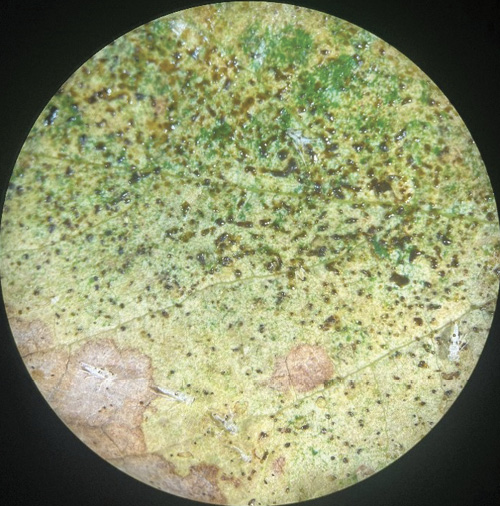
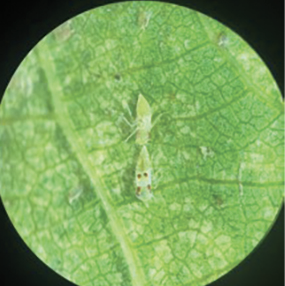
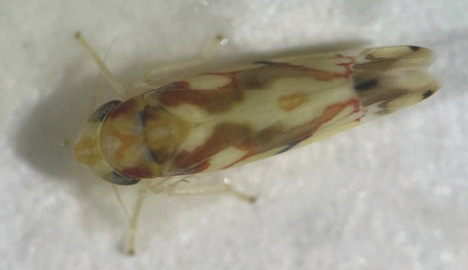
Figure 6. Adult grape leafhopper. The characteristic wing coloration and body shape used for identification.
Western Grapeleaf Skeletonizer
The western grapeleaf skeletonizer (Harrisima metallica) is a destructive pest native to the southwestern United States, including New Mexico, Arizona, California, Texas, Utah, and Colorado. It can cause severe defoliation if not managed.
Pattern: Localized in leaves of random vines.
Timing: Late spring through summer.
Location: Often starts in lower/interior canopy.
Field symptoms
- White or translucent patches on leaves where the green tissue has been scraped away (Figure 7).
- Early feeding appears as “windowpane” areas. These parts will first look pale yellow; then they will dry out, brown, and appear scorched.
- As feeding progresses, the entire leaf tissue is eaten, leaving only the vein framework (skeletonized leaves, Figure 8).
- Damage often starts in the lower or interior canopy leaves and continues through the rest of the canopy when infestations are severe.
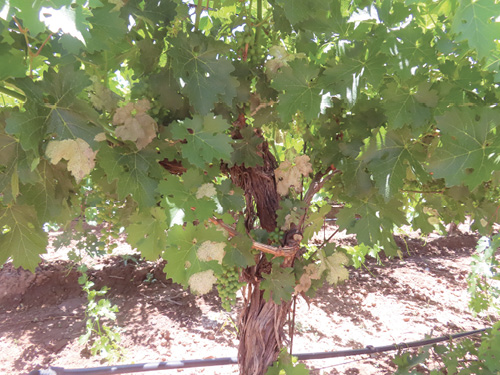
Figure 7a. The first signs of western grape leaf skeletonizer feeding usually start in basal leaves or internal shaded parts of the canopy and then progress outwards (7a). Close up of the characteristic “windowpane” feeding damage on a leaf (7b).
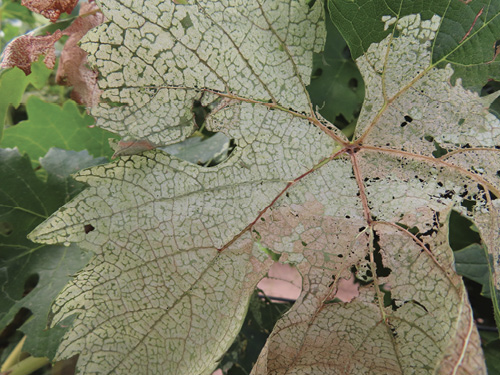
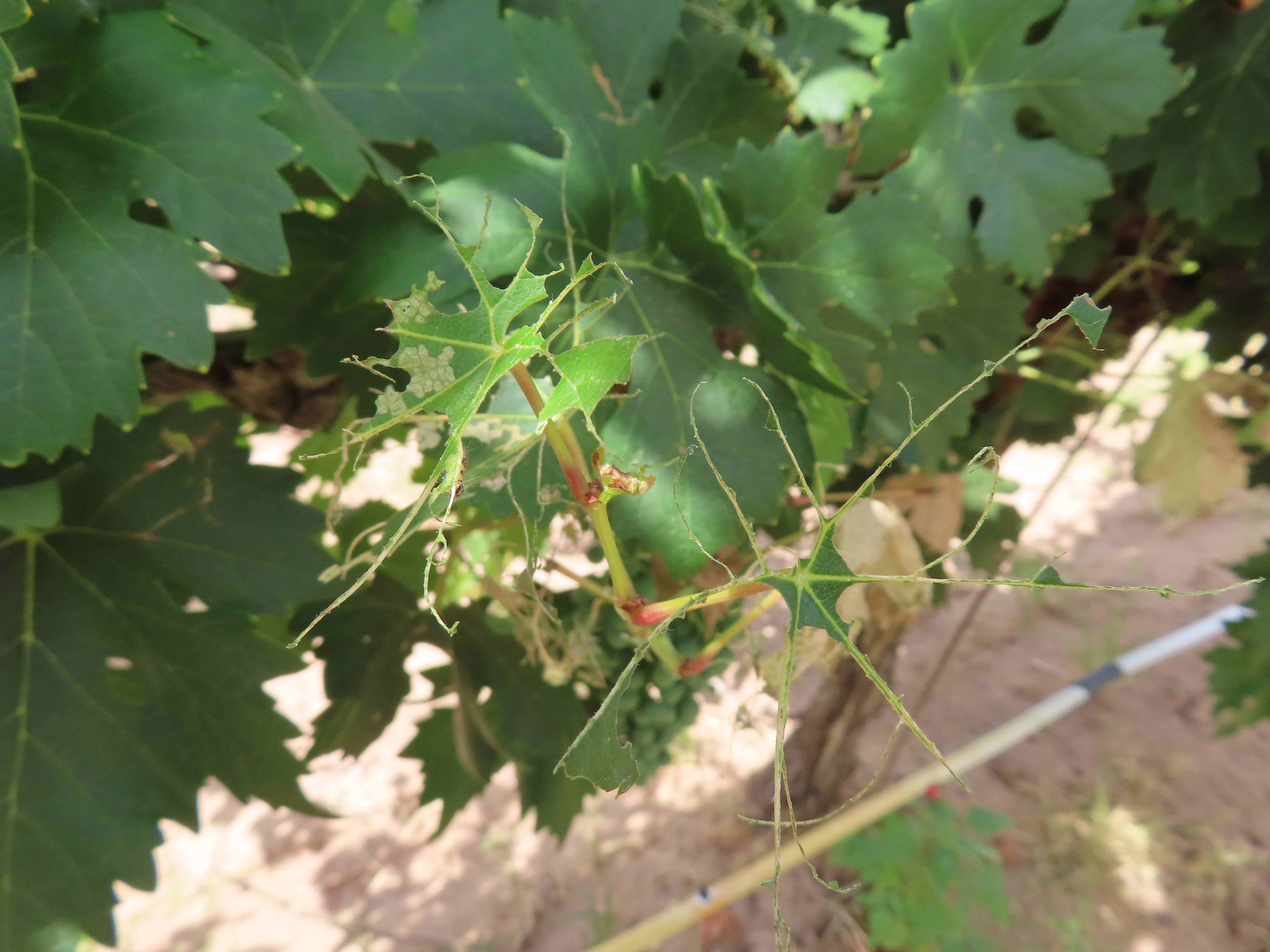
Figure 8. Completely skeletonized leaves leaving only the vein framework.
Key identification features
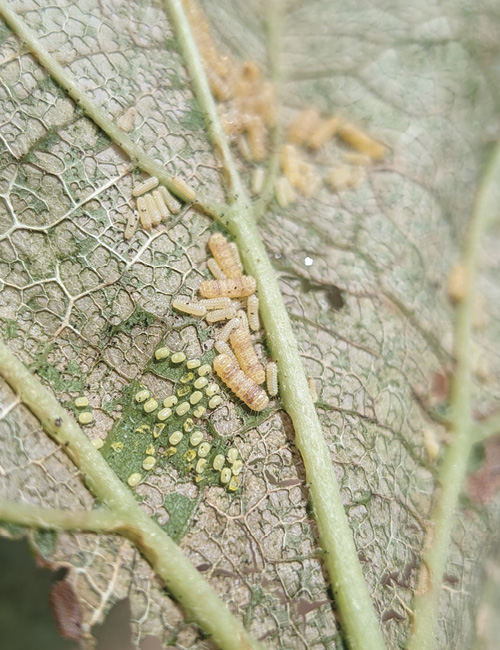
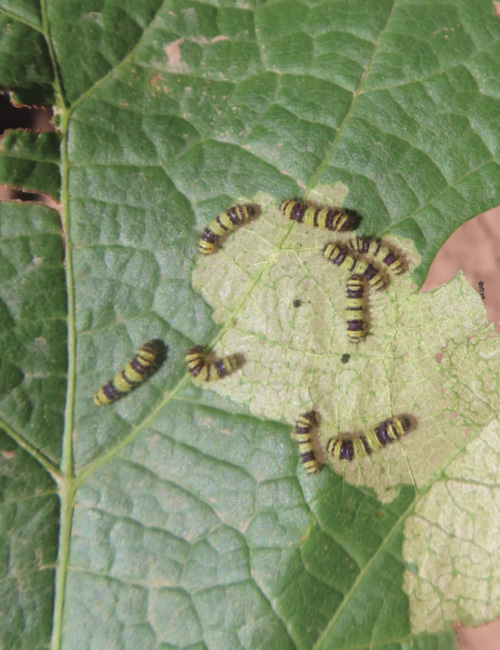
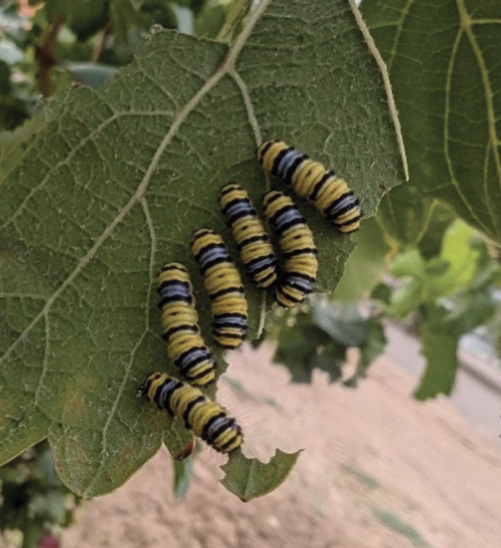
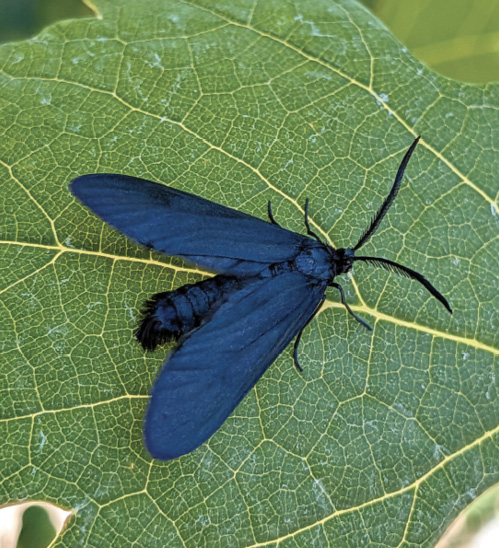
Early instars are light-colored (Figure 9), while later stages become bright yellow with distinct purple and black bands, reaching up to approximately ⅝ inch in length (15–16 mm). The adult stage is a small moth with a metallic bluish-black body, narrow iridescent wings, and long, feathery antennae (Figure 10). Eggs are usually laid in clusters on the undersides of leaves. Feeding typically begins on the undersides of leaves, where early instar larvae feed in groups (gregariously), scraping away green tissue and creating the “windowpane” look. As the larvae develop, feeding intensifies and later instars can completely skeletonize leaves by consuming all tissue between the veins.
Can be confused with
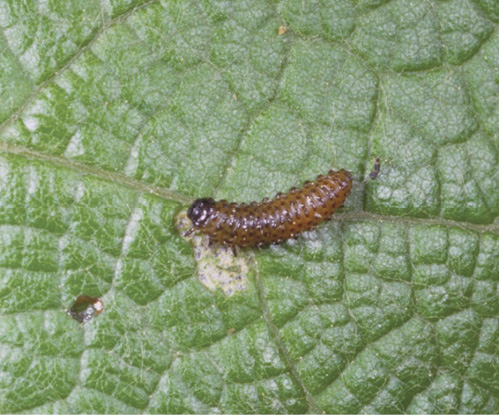
- Grape flea beetle: This pest produces “shot hole” or ragged damage and does not skeletonize entire leaf between veins. The grape flea beetle larvae are darker in color (brown) with black spots.
Why it matters
Severe infestations can cause rapid defoliation. The loss of canopy, and particularly basal leaves, can expose clusters and increase the risk of sunburn. Young vines are at particular risk to feeding due to their low number of leaves.2
Causes and contributing factors
Warm temperatures in New Mexico may allow multiple generations of the western grapeleaf skeletonizer to develop within a single growing season, increasing the risk of repeated infestations. Populations may build up when vineyards are located near unmanaged vegetation or alternative host plants3 (e.g., creeper).
Management and next steps
Regular monitoring is essential, especially in late spring and early summer. Growers should inspect basal and interior leaf undersides for egg clusters or early larval feeding patches. Hand-removal of egg masses and young larvae is effective in small vineyards. Insecticides should be applied when larvae are small, targeting the early instars before skeletonization occurs. Organic options for chemical control include Bacillus thuringiensis (Bt var. kurstaki)3 and Spinosad. Bt is most effective against young larvae while Spinosad can provide effective control of later larval instars.
Grape Flea Beetle
The grape flea beetle is a small but an occasionally problematic pest of grapevines in New Mexico. Damage is most severe in spring when the adults feed on newly swollen grape buds, which can reduce yield.
Pattern: Often concentrated along vineyard edges or hotspots; can be patchy within blocks.
Timing: Early season (buds), through summer (leaves).
Location: Buds and young shoots in spring. On leaves and shoots in summer.
Field symptoms
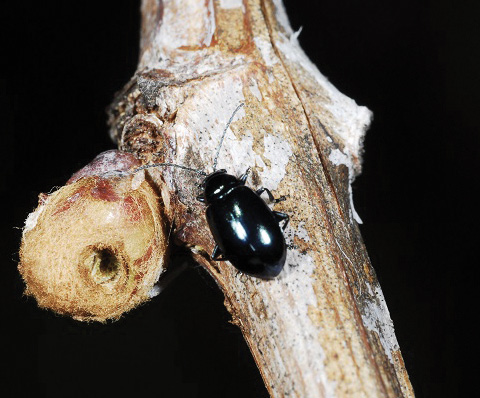
- Damage appears primarily at bud swell (early spring), showing chewed holes in the sides or tips (Figure 11).
- Affected buds may fail to develop into shoots, or shoots may appear hollowed or destroyed if they develop.
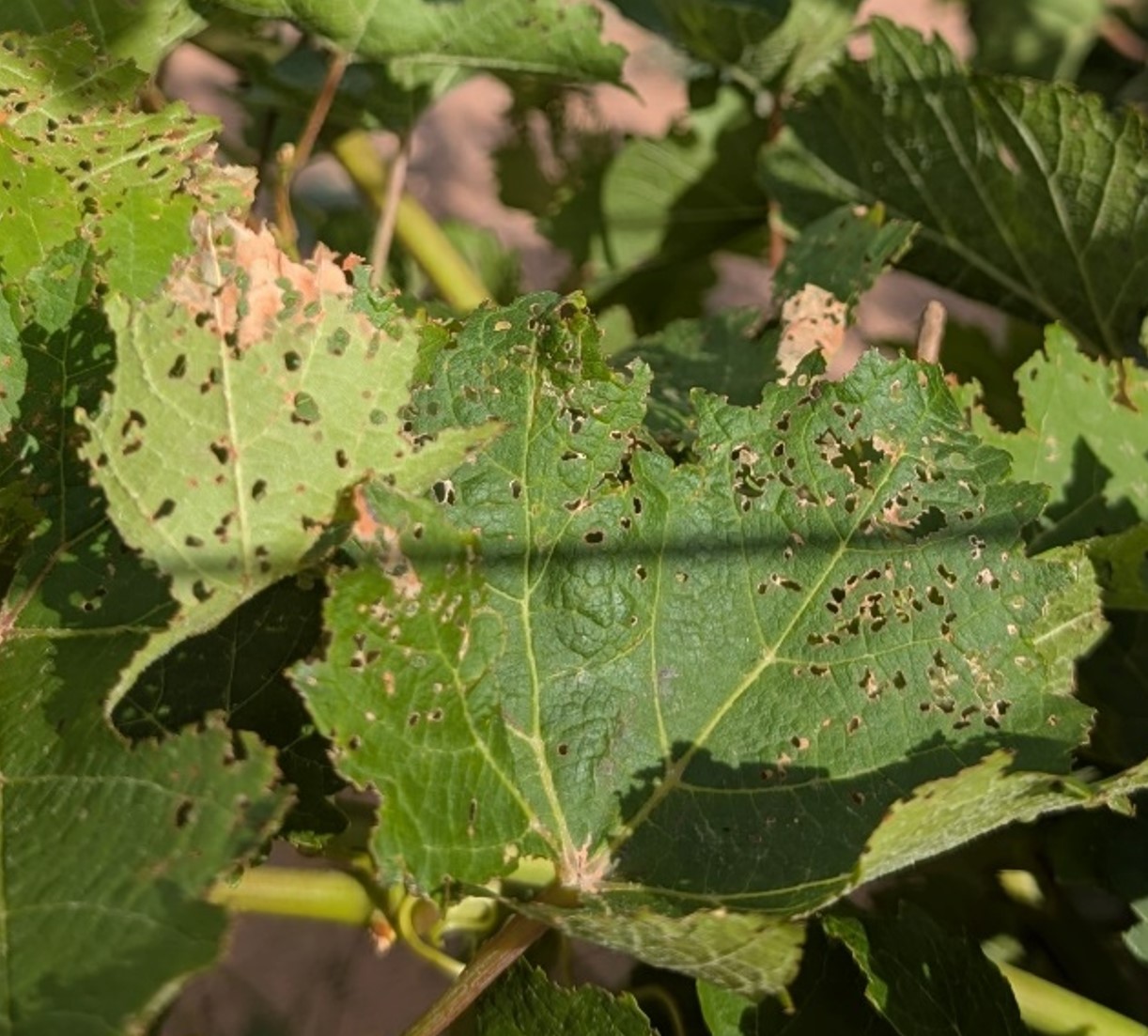
- Later in the season, leaves may show irregular holes or ragged chewing damage with a distinct “shot hole” pattern (Figure 12).
Key Identification features
The adult grape flea beetle is a small, shiny, metallic blue or blue-green beetle, about 1/5 inch long (4-5mm). Larvae and newly emerged adults also feed on the upper surface of grape leaves, which can result in a ragged look (Figure 12). This type of damage is typically less severe and rarely has a major impact on yield.
Can be confused with
- Western grape leaf skeletonizer: Both flea beetle and skeletonizer larvae feed on grapevine leaves, but flea beetle larvae are brown with black spots. Flea beetles tend to produce irregular chewing holes rather than progressive skeletonization. Damage to buds is unique to flea beetles and not skeletonizers. Western grapeleaf skeletonizer larvae tend to feed in groups, and will develop dark bands as they mature.
- Winter injury or frost damage: Buds may fail to develop or produce weak shoots, but there is no evidence of chewing or missing tissue. Damaged buds typically appear necrotic or fail to push altogether, rather than showing feeding holes.
- Cutworms: Both cutworms and grape flea beetles can damage swelling buds in early spring. Cutworm feeding is often more extensive and affects several buds or young shoots on the same vine. Cutworms feed primarily at night; inspect trunks and cordons after dark with a flashlight to confirm their presence.
Why it matters
Damage from adults feeding on swelling buds is the primary concern. Flea beetles chew holes in the sides and tips of developing buds, often destroying primary shoots and sometimes secondary or tertiary buds. Even when secondary buds survive, crops may be delayed, and yields can be significantly reduced. Larval feeding on foliage later in the season rarely causes serious economic losses.
Causes and contributing factors
Flea beetles emerge in spring (typically in late March-early April in much of the Southwest) and can begin feeding immediately on grape buds. Females lay eggs under loose bark, and larvae feed on developing leaves before dropping to the soil to pupate. Depending on climate, there may be one to two generations per year. Infestations are usually heaviest along vineyard borders near unmanaged vegetation, where overwintering sites are abundant.4
Management, and next steps
Because the most harmful damage occurs around bud swell, early-season scouting is essential. Shiny metallic adults are easiest to spot on canes and buds during warm, sunny days. If average bud injury reaches about 4% or more, treatment at bud swell may be required to protect developing shoots.
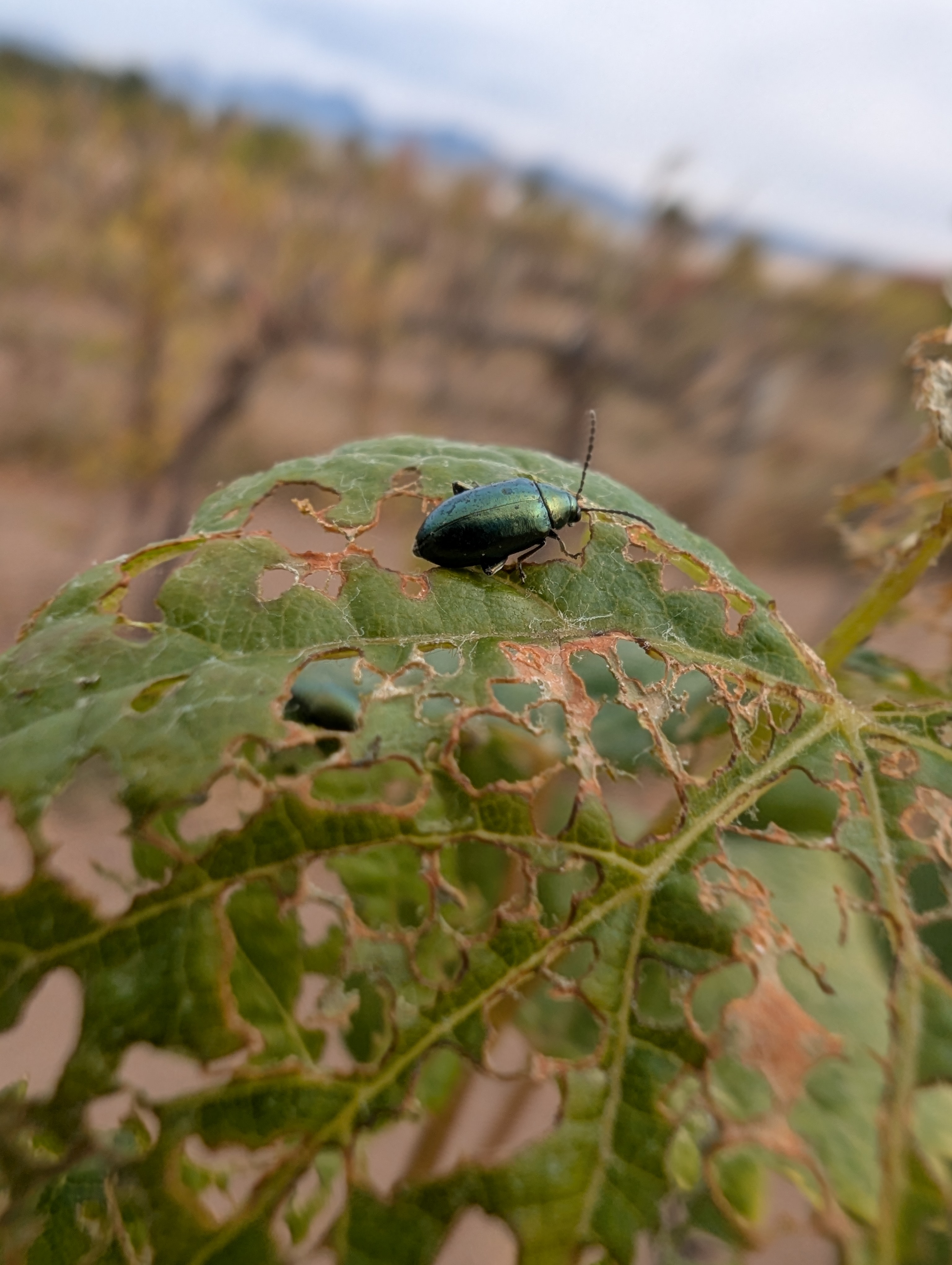
Figure 13. Close-up of flea beetle feeding on grape leaf showing irregular chewing holes.
References
- Daane K.M. & Cooper M.A. (2013). Western grape leafhopper. In L. J. Bettiga (Ed.), Grape pest management (3rd ed., pp. 202–219). University of California Agriculture and Natural Resources.
- Pickett, C. H., Pitcairn, M. J., Villegas, B., & Lara, J. R. (2024). Classical biological control of the western grape leaf skeletonizer in California, a review 1941–2022. Biocontrol Science and Technology, 34(11), 1020-1036. DOI: https://doi.org/10.1080/09583157.2024.2396982
- Pinnock, D. E., Milstead, J. E., Coe, N. F., & Stegmiller, F. (1973). Evaluation of Bacillus thuringiensis Formulations for Control of Larvae of the Western Grapeleaf Skeletonizer. Journal of Economic Entomology, 66(1), 194-197. DOI: https://doi.org/10.1093/jee/66.1.194
- Phillips, E. F., & Gillett-Kaufman, J. L. (2019). Flea Beetles of the Genus Altica: Altica spp. (Insecta: Coleoptera: Chrysomelidae): EENY-721/IN1238, 1/2019. EDIS, 2019(2). DOI: https://doi.org/10.32473/edis-in1238-2019
Resources
Publication ENTFACT-224: Grape Flea Beetle. Photographs and information. University of Kentucky, College of Agriculture https://entomology.mgcafe.uky.edu/ef224

Geraldine Diverres Naranjo is the NMSU Viticulture Extension Specialist focused on irrigation management, vine physiology, and the effect of vineyard management on fruit quality in arid climates.
To find more resources for your business, home, or family, visit the College of Agricultural, Consumer and Environmental Sciences on the World Wide Web at pubs.nmsu.edu/
Contents of publications may be freely reproduced for educational purposes. All other rights reserved. For permission to use publications for other purposes, contact pubs@nmsu.edu or the authors listed on the publication.
New Mexico State University is an equal opportunity employer and educator. NMSU and the U.S. Department of Agriculture cooperating.
October 2026, Las Cruces, NM