Circular 457-B
Revised by Stephanie Walker and Israel Joukhadar
College of Agricultural, Consumer and Environmental Sciences, New Mexico State University
Authors: Respectively, Extension Vegetable Secialist and Professor, Extension Plant Sciences; and Assistant Professor, Plant and Environmental Sciences. New Mexico State University. (Print Friendly PDF)
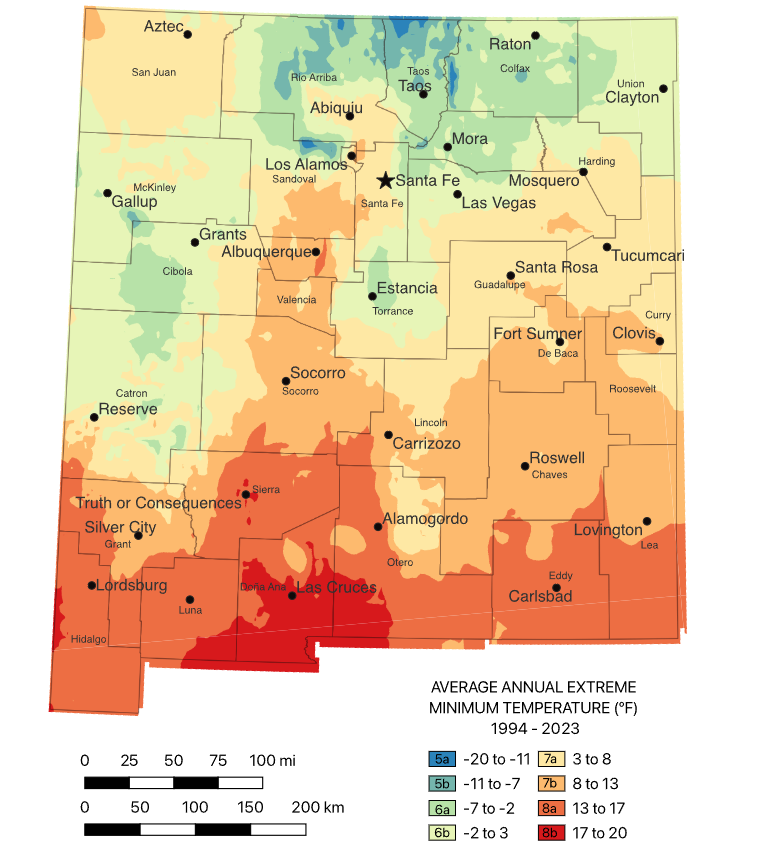
Figure 1. Growing zones of New Mexico, categorized by average annual extreme minimum temperatures (°F) and represented by eight distinct colors. Each color in the legend corresponds to a USDA hardiness zone. Updated from PRISM climatological data (1994-2023) and compiled by Dr. Ciro Velasco-Cruz, Assistant Professor, Agricultural Economics and Agricultural Business, New Mexico State University.
New Mexico can be divided into eight growing zones (Figure 1) and are aligned with the latest United States Department of Agriculture Hardiness Growing zones which can be found here USDA Plant Hardiness Zone Map (https://planthardiness.ars.usda.gov/). The hardiness zones are geographical areas that are defined by their average annual minimum temperatures. These hardiness zones are used to help gardeners and growers determine which plants can survive and thrive in a given location.
Selecting zone-appropriate plants is only the first step. Gardeners must then schedule planting to guarantee a long enough season for crops to mature, using the guidelines in Table 1. However, one key exception to extend the season is starting transplants indoors from seed, a method described in detail below.
|
Table 1. USDA Hardiness Zones in New Mexico with Average Dates of Last Frost and Number of Frost-Free Days. |
||
|---|---|---|
|
USDA Growing Zone |
Average Date of Last Frost in NM |
Average Number of Frost-Free Days in NM |
|
5a |
After May 29 |
126 |
|
5b |
May 15 – May 29 |
126-149 |
|
6a |
April 29 – May 15 |
149-173 |
|
6b |
April 14 – April 29 |
173-196 |
|
7a |
Mar 30 – April 14 |
196-220 |
|
7b |
Mar 15 – Mar 30 |
220-243 |
|
8a |
Feb 28 – Mar 30 |
243-267 |
|
8b |
Before Feb 28 |
267 |
|
Calculated from PRISM climatological data (1994-2023) and compiled by Dr. Ciro Velasco-Cruz, Assistant Professor, Agricultural Economics and Agricultural Business, New Mexico State University. |
||
Growing periods for individual gardens can vary as much as 20 days from the zone’s average. This variability may be due to elevation, site exposure, or air drainage. For example, gardens with northern slope exposures are cooler than those with southern slope exposures. Also, cooler air is heavier than warmer air, so gardens in valleys are more prone to frost than gardens overlooking the valley. Therefore, consider your garden’s unique needs as you determine planting dates.
Successful vegetable gardening in New Mexico requires an understanding of the two primary planting methods: direct seeding and transplanting. Direct seeding involves sowing crops like carrots and beans straight into the garden soil when conditions are favorable, while transplanting involves starting tender plants like tomatoes and peppers indoors to get a head start on the season. It is critical to select the appropriate method, as some crops do not transplant well and must be direct-seeded, and vice-versa. Furthermore, the state’s varied climates mean planting strategies must be tailored to hardiness zones. Gardeners in warmer zones can often enjoy both spring and fall planting windows for many crops. In colder zones with shorter frost-free periods, starting long-season crops as transplants indoors is essential to ensure they have enough time to mature. Consult Table 2 for precise planting dates tailored to your area. The dates are organized by three key hardiness zone groups within New Mexico.
|
Table 2. Planting and Harvest Guide for New Mexico |
||||||||
|---|---|---|---|---|---|---|---|---|
|
How to Plant |
Approximate Yield per 100 Feet of Row |
|||||||
|
Crop |
Average Days to Harvest |
Direct Sow Seed Depth (in.) |
Distance Between Plants in Rows (in.) |
Distance Between Rows (in.) |
Feet of Row per Person |
Seed or Plants per 100 Feet of Row |
Fresh (lbs) |
Canned (pints) |
|
Asparagus |
2 years |
6—8 |
12—15 |
36—60 |
30 |
80—100 plants |
60 |
25 |
|
Beans, bush |
54 |
1—2 |
2—6 |
18—36 |
80 |
1/2 lb |
90 |
65 |
|
Beans, bush (wax) |
52 |
1—2 |
2—6 |
18—36 |
80 |
1/2 lb |
90 |
65 |
|
Beans, pole |
63 |
1—2 |
4—8 |
36—48 |
10 |
1/2 lb |
90 |
80 |
|
Beans, lima |
68 |
1—2 |
3—6 |
18—36 |
20 |
1 lb |
30 |
40 |
|
Beans, lima, pole |
88 |
1—2 |
8—12 |
36—48 |
20 |
1/2 lb |
30 |
40 |
|
Beans, fava (broad), garbanzo (chickpea) |
90 |
1—2 |
3—6 |
24—48 |
20 |
1 lb |
30 |
40 |
|
Beets |
56 |
1/2 |
2—4 |
12—30 |
10 |
1 oz |
80 |
70 |
|
Broccoli |
60 |
1/2 |
8—12 |
26—36 |
25 |
1/2 oz or 100—150 plants |
75 |
— |
|
Brussels sprouts |
93 |
1/2 |
18—24 |
24—40 |
10 |
1/2 oz or 50—65 plants |
60 |
— |
|
Cabbage |
67 |
1/2 |
12—24 |
24—36 |
6 |
1/2 oz or 50—100 plants |
150 |
— |
|
Cabbage, Chinese |
57 |
1/2 |
12—24 |
24—36 |
10 |
1/2 oz or 50—100 plants |
30 |
— |
|
Cantaloupe (muskmelon) |
86 |
1/2—3/4 |
12 |
60—84 |
15 |
1 oz |
90 melons |
— |
|
Carrots |
72 |
1/4 |
1—3 |
16—36 |
30 |
1/2 oz |
75 |
— |
|
Cauliflower |
75 |
1/2 |
18—24 |
24—36 |
20 |
1/2 oz or 50—65 plants |
50 heads |
— |
|
Chard, Swiss |
58 |
1/2—3/4 |
4—15 |
24—36 |
10 |
1 oz |
100 |
— |
|
Collards |
80 |
1/2 |
10—24 |
24—36 |
— |
1/2 oz |
— |
— |
|
Corn, sweet (regular, SU) |
81 |
1—2 |
8—12 |
30—40 |
120 |
1/2 lb |
75 ears |
20 |
|
Corn, sweet (sugary enhancer, SE) |
81 |
1—2 |
8—12 |
30—40 |
120 |
1/2 lb |
75 ears |
20 |
|
Corn, sweet (super sweet, SH2) |
80 |
1/2—1 |
8—12 |
30—40 |
120 |
1/2 lb |
75 ears |
20 |
|
Cucumber, slicing |
59 |
1/2—3/4 |
8—12 |
36—72 |
5 |
1/2 oz |
180 |
— |
|
Cucumber, pickling |
57 |
1/2—3/4 |
8—12 |
36—72 |
5 |
1/2 oz |
90 |
25 |
|
Eggplant |
68 |
1/4—1/2 |
18—30 |
24—48 |
5 |
1/4 oz |
200 |
— |
|
Eggplant |
64 |
1/4—1/2 |
18—30 |
24—48 |
5 |
1/4 oz |
200 |
— |
|
Garlic, hardneck |
8—10 months |
1—3 |
3—6 |
12—36 |
3 |
1—12 lb of cloves |
— |
— |
|
Garlic, softneck |
8—10 months |
1—3 |
3—6 |
12—36 |
3 |
1—12 lb of cloves |
— |
— |
|
Kohlrabi |
53 |
1/2 |
3—6 |
12—36 |
12 |
1/2 oz |
100 |
— |
|
Leek |
120 |
1/2 |
3—6 |
12—36 |
10 |
1/2 oz |
— |
— |
|
Lettuce, head |
69 |
1/4—1/2 |
10—15 |
20—36 |
12 |
1/2 oz |
50 heads |
— |
|
Lettuce, leaf |
46 |
1/4—1/2 |
8—12 |
20—36 |
6 |
1/2 oz |
100 |
— |
|
Lettuce, romaine |
67 |
1/4—1/2 |
10—14 |
20—36 |
— |
1/2 oz |
100 |
— |
|
Lettuce, butterhead |
66 |
1/4—1/2 |
10—15 |
20—36 |
— |
1/2 oz |
— |
— |
|
Mustard |
35 |
1/2 |
5—10 |
20—36 |
6 |
1—2 oz |
50 |
60 |
|
Okra |
54 |
1 |
8—24 |
42—60 |
10 |
2 oz |
30 |
12—24 |
|
Onions, fall-planted |
110 |
1/2 |
2—4 |
20—36 |
20 |
1 oz |
70 |
— |
|
Onions, spring-planted |
90 |
1/2 |
2—4 |
20—36 |
40 |
1 oz |
75 |
— |
|
Parsnips |
105 |
1/2 |
2—4 |
20—36 |
0 |
1 oz |
100 |
— |
|
Peas, snap |
61 |
1 |
1—3 |
24—36 |
5 |
2 lb |
40 |
25 |
|
Peas, snow |
62 |
1 |
1—3 |
24—36 |
5 |
2 lb |
40 |
25 |
|
Peas, English |
70 |
1 |
1—3 |
24—36 |
5 |
2 lb |
40 |
25 |
|
Peppers, chile and bell |
76 |
1/4 |
12—24 |
24—36 |
15 |
1/2 oz |
75 |
— |
|
Potato |
102 |
4 |
12 |
30—36 |
60 |
10 lb of seed pieces |
75 |
— |
|
Sweet potato |
126 |
(transplants) |
10—18 |
36—48 |
5 |
65—120 plants |
— |
— |
|
Pumpkin |
103 |
1—1 1/2 |
36—60 |
72—96 |
5 |
1 oz |
150 |
— |
|
Radish |
25 |
1/2 |
1—2 |
12—18 |
6 |
1 oz |
100 bunches |
— |
|
Spinach, cool season |
43 |
1/2 |
2—6 |
12—36 |
15 |
1 oz |
50 |
60 |
|
Spinach, summer |
70 |
1 |
12—18 |
36 |
10 |
1 oz |
60 |
75 |
|
Squash, summer |
48 |
1 |
24—48 |
36—60 |
5 |
2 oz |
100 |
— |
|
Squash, winter |
91-95 |
1 |
36—96 |
72—96 |
10 |
1 oz |
40 fruits |
— |
|
Tomatoes, plum, small types (<1” size) |
64 |
1/2 |
18—48 |
36—60 |
60 |
25—65 plants or 1/2 oz |
150 |
110 |
|
Tomatoes, large (>3” size) |
69-75 |
1/2 |
18—48 |
36—60 |
60 |
25—65 plants or 1/2 oz |
150 |
110 |
|
Tomatoes, paste |
78 |
1/2 |
18—48 |
36—60 |
60 |
25—65 plants or 1/2 oz |
150 |
110 |
|
Turnips |
45 |
1/2 |
2—6 |
12—36 |
30 |
3/4 oz |
100 |
— |
|
Watermelon |
82 |
1 |
24—36 |
72—96 |
10 |
1 oz |
20 fruits |
— |
|
Melons, Other |
94 |
1 |
24—36 |
72—96 |
— |
1 oz |
90 melons |
— |
Planting Guidelines and Yield Information
Effective garden planning integrates both planting logistics and yield expectations to maximize the productivity of your available space. Key planting information, spacing, and depth, directly influences plant health and eventual harvest. Table 2 provides these essential guidelines alongside estimated yield per foot of row for common vegetables, enabling gardeners to accurately calculate how much to plant based on their household’s needs and storage goals.
Refer to Circular 457, Home Vegetable Gardening in New Mexico (https://pubs.nmsu.edu/_circulars/CR457/), for more information on gardening in New Mexico.
For Further Reading
CR-457: Home Vegetable Gardening in New Mexico
pubs.nmsu.edu/_circulars/CR457/
H-220: Starting Plants Early Outdoors
pubs.nmsu.edu//_h/H220/
H-221: Spices and Herbs for the Home Garden
pubs.nmsu.edu//_h/H221/
H-240: Growing Chile Peppers in New Mexico Gardens
pubs.nmsu.edu//_h/H240/

To find more resources for your business, home, or family, visit the College of Agricultural, Consumer and Environmental Sciences on the World Wide Web at pubs.nmsu.edu/.
Contents of publications may be freely reproduced, with an appropriate citation, for educational purposes. All other rights reserved. For permission to use publications for other purposes, contact pubs@nmsu.edu or the authors listed on the publication.
New Mexico State University is an equal opportunity employer and educator. NMSU and the U.S. Department of Agriculture cooperating.
Revised January 2026 Las Cruces, NM