Guide B-136
Marcy Ward, Francine Mezzomo Giotto, and Craig Gifford
College of Agricultural, Consumer and Environmental Sciences
Authors: Respectively, Extension Livestock Specialist, Extension Animal Sciences and Natural Resources, New Mexico State University (NMSU); Assistant Professor, Animal and Range Sciences, NMSU; and Associate Professor, Department of Animal and Range Sciences, NMSU. (Print Friendly PDF)
Photo by Darrell Pehr. NMSU, 2007.
Introduction
Many livestock owners intend to keep a few animals for themselves to fill their freezers or sell to their neighbors. There is nothing quite like beef that comes fresh off the farm or ranch. Most producers that harvest their own beef only keep a small number of animals for this reason. Feeding a few animals in an efficient and cost-effective manner can be a challenge. This publication will offer guidelines on what is needed to feed cattle to get them to their finishing weight.
Considerations
The definition of a “finished” beef animal includes the combination of animal frame, body weight, and fat cover. Breed, variation within breed, and diet will influence how much marbling and tenderness the meat will have and dictate how long it will take an animal to reach its finished condition. The amount of fat that covers the animal can also be correlated with slaughter readiness and meat quality. On average, however, beef animals in the United States are considered finished at approximately 1300 pounds. The reason that the industry prefers animals this size is that they best meet the desired carcass weight for the processing facility, product packaging, and marketing. Individuals, however, can finish their cattle to their own preferred end weight to maximize the genetics of their animal and reach a desired product quality.
Frame size (measured at the hip at 10-12 months of age) can be used as a tool to estimate realistic finishing weights in beef cattle (Figure 1) (Hammack and Gill, 2009).
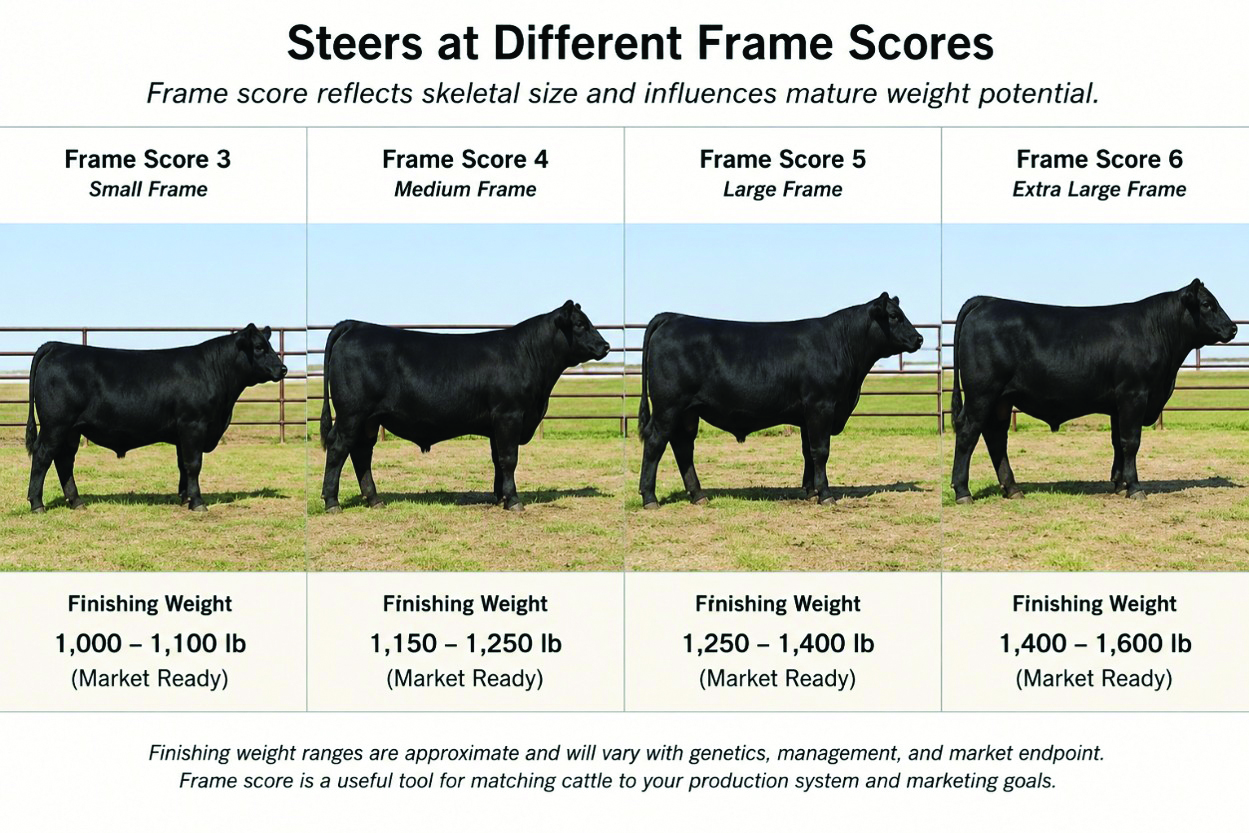
Figure 1. Finishing weight ranges are approximate and will vary with genetics, management, and market endpoint. Frame score is a useful tool for matching cattle to your production system and marketing goals. Image generated by ChatGPT.
The end weight goal is important to know so that feeding management can be established to efficiently reach that weight. There are a few steps that need to be considered when building a feeding program to finish beef animals.
Step 1: Determine how much an animal needs to gain to reach the desired end weight. It is important to know the starting weight so the total pounds of gain needed to reach the finished weight can be calculated.
Example: Weaned calf weighs 550 pounds, with an end goal weight of 1300 pounds.
1300 lbs – 550 lbs = 750 lbs (total weight gain needed).
Step 2: Determine how you intend to feed the animal.
- Feeding a grain-based diet results in a far faster rate of gain, so the animal will be ready to harvest in a relatively short amount of time. These diets also typically result in more marbling within the beef.
- Example: A balanced high-grain diet results in a rate of gain of 3 lbs per day
- If the animal needs to gain 750 lbs it will take 250 days to reach 1300 lbs
- 750 lbs total / 3 lbs per day = 250 days
- If the animal needs to gain 750 lbs it will take 250 days to reach 1300 lbs
- Example: A balanced high-grain diet results in a rate of gain of 3 lbs per day
- Finishing cattle on grass or hay is another option. These diet options are lower in energy and therefore result in a slower rate of gain. Diets low in starch/grain also typically result in a leaner beef product.
- Example: Grazing high-quality forage results in an average rate of gain of 1.75 lbs per day.
- If the animal needs to gain 750 lbs, it will take 428 days to reach 1300 lbs
- 750 lbs total / 1.75 lbs per day = 428 days
- If the animal needs to gain 750 lbs, it will take 428 days to reach 1300 lbs
- Example: Grazing high-quality forage results in an average rate of gain of 1.75 lbs per day.
Step 3: Establish a plan on how the animals will be housed, fed, and managed.
- If hand-feeding grain daily there are several details to consider.
- Pen size – 1 beef animal requires 350 square feet minimum.
- Bunk space - A feeder calf (500-700 lbs) needs 12 inches of feeder bunk space. As the animal grows, that requirement increases to 16 inches of linear bunk space per animal.
- Animal access to shelter or windbreaks – When animals have a way to be protected from inclement weather, they tend to have improved performance.
- Water access – free choice clean water results in optimum performance.
- Feed storage and access – buying feed in larger quantities is the most economical but will require the space to store it in a dry (preferably rodent-free) place.
- Manure management – clean pens are key to maintaining health and performance. Having a place to take the manure needs to be considered.
- Odor and insect control if feeding in or near urban or suburban areas – Insect control also improves animal welfare.
- Raising beef in a pasture setting has two primary considerations.
- Is there enough forage to support the animal(s) an additional year or more after weaning? Proper forage management must be considered prior to deciding on this feeding option.
- Changes in forage quality must also be considered. Supplementation will be needed for several months from late fall to early spring in order to maintain the same rate of gain throughout the year.
- If you are not confident in what the forage quality is, it is recommended that you send off a sample for nutrient analysis. This will allow you to properly balance supplement needs.
- Rainfall will be directly proportional to the abundance of forage and forage quality, both of which impact animal performance.
- Changes in forage quality must also be considered. Supplementation will be needed for several months from late fall to early spring in order to maintain the same rate of gain throughout the year.
- Water access/availability can vary from year to year, impacting animal performance.
- Is there enough forage to support the animal(s) an additional year or more after weaning? Proper forage management must be considered prior to deciding on this feeding option.
Seasonal weather changes will also affect performance. Extreme heat can reduce growth performance as cattle expend more energy regulating body temperature and consume less feed.
Hand feeding more nutrient dense feed is generally the most efficient way to reach final weights in market animals. Therefore, the remainder of this article will focus on the hand feeding option.
Feeding Cattle to Finish
To optimize gain, reduce time on feed, and support carcass quality, an animal’s nutrient requirements for growth must be met (Table 1). For ruminants, this can be accomplished by utilizing a wide variety of ingredients. There are just a few rules of thumb to consider when building a ration to finish cattle in a drylot.
Intake will drive an animal’s ability to meet its nutritional requirements. Table 1 is based on a scenario where the animal has sustained gains of 3 lbs per day. A growing animal’s intake often doubles over time, protein concentration declines, and energy concentration slightly increases. By understanding this principle, producers can adjust the rations to best meet the animal’s requirements for growth. Increasing the high-energy ingredients and reducing the high-protein ingredients by the time the animal reaches 900 lbs, can reduce costs while still achieving the desired outcome.
|
Table 1. Nutrient Requirements for Growing Beef Cattle Gaining 3lbs per Day.1 |
|||||||
|---|---|---|---|---|---|---|---|
|
Body Weight (lb) |
Dry Matter Intakea |
TDNb (%) |
TDN |
Crude |
Crude Protein |
Calcium (%) |
Phosphorus (%) |
|
400 |
13.0 |
74 |
9.6 |
15.5 |
2.0 |
0.65 |
0.38 |
|
600 |
17.0 |
71 |
12.1 |
13.8 |
2.3 |
0.60 |
0.34 |
|
800 |
21.0 |
69 |
14.5 |
12.5 |
2.6 |
0.55 |
0.30 |
|
1,000 |
24.0 |
67 |
16.1 |
11.5 |
2.8 |
0.50 |
0.27 |
|
1,200 |
27.0 |
65 |
17.6 |
10.5 |
2.8 |
0.45 |
0.25 |
|
1,400 |
29.5 |
63 |
18.6 |
10.0 |
3.0 |
0.42 |
0.22 |
|
aSubsequent nutrient values are on the dry matter basis. |
|||||||
Common Feedstuffs
There are three primary categories of feed ingredients. These categories are based on nutrient density and include energy, protein, and fiber. Table 2 provides examples of feedstuffs within each category.
|
Table 2. An example of a step-up ration feeding schedule based on time and size of animal. |
|||
|---|---|---|---|
|
Animal weight |
Ration |
% of Ration |
Days on Feed |
|
500 |
Free choice hay |
100 |
Day 0 - 3 |
|
500 |
Free choice hay 2 lb corn 1/2 lb CSM *Free choice mineral/salt |
86 11 2 1 |
Day 4 - 7 |
|
500-900 |
Free choice hay Increase corn to 10 lbs Increase CSM to 1 ½ lbs Free choice finishing mineral/salt |
53 40 32 6 1 |
Day 8 – Day 135 |
|
900-1300** |
Hand feed Hay 10 lbs Increase corn to 14lbs Increase CSM to 2 lbs Free Choice finishing mineral/salt |
38 54 7 1 |
Day 135 - Finish (approx. day 270) |
|
* A basic mineral package is less expensive than the finishing mineral (high calcium lower phosphorus) and can be offered until the ration exceeds 50% grain. It is at that point; that a finishing mineral should be provided. ** Increase the ratios of all ingredients as the animal grows. If they are easily cleaning up what is offered, increase everything proportionally. Try not to limit feed at any stage of growth. ***The sum of the percentages should always equal 100. |
|||
Byproduct Feedstuffs
Byproduct feedstuffs are those ingredients that are either remnants of industrial processing of whole grains or rejected food items not suited for human consumption. There are many options to choose from in byproducts that have proven to be good sources of nutrition for ruminants.
One of the most common byproducts used in the feedlot industry are distillers’ grains. Distillers’ grains are the solid portion that remains after whole corn or milo has been distilled for ethanol or alcohol. These products are high in protein (25 – 30%) and high in energy (80 – 85% TDN). They are also low in starch and very palatable, which makes them easy to feed and manage. Though distillers’ grains are a great feedstuff to use, it is recommended to only incorporate it at no more than 30% of the ration.
Other byproducts can be found regionally. For example, in southern New Mexico, many people will feed discarded chiles, cotton gin “trash”, or even rejected tortillas.
Feeding byproducts is a great way to reduce costs, but there are things to consider. There can be quite a bit of variability in nutrient density and composition with byproducts. One batch may be high in protein or fat, whereas the next batch may be lower in both. Therefore, it is important to regularly test samples of byproducts for nutrient density and adjust the rest of the ration accordingly.
Palatability can sometimes be an issue where cattle simply don’t like the smell or taste of some ingredients. Feeding limitations should also be considered. Bakery waste products like tortillas and discarded snack foods that are very high in fat, should only be fed at no more than 5% of the ration. Storage is another consideration. Products that are high in fat can go rancid, so it is good to estimate how much of an ingredient will be used in a 10 to 14-day window, to help keep ingredients fresh.
Vitamins and Minerals
Although vitamins and minerals are required in very small amounts, they are key to proper digestion, growth, and immune function. The core ingredients in a ration (energy, protein, and fiber) often do not adequately meet the nutrient requirements for vitamins and minerals. Finishing rations in particular can create an imbalance between Calcium (Ca) and Phosphorus (P). Most finishing rations are higher in P than Ca. In order to optimize growth, there should be more available Ca than P in the ruminant’s diet. To fix the ratio of Ca:P in the base ration, Ca should be included. In order to properly balance high grain rations, it is recommended to buy a commercial supplement best suited for finishing rations.
Building a Ration
Planning ahead is important when building a ration. Ingredient availability and the cost of those ingredients must be the first thing to consider. Offering a consistent diet throughout the feeding phase is key to optimize performance. Here is an example of how to build a finishing ration.
Step 1:
Energy needs to be the primary nutrient in a finishing ration. Therefore, energy ingredients should be selected first and then build the ration from there.
Corn is generally the most abundant, highest in energy, and economical. It can also be fed whole or rolled.
Distillers’ grains offer a good combination of protein and energy but may be difficult to source.
Step 2:
Protein will be the next nutrient to include. It is important to have adequate protein in the ration, so the animal can fully utilize energy for proper muscle and fat development. If not enough protein is fed, the animals will get too fat and will lack muscle.
Soybean meal (SBM) is a good quality protein that can be added in small amounts.
Cottonseed meal (CSM) may be a good alternative as it is more regionally available and economical.
If available, distillers’ grains can be used as both a protein and energy source.
Step 3:
Roughage/fiber will be incorporated at the lowest amount of the ration (20 to 40%). Though typically low in protein and energy, it is important that fiber be included in the diet to maintain rumen health and digestion. Most commercial feedlot finishing rations have less than 10% roughage, however, acidosis and founder can occur if not properly managed. Therefore, higher levels of roughage should be fed in a home feeding scenario, to avoid these issues:
- Free choice hay (alfalfa, grass, wheat, oat, sudan)
- You will want to transition to hand-feeding a fixed amount of hay as the calf approaches 900 lbs.
Feeding Management
Feeding management is as important as what you are feeding. Ruminants require time to transition through different diets. To maintain proper gut health, calves should be introduced to grain slowly. Using the ingredients listed above, Table 3 will offer an example of a recommended step-up ration schedule.
Feeding a prepared feed that is already balanced with all the nutrients can be a simple option. Keep in mind, however, that most of these manufactured products come with a price markup and can be cost-prohibitive. These feeds are typically designed to finish a feeder show project. When deciding what and how you want to feed, always look at the estimated cost. Feeding cattle is a long-term investment that should be budgeted for prior to making that commitment.
Flexibility can be built in to adjust for changing feed prices and availability. For example, if soybean meal is hard to find or is cost prohibitive, cottonseed meal can be cheaper alternative with similar protein content. It is advised that research be done when changing ingredients within a ration, to ensure that the nutritional requirements of the animal are still being met. Additionally, new ingredients should also be introduced gradually to reduce the risk of digestive upset.
How to Determine if a Calf is Ready for Market
Frame and breed often determine how long it will take for an animal to reach its finished condition. The greater the frame, the longer it will take.2 English breeds typically finish at a younger age than continental, dairy, or Japanese breeds (i.e. Wagyu, Akaushi). There are some physical characteristics, however, that can help determine slaughter readiness.
Monitoring fat deposition at the tail head, pin bones, down the top line, brisket, flank, and over the ribs provides points of reference (Figure 2). As a calf begins to finish, it will be flatter on the top line, and the tail head and brisket will be filled with fat deposits. The ribs and pin bones can no longer be distinguished (Figure 3).
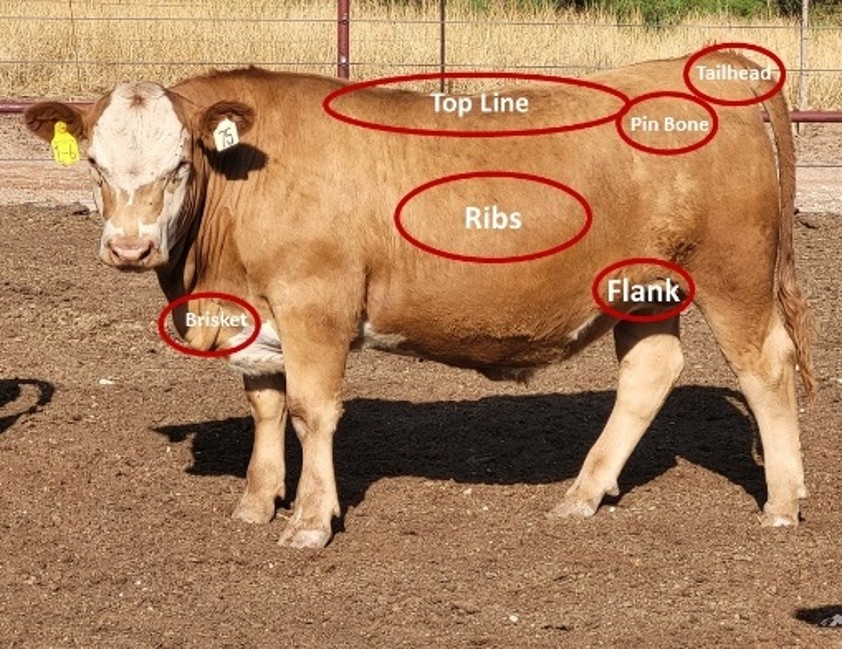
Figure 2. Anatomical points for fat cover assessment in feeder cattle
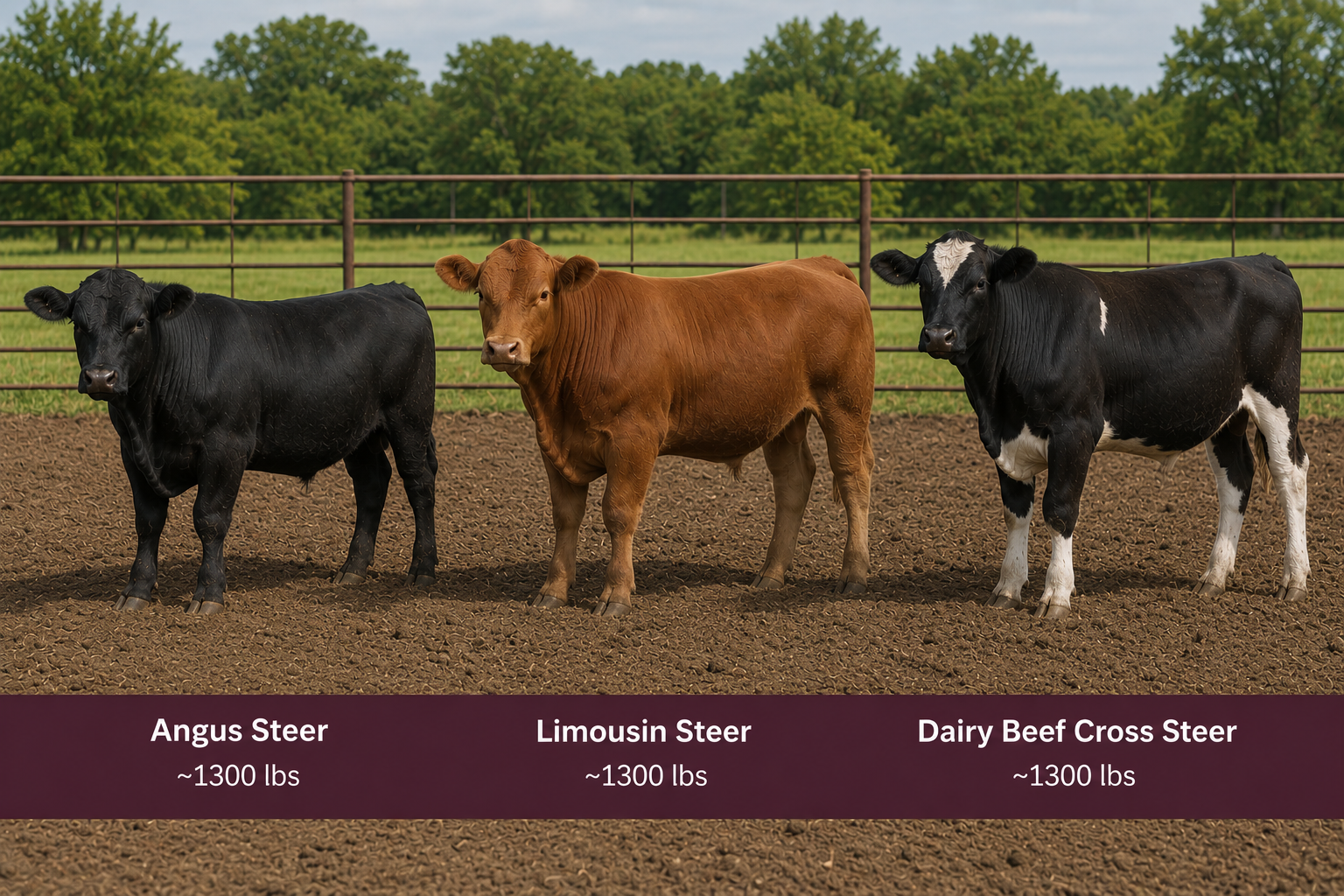
Figure 3. 1300 pound steers at various stages of finish. Images provided by: https://afs.ca.uky.edu/livestock/grading/Market-Steers-Yield-Quality-Grade
In Summary
Feeding out your own beef can be very rewarding. Feeding a few head of cattle out can also be another source of income. It should be noted that this is likely going to be a year-long commitment. Prior to making this decision, a few things need to be considered: Is the facility appropriate to house cattle in confinement for a long period of time? Can an adequate amount of feed and forage be secured throughout the feeding process? Is there adequate storage for the feed and hay? And finally, are finances in place that can ensure a consistent level of feeding and care of the cattle, and the cost of processing?
Your local county agent, or state beef specialist, can be a good source of information and guidance when starting to feed out cattle.
References
- National Academies of Sciences, Engineering, and Medicine. (2016). Nutrient requirements of beef cattle (8th Rev. ed.). National Academies Press. doi: 10.17226/19014.
- Gammack, S. P., & Gill, R. J. (2009). Texas Adapted Genetic Strategies for Beef Cattle X: Frame Score, Frame Size, and Weight. Texas Agrilife Extension Service http://agrilifebookstore.org/

Marcy Ward is the Extension Livestock Specialist at NMSU. She received her B.S. and M.S. in animal science from Colorado State University and NMSU, respectively, and her Ph.D. in ruminant nutrition from North Dakota State University. She was most recently the Beef Program Director at Colby Community College in Colby, KS.
To find more resources for your business, home, or family, visit the College of Agricultural, Consumer and Environmental Sciences on the World Wide Web at pubs.nmsu.edu
Contents of publications may be freely reproduced for educational purposes. All other rights reserved. For permission to use publications for other purposes, contact pubs@nmsu.edu or the authors listed on the publication.
New Mexico State University is an equal opportunity/affirmative action employer and educator. NMSU and the U.S. Department of Agriculture cooperating.
September 2026 Las Cruces, NM