Guide B-134
Marcy Ward and Donald Martinez
College of Agricultural, Consumer and Environmental Sciences, New Mexico State University
Authors: Respectively, Extension Livestock Specialist, Extension Animal Sciences and Natural Resources; and Rio Arriba County Agricultural Agent, Rio Arriba County Extension Office. Both from New Mexico State University. (Print Friendly PDF)
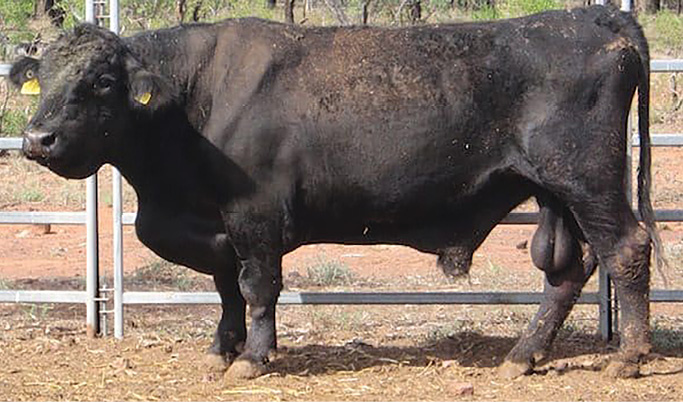
Approximately one-third of the beef cattle produced in New Mexico come from elevations of 5000 ft or greater. A common ailment of cattle raised at these elevations is commonly known as Brisket disease, specifically bovine high-altitude pulmonary edema (BHPE) or high-altitude disease (HAD). Affected cattle have trouble coping with lower oxygen levels, causing the heart to work harder and resulting in fluid accumulating within the pericardial sac, which may eventually lead to edemas (fluid accumulation) around the lungs and brisket region (Figure 1). The inefficiency of oxygen transfer increases their susceptibility to other respiratory infections as well.
Symptoms of HAD may include:
- Difficulty breathing or rapid breathing
- Coughing
- Increased respiratory rate
- Decreased exercise tolerance
- Bluish discoloration of the mucous membranes (cyanosis)
- Swelling in the brisket area
High altitude disease can be fatal if not promptly diagnosed and treated. Treatment typically involves moving affected cattle to lower altitudes, where oxygen levels are higher, and supportive care such as administration of oxygen and diuretics that can reduce fluid accumulation in the tissue. If moving cattle to lower ground does not alleviate symptoms, consult your veterinarian for more medical care.
Monitoring Herd Susceptibility to HAD
It’s important for cattle producers and veterinarians in high-altitude regions to be aware of frequency of HAD and take appropriate measures to mitigate its effects, especially during times of increased stress or rapid changes in altitude.
The method used to monitor your cattle and their propensity to develop HAD is through pulmonary arterial pressure testing. This test can be used for selection criteria for replacement heifers and/or bull purchase, as well as determining animal susceptibility.
This test measures pulmonary arterial pressure (PAP) and refers to the pressure within the pulmonary artery, which is the blood vessel that carries deoxygenated blood from the heart to the lungs for oxygenation.
Elevated PAP can indicate various health issues in beef cattle, such as:
- Pulmonary Hypertension: This condition involves increased pressure in the pulmonary arteries, which can lead to heart failure and reduces ability to oxygenate lung fields.
- Respiratory Diseases: Respiratory conditions such as pneumonia or chronic obstructive pulmonary disease (COPD) can lead to increased PAP due to inflammation or obstruction in the lungs.
- Heart Diseases: Certain heart conditions, such as congenital defects or valvular disorders, can cause increased pressure in the pulmonary artery.
- High-Altitude Disease: In regions with high altitudes, cattle can develop high-altitude pulmonary hypertension (HAPH), a condition where decreased oxygen availability leads to increased PAP.
Testing for PAP requires specialized equipment, including catheters, transducers, and an EKG monitoring device. This procedure can be performed at the ranch location by a certified PAP veterinarian. In some cases, the animal may be referred to a specialty hospital if cardiovascular or respiratory disease is detected (Figure 2).
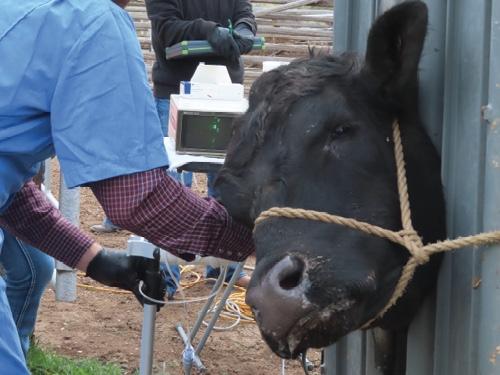
Figure 2. Animal being evaluated for Pulmonary Arterial Pressure (PAP) by a veterinarian.
What constitutes a “good” PAP score can vary depending on the altitude and the specific breeding goals of the operation. Generally, a PAP score below a certain threshold is considered desirable for cattle that will be raised or used for breeding at high altitudes (Table 1). The exact threshold may vary, but in some cases, a PAP score of 40 mmHg or lower is considered acceptable for high-altitude adaptation.
|
Table 1. PAP Risk Factor High Elevation Test Chart Conducted at an elevation of 5500-7000 ft (75-95% repeatable, predictive value).1 |
||||
|---|---|---|---|---|
|
Pap Score |
Use at Low Elev. (<4000 ft) |
Use at Moderate Elev. (4000-5500 ft) |
Use at High Elev. (5500-7500 ft) |
Use at Extreme Elev. (>7500 ft) |
|
34-39 |
Low Risk |
Low Risk |
Low Risk |
Low Risk |
|
40-45 |
Low Risk |
Low Risk |
Low/Moderate Risk |
Low/Moderate Risk |
|
46-49 |
Moderate Risk |
Moderate Risk |
Moderate Risk |
High Risk |
|
≥50 |
Moderate Risk |
Moderate Risk |
High Risk |
High Risk |
|
Based on Beef Improvement Federation Guidelines.2 |
||||
It’s important to note that PAP scores should be interpreted in the context of the altitude at which the cattle will be living or working. What might be considered a good PAP score at one altitude may not be suitable for another. Additionally, other factors such as breed, age, and overall health should also be taken into consideration when evaluating PAP scores. Cattle should be managed at elevations greater than 6400 feet for a minimum of 45 days before being tested for PAP. Waiting 45 days before testing will yield results that will better demonstrate how the animal is responding to lower atmospheric oxygen.. Testing above 6400 feet in elevation has proven to produce more accurate PAP readings as well.
Unfortunately, cattle that carry a high propensity for HAD cannot be “cured”. Cattle with high PAP scores may have permanent changes to the heart and lungs and will continue to have a risk of developing pulmonary issues, regardless of elevation.
A key prevention strategy of HAD is through selection. When cattle are managed above 6000 feet, for example, PAP monitoring in bulls and replacement heifers is recommended. Culling high risk animals (PAP greater than 45mmHg) can also help to reduce overall economic loss due to HAD.
Genetics and HAD
Research has shown that there is a genetic link of susceptibility to HAD. Heritability is estimated to be approximately 30%.3 When Angus bulls, heifers, and steers were evaluated, bulls demonstrated higher PAP scores compared to heifers and steers, with heifers having consistently lower PAP scores than bulls or steers. This indicates females tend to be slightly more resistant to HAD. Therefore, having bulls and replacement heifers tested for PAP is recommended at higher altitudes.
Cattle breeders and producers often use actual PAP scores as part of their selection criteria when choosing breeding stock or purchasing animals for high-altitude environments. High altitude diseases’ genetic component is complex, with a strong environmental influence on this disease trait being expressed. More research is needed to better clarify the genetic impact on HAD. Nevertheless, what data is available has compelled the American Angus Association to develop a “PAP” EPD. Producers can then make selection decisions to reduce the risk of HAD development. A lower PAP EPD value is more desirable in Angus cattle raised in higher altitudes. Expected progeny values for PAP range from -4.76 to 10.3 (https://www.angusonline.org/Nce/SireSummary).
Nutrition and HAD
Balanced nutrition is a good way to reduce HAD onset in beef cattle. In grazing beef cattle, this can be difficult, as forage quality continually changes over the course of the year. Here are some considerations when managing HAD with proper nutrition.
- Copper (Cu): Deficiencies have been shown to contribute to the onset of HAD symptoms in susceptible cattle.4
- Salt: Cattle suffering from HAD seek hydration. Salt will promote water intake. Offering salt near good water sources is recommended. However, excessive salt, could contribute to hypertension, which could lead to HAD onset. Feeding mineral packages low in sodium will still help promote water intake, without overconsuming salt. Salt blocks could help regulate overall sodium consumption.
- Iron (Fe): Though Fe is needed in hemoglobin formation (oxygen transport), too much Fe can have a negative effect. Elevated Fe in the diet can cause oxidative stress and reduce the absorption of copper along with other key minerals,5 increasing the risk of HAD. In forested areas, it is not uncommon to have excessively high Fe levels in the forage and water sources.
Feeding a loose mineral that is higher in copper can help offset the negative effects of elevated dietary Fe, potentially reducing the risk of HAD in beef cattle grazing in higher altitudes.
Water and forage quality are challenging to control. Testing forage and water for minerals regularly is a good way to know what may need to be supplemented to optimize nutrition.
Summary
High altitude disease can result in significant economic loss to cattle producers who ranch in higher elevations. Through indirect culling and selection, some herds are better suited to mountainous regions. However, when new cattle are introduced to these conditions, steps should be taken to determine how well these animals will handle higher altitudes.
A PAP evaluation by a trained veterinarian will provide a key piece of information on how suited the animal is to higher elevations. Considering the level of heritability of this disease, culling animals based on PAP scores or removing those who develop HAD symptoms will improve the genetic base of the herd. Proper selection criteria and good nutrition can all be used to reduce the risk of HAD in your herd.
References
- Holt, T. N., & Callan, R.J. (2007). Pulmonary arterial pressure testing for high mountain disease in cattle. Vet. Clin. Food. Anim., 23, 575-596.
- Enns, M., Holt, T., Speidel, S.E., & Thomas, M.G. (2021 April). Pulmonary Arterial Pressure. Beef Improvement Federation Guidelines. https://guidelines.beefimprovement.org/index.php/Pulmonary_arterial_pressure_(PAP)
- Cockrum, R.R., Zeng, X., Berg, N.F., Neary, J.M., Garry, F.B., Holt, T., Blackburn, H.D., Thomas, S., Speidel, S.E., Garrick, D.J., Enns, R.M., & Thomas, M.G. (2014). Angus cattle at high altitude: Genetic relationships and initial genome-wide association analysis of pulmonary arterial pressure, 17-22. Proc 10th Annual World Congress of Genetics Applied to Livestock Production, Vancouver, Canada.
- Stowe H. D., & Harmon B.G. (1972). Copper deficiency, altitude, and brisket disease. J Am Vet Med Assoc., 161(9), 1021-3.
- National Academies of Sciences, Engineering, and Medicine. (2016). Nutrient requirements of beef cattle, eighth rev. ed. Washington, D.C.: National Academies Press. doi: 10.17226/19014.

Donald Martinez is the current Rio Arriba County Agricultural Agent. He is a New Mexico native born and raised on a farm and ranch in Rio Arriba County. His B.S. is in Animal Science and his master’s degree in education. Coordination of livestock production and projects in his county has been the highlight of his outreach and programming.
To find more resources for your business, home, or family, visit the College of Agricultural, Consumer and Environmental Sciences on the World Wide Web at pubs.nmsu.edu.
Contents of publications may be freely reproduced, with an appropriate citation, for educational purposes. All other rights reserved. For permission to use publications for other purposes, contact pubs@nmsu.edu or the authors listed on the publication.
New Mexico State University is an equal opportunity employer and educator. NMSU and the U.S. Department of Agriculture cooperating.
December 2025 Las Cruces, NM