Fact Sheet 002
Joanie King and Joanna Bloese
College of Agricultural, Consumer and Environmental Sciences, New Mexico State University
Authors: Respectively, Assistant Professor and Extension Entomology Specialist, Extension Plant Sciences; and Integrated Pest Management Specialist, Extension Plant Sciences and Agricultural Science Center at Los Lunas, NM. New Mexico State University. (Print-Friendly PDF)
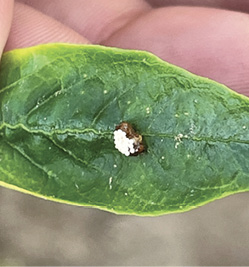
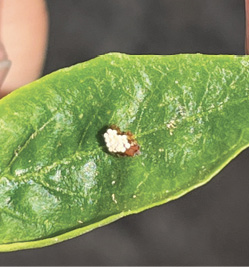
Figure 1. Assassin bug (Zelus sp.) egg mass on a chile peper leaf.
Assassin bugs in the genus Zelus are beneficial natural enemies of many pests in New Mexico. The predominant Zelus species in New Mexico is the leafhopper assassin bug (Zelus renardii), and it is native to North America. The four-spurred assassin bug (Zelus tetracanthus) and pale green assassin bug (Zelus luridus) are also present in and native to the Southwest, with the pale green assassin bug being the least commonly encountered. The leafhopper assassin bug can be found in a variety of habitats such as agricultural fields (e.g., alfalfa, chile), orchards (e.g., apple, pecan), and home gardens. Assassin bugs are beneficial for many cropping systems and home gardens as they feed on a variety of soft-bodied pests (e.g., aphids, armyworms, leafhoppers).
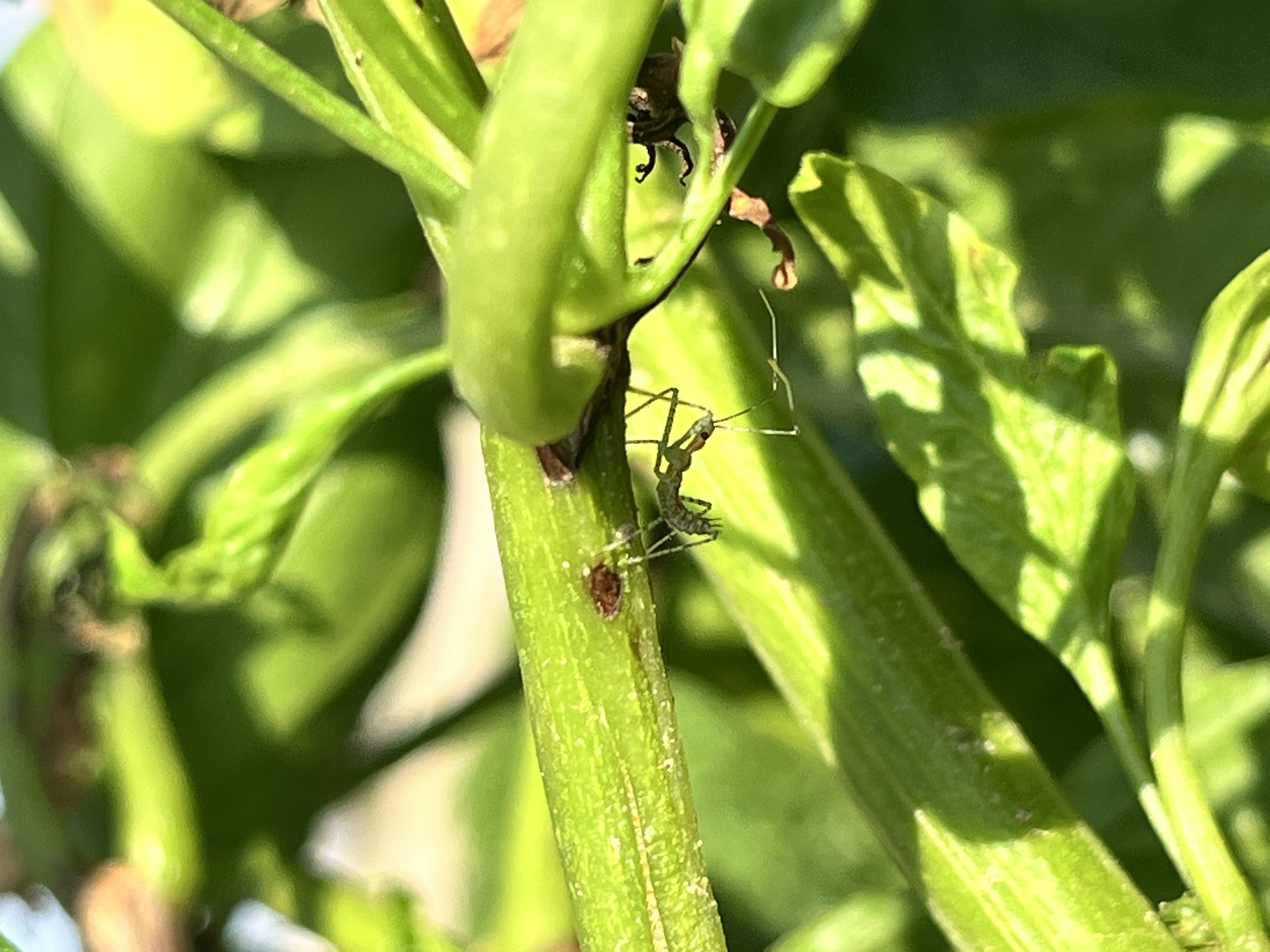
Figure 2. Nymph leafhopper assassin bug (Zelus renardii) on a chile pepper plant.

Figure 3. Nymph leafhopper assassin bug (Zelus renardii) on a datura plant.
Role in Integrated Pest Management: Zelus assassin bugs are beneficial, generalist predators that provide natural pest control as they eat a wide range of insect pests, such as aphids, armyworms, leaf-mining flies, leafhoppers, thrips, and whiteflies. Like many generalist predators, they may also feed on beneficial or non-pest insects, but the positive impact of Zelus assassin bugs on integrated pest management (IPM) significantly outweighs their occasional consumption of pollinators.
Life Cycle: It takes about two months for the leafhopper assassin bug to develop from egg to adult under favorable conditions. Weather (warm weather speeds up their growth while cooler weather slows it down) and food availability are the two main factors that affect Zelus spp. development. They can be found in New Mexico from April to October, are most abundant in the summer months (June-August), and have one to two generations per year. The overwintering stage of Zelus spp. can be either late-stage nymphs or adults. Many other species of assassin bugs overwinter as adults, but it depends on the species as there are some exceptions.
Identification: Hemiptera (Order): Reduviidae (Family): Zelus spp. (Note: “spp.” indicates multiple species in the Zelus genus)
Adults: Adult leafhopper assassin bugs are considered medium-sized to relatively large among true bugs, being 0.4-0.6 inch (10 -14.25 mm) in length. They vary in color, on their underbody (abdomen), the thickened, leathery parts of their forewing (corium) are usually pale red in color. They have long bodies with a small, elongated head. They have long legs, with the tibia containing glandular hairs (setae) that secrete a sticky substance which helps them capture prey. Adult females are slightly larger than the males and both have a needle-like beak (rostrum).
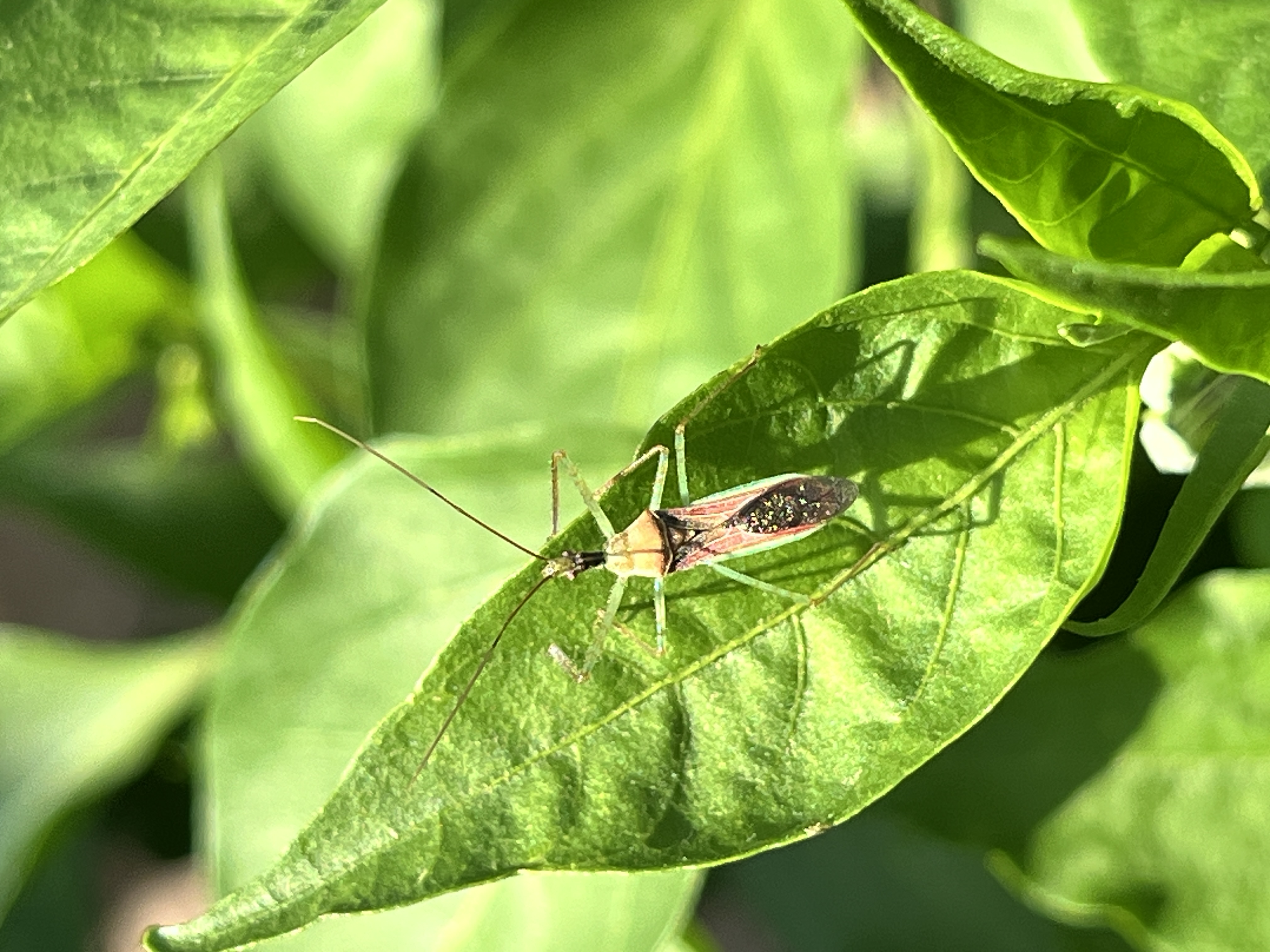
Figure 4. Adult leafhopper assassin bug (Zelus renardii) on a chile peper leaf.
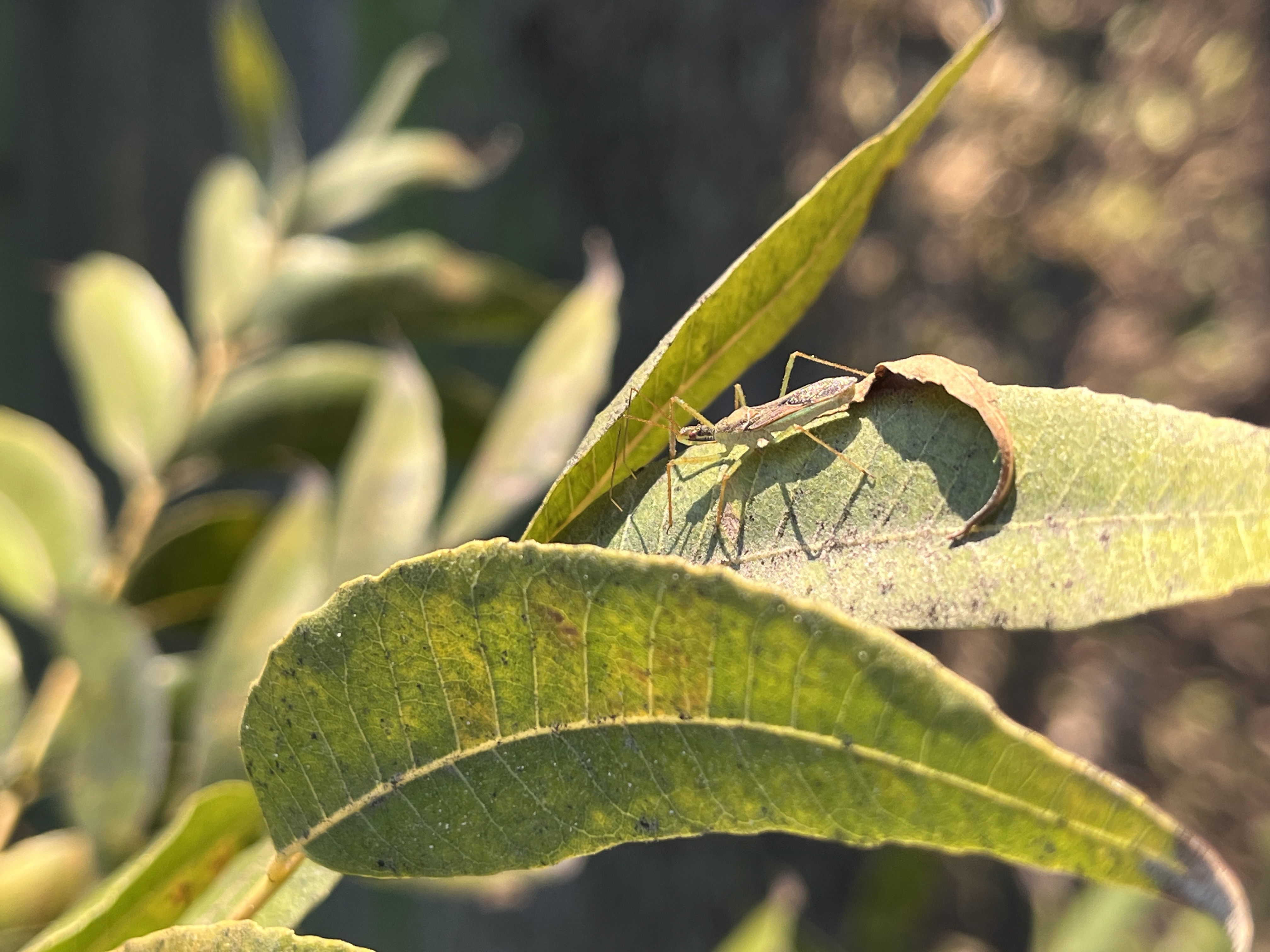
Figure 5. Adult leafhopper assassin bug (Zelus renardii) on a pecan leaflet.
Eggs: Zelus spp. eggs are distinctive. Egg masses consist of 20-50 cylindrical eggs glued together with a sticky, dark, reddish-brown secretion, forming a wall-like structure that surrounds the eggs and may appear hard and shiny. Some egg masses are approximately 0.4 in (10 mm) across and vary among species. They are typically laid directly onto plant surfaces (e.g., undersides of leaves, along stems).
Nymphs: Zelus assassin bugs have five nymphal instars. Nymphs resemble adults but are smaller, wingless (although wing pads become visible in later nymphal instars), and generally paler in color (typically pale green, or yellow-green), often with speckled legs.
Metamorphosis: Incomplete/simple metamorphosis (meaning that immature insects look similar in form to adults). Egg to five nymphal instars to adult.
Mouthparts: Assassin bugs have thick piercing-sucking mouthparts consisting of a short, stout, 3-segmented beak (rostrum) that faces downward. They are used to pierce prey, inject saliva with liquifying enzymes, and consume internal tissues.
Feeding Stages: Both nymphs and adults are predatory.
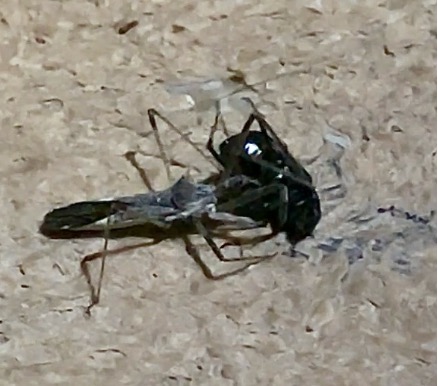
Figure 6. Four-spurred assassin bug (Zelus tetracanthus) attacking and feeding on beetle. Both insects attracted to headlamps.
References
El-Tom, H. A. (1965). The Biology of Zelus renardii Kolenati and Zelus socius Uhler (Hemiptera: Reduviidae).
Lahbib, N., Picciotti, U., Sefa, V., Boukhris-Bouhachem, S., Porcelli, F., & Garganese, F. (2022). Zelus renardii roaming in southern Italy. Insects, 13(2), 158.
Zhang, G., Hart, E. R., & Weirauch, C. (2016). A taxonomic monograph of the assassin bug genus Zelus Fabricius (Hemiptera: Reduviidae): 71 species based on 10,000 specimens. Biodiversity Data Journal, (4), e8150.
For future reading
Bennett, A. (2018). Using Insectary Plants to Attract and Sustain Beneficial Insects for Biological Pest Control [Guide H-159]. New Mexico State University Cooperative Extension Service. https://pubs.nmsu.edu/_h/H169/index.html

Joanie King is an assistant professor and Extension entomologist. She earned a Ph.D. in entomology from Texas A&M University, a M.S. in entomology from the University of Georgia, a B.S. in biology from the University of Central Florida, and an A.A. from Valencia College. Alongside her Extension and outreach focus, Dr. King’s lab focuses on host-parasite interactions, community ecology, and integrated pest management (IPM). Dr. King also researches how to plan effective science outreach and science communication.
To find more resources for your business, home, or family, visit the College of Agricultural, Consumer and Environmental Sciences on the World Wide Web at pubs.nmsu.edu/
Contents of publications may be freely reproduced for educational purposes. All other rights reserved. For permission to use publications for other purposes, contact pubs@nmsu.edu or the authors listed on the publication.
New Mexico State University is an equal opportunity employer and educator. NMSU and the U.S. Department of Agriculture cooperating.
November 2026, Las Cruces, NM